HB 94 Delaware House · 153rd General Assembly (2025-2026)

AN ACT AMENDING TITLES 10 AND 11 OF THE DELAWARE CODE RELATING TO LAW ENFORCEMENT COOPERATION IN FEDERAL IMMIGRATION ENFORCEMENT.

Summary
This Act restricts State and local law-enforcement from cooperating with federal agencies conducting civil immigration enforcement activities at child-serving entities, institutions of higher education, places of worship, or health-care facilities except in exigent circumstances. This Act is a substitute for and differs from House Bill No. 94 and House Substitute 1 for House Bill No. 94 by simply prohibiting direct participation by law-enforcement in civil enforcement proceedings unless an exigent circumstance exists, rather than requiring the permission of the Attorney General. If law-enforcement does participate in such an activity because of an exigent circumstance, a report must be submitted to the Police Officer Standards and Training Commission and the Department of Safety and Homeland Security within 48 hours. These reports are to be aggregated in a biannual report and delivered to the General Assembly.
Bill status passed both 4 of 5 stages cleared
Introduction
Apr 2026
Committee Review
May 2026
House Passage
Apr 2026
Senate Passage
Jun 2026
Governor
Introduced Apr 14, 2026 Last action Jun 25, 2026
Maddy AI version diff · 1 comparison

What changed between versions

HA 1 to HS 2 for HB 94 Bill Text · 6 edits
MODERATE
HB 94 was completely rewritten from a narrow definitional amendment into a substantive policy bill restricting state and local law enforcement cooperation with federal civil immigration enforcement at protected locations (schools, universities, places of worship, health-care facilities). The new version prohibits such cooperation unless an exigent circumstance exists, requires 48-hour written notice to oversight bodies when the exception is invoked, and mandates biannual aggregated reports to the General Assembly. This represents a major shift from a technical cleanup to a significant civil liberties and immigration enforcement policy change.
Scope change
The bill shifted from a minor technical amendment (simplifying one definition) to a comprehensive policy restriction on state and local law enforcement cooperation with federal civil immigration enforcement at specific protected locations, with built-in exigency exceptions and reporting obligations.
SCOPE

The bill now restricts state and local law-enforcement officers from directly participating with federal agencies in civil immigration enforcement activities at child-serving entities, institutions of higher education, places of worship, or health-care facilities unless an exigent circumstance exists.

The previous version's sole purpose - simplifying the definition of 'law-enforcement agency' by referencing the existing 'law-enforcement officer' definition in Title 11 - is no longer the focus of the bill, though that definition is retained as part of the broader new text.

DEFINITION

New definitions added for 'child-serving entity' (referencing Title 31), 'exigent circumstance' (imminent risk to public safety or individual/group safety), and 'health-care facility' (with detailed subcategories including hospitals, nursing homes, physician offices, laboratories, and other licensed providers).

REQUIREMENT

If law enforcement participates in civil immigration enforcement under an exigent circumstance, they must provide written notice within 48 hours to the Police Officer Standards and Training Commission and the Department of Safety and Homeland Security, including the officer's name, federal agency involved, date/time/duration, purpose, names of impacted individuals, records collected, nature of the exigency, and why the activity had to occur at that specific location.

ENFORCEMENT

The Department of Safety and Homeland Security must aggregate reports every 6 months and deliver them to the Governor, the Chair of the House and Senate Judiciary Committees, and the Director and Librarian of the Division of Legislative Services.

ELIGIBILITY

An explicit exception preserves law enforcement's ability to assist federal criminal immigration activities conducted under a valid court order, distinguishing civil from criminal proceedings.

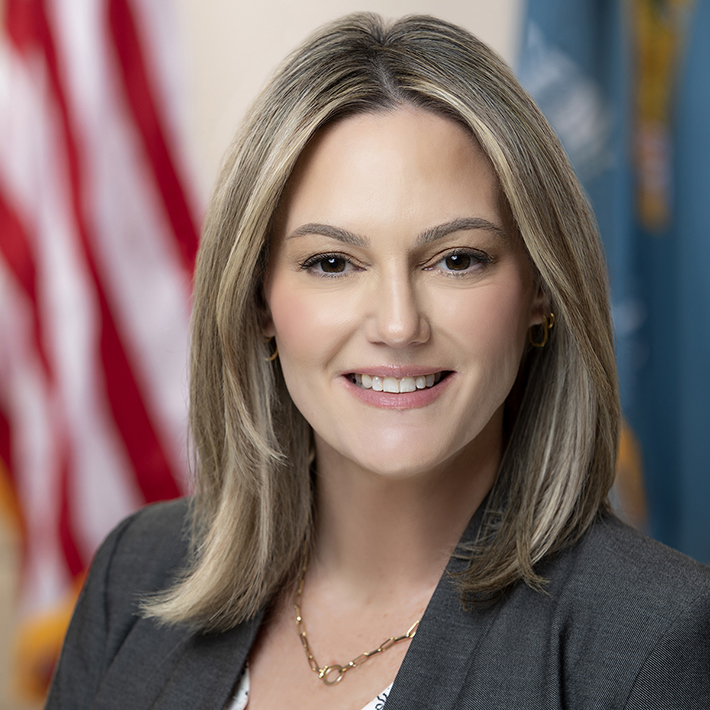
Floor votes · House Apr 16, 2026

How they voted

This bill passed the Senate by voice vote (no roll call recorded).
Full legislative history

Actions timeline

Total actions
7
Key actions
4
Committee
1
Amendments
2
Jun 25, 2026
Upper · Passed
Passed By Senate. Votes: 15 YES 6 NO
upper
May 5, 2026
Upper · Passed
Reported Out of Committee (Corrections & Public Safety) in Senate with 4 Favorable
upper
Apr 16, 2026
Introduced
Assigned to Corrections & Public Safety Committee in Senate
upper
Apr 16, 2026
Lower · Passed
Passed By House. Votes: 27 YES 14 NO
lower
Apr 16, 2026
Lower · Passed
Amendment HA 1 to HS 2 - Passed In House by Voice Vote
lower
Apr 16, 2026
Introduced
Amendment HA 1 to HS 2 - Introduced and Placed With Bill
lower
Apr 14, 2026
Introduced
was introduced and adopted in lieu of HB 94
lower
11 primary · 0 co-sponsors

Sponsors