

Under current law, effective January 1, 2019, the limitation on the maximum alcohol content of fermented malt beverages, also referred to as '3.2% beer', is eliminated, thereby allowing grocery stores, convenience stores, and any other person currently licensed or licensed in the future to sell fermented malt beverages for consumption on or off the licensed premises to sell fermented malt beverages containing more than 3.2% alcohol by weight or 4% alcohol by volume, referred to as 'malt liquor'. The bill modifies laws governing the retail sale of fermented malt beverages, which will be synonymous with malt liquor as of January 1, 2019, as follows: Effective January 1, 2019, prohibits a fermented malt beverage retailer's employees who are under 21 years of age from selling, dispensing, delivering, handling, or otherwise having any contact with malt liquor for sale on or sold and removed from the licensed premises ( sections 3 and 11 of the bill); As of the effective date of the bill, eliminates the fermented malt beverage retailer's license type that allows a retailer to sell malt liquor for consumption both on and off the licensed premises and prohibits renewal of existing on- and off-premises licenses on or after that date ( sections 2 and 4 ); For fermented malt beverage retailer licenses authorizing the sale of malt liquor for off-premises consumption issued or renewed on or after January 1, 2019, the retailer: Must derive at least 20% of its gross annual sales revenues from the sale of food items; cannot sell malt liquor to consumers at a price that is below the retailer's cost to purchase the malt liquor, with limited exceptions; cannot allow customers to use a self-checkout mechanism to purchase malt liquor; may operate under a single or consolidated corporate entity but cannot commingle purchases for multiple licensed premises to secure a better wholesale price based on total product volume purchased; and may deliver fermented malt beverages to customers of legal age under the same conditions applicable to retail liquor store and liquor-licensed drugstore licensees ( section 4 ); As of the effective date of the bill, prohibits the state and local licensing authorities from issuing a new fermented malt beverage retailer's license authorizing the sale of malt liquor for off-premises consumption or allowing a fermented malt beverage retailer to relocate its licensed premises, if the licensed premises is or will be located within 1,500 feet of a licensed retail liquor store; for a premises located in a municipality with a population of 10,000 or fewer, within 3,000 feet of a licensed retail liquor store; or for a premises located in a municipality with a population of 10,000 or fewer that is contiguous to the city and county of Denver, within 1,500 feet of a licensed retail liquor store ( section 5 ); As of the effective date of the bill, precludes issuance of a new fermented malt beverage retailer's license or the relocation of an existing fermented malt beverage retail licensed premises if the building in which malt liquor will be sold is located within 500 feet of a school, unless an exception applies or the local licensing authority or local governing body authorizes an exception within its jurisdiction ( section 7 ); Prohibits the sale of malt liquor in a sealed container by a fermented malt beverage retailer on Christmas day ( section 11 ); and Requires a licensed fermented malt beverage retailer to check the identification of its customers who attempt to purchase malt liquor to verify each customer is at least 21 years of age ( section 11 ). With regard to the retail sale of malt, vinous, or spirituous liquors by retail liquor stores or liquor-licensed drugstores, the bill: Modifies requirements pertaining to the delivery of malt, vinous, or spirituous liquors by a retail liquor store or liquor-licensed drugstore to: Require the delivery to be made by a store employee who is at least 21 years of age and is using a store-owned or store-leased vehicle; require the person delivering the product to verify that the person receiving the delivery is at least 21 years of age; and limit total sales revenues from delivered alcohol beverage products to 50% of gross annual alcohol beverage sales ( sections 8 and 9 ); Modifies provisions governing tastings conducted at a retail liquor store or liquor-licensed drugstore, including allowing tastings to be conducted: Between 11 a.m. and 9 p.m.; on up to 156 days per year; and by a representative of the alcohol beverage supplier ( section 5 ); Specifies that if an employee or representative of an alcohol beverage supplier pours or serves the supplier's product during a tasting at a retail establishment, that service does not constitute labor provided by a supplier to a retail licensee ( section 6 ); Applies the 1,500-foot radius restriction, rather than the 3,000-foot restriction, to a retail liquor store or liquor-licensed drugstore premises located in a municipality with a population of 10,000 or fewer that is contiguous to the city and county of Denver ( sections 5, 8, and 9 ); Prohibits a retail liquor store from selling alcohol beverages to consumers at a price that is below the retailer's cost to purchase the alcohol beverages, with limited exceptions, and allows the same exceptions to the restriction on below-cost sales applicable to liquor-licensed drugstores under current law ( sections 8 and 9 ); Allows retail liquor store and liquor-licensed drugstore licensees with multiple locations to operate under a single or consolidated corporate entity but prohibits commingled purchases for multiple licensed premises to secure a better wholesale price based on total product volume purchased ( sections 8 and 9 ); and Allows a liquor-licensed drugstore that applied for its license after July 1, 2016, to obtain additional liquor-licensed drugstore licenses, if obtained in the manner specified in current law for other liquor-licensed drugstores to obtain additional licenses, as follows: a maximum of 2 licenses between January 1, 2019, and January 1, 2022; a maximum of 3 licenses between January 1, 2022, and January 1, 2027; and a maximum of 4 licenses on or after January 1, 2027 ( section 9 ). Current law prohibits the public consumption of malt, vinous, and spirituous liquors except on a premises licensed to sell alcohol beverages for consumption on the licensed premises. Section 11 includes fermented malt beverages within the prohibition against public consumption and authorizes a state or local government entity, by rule, ordinance, or resolution, as applicable, to authorize public consumption of any type of alcohol beverage within the government entity's jurisdiction. With regard to the enforcement authority of the state and local licensing authorities, section 10 : Specifies the fine amount, if a fine is imposed, when a licensed retail establishment sells alcohol beverages to minors or to visibly intoxicated persons; and In determining the suspension or fine to impose for that violation, precludes consideration of violations that occurred more than 5 years before the current violation. Section 12 authorizes the state licensing authority to adopt, and requires retailers to comply with, rules prohibiting retailers from accepting an extension of credit from a distributor for more than 30 days. $87,592 is appropriated from the liquor enforcement division and state licensing authority cash fund to the department of revenue to implement the bill, with $10,656 reappropriated to the department of law to provide legal services to the department of revenue. (Note: This summary applies to the reengrossed version of this bill as introduced in the second house.) , Read More
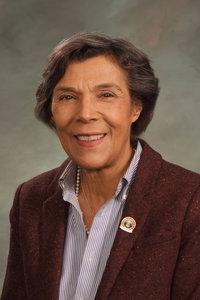
Sponsored bills
With limited exceptions, current law prohibits a licensing authority from receiving or acting upon a license application under the 'Colorado Liquor Code' for the retail sale of alcohol beverages if the building in which the alcohol beverages will be sold is located within 500 feet of a public or parochial school or a college, university, or seminary. A local government may eliminate or reduce the distance restrictions. The bill applies the same distance restrictions, with the same limited exceptions and authority of a local government to reduce or eliminate the restrictions, to any fermented malt beverage retailer licensed on or after the effective date of the bill under the 'Colorado Beer Code' to sell fermented malt beverages at retail or any fermented malt beverage retailer that applies on or after the effective date of the bill to relocate its licensed premises. (Note: This summary applies to the reengrossed version of this bill as introduced in the second house.) , Read More
The bill changes the name of the existing low-income housing tax credit to the affordable housing tax credit. This change is reflected in sections 1 and 3 of the bill. Section 2 extends the period during which the Colorado housing and finance authority may allocate affordable housing tax credits from December 31, 2019, to December 31, 2024.(Note: This summary applies to the reengrossed version of this bill as introduced in the second house.) , Read More
The bill creates the Chicana/o special license plate. A person becomes eligible to use the plate by providing a certificate confirming that the person has made a donation to an organization chosen by the department of revenue based on the organization's provision of services to the Latino community. The organization may implement the bill by making grants to other organizations that also qualify under the standards of the bill. In addition to the standard motor vehicle fees, the plate requires 2 one-time fees of $25. One of the fees is credited to the highway users tax fund and the other to the licensing services cash fund.(Note: This summary applies to this bill as introduced.) , Read More
Executive Committee of the Legislative Council. Currently, salaries for most state employees are paid once a month on the last day of the month; except that salaries for June are paid on the first working day of July. Current law states that salary payments for employees paid through the state's payroll system will change from monthly to twice monthly when the twice monthly payroll system is implemented. The bill exempts members of the general assembly and most employees of the legislative department from the change to the twice monthly payroll system. The bill specifies that members of the general assembly and most employees of the legislative department will continue to be paid monthly as of the last working day of the month; except that salaries for the month of June shall be paid on the first working day of July. The bill also specifies that salary payments for employees of the legislative department who are currently paid on a biweekly basis will change to a twice monthly payment when the twice monthly payroll system is implemented and in place for all other employees. (Note: This summary applies to this bill as introduced.) , Read More
The bill prohibits a licensed physician specializing in psychiatry or a licensed, certified, or registered mental health care provider from engaging in conversion therapy with a patient under 18 years of age. A licensee who engages in these efforts is subject to disciplinary action by the appropriate licensing board. 'Conversion therapy' means efforts that seek to change an individual's sexual orientation, including efforts to change behaviors or gender expressions or to eliminate or reduce sexual or romantic attraction or feelings toward individuals of the same sex. (Note: This summary applies to the reengrossed version of this bill as introduced in the second house.) , Read More
Current law requires persons outside of Colorado who accept wagers from residents of Colorado on simulcast horse racing events to be licensed in Colorado and to pay a source market fee into the racing cash fund. The bill authorizes the director of the division of racing events to allocate a portion of the source market fee to be paid to any horse purse trust fund established pursuant to existing law, if necessary, to maintain a sustainable and competitive purse structure in Colorado. The money credited to a horse purse trust account from the source market fee is to be paid out as purses for races held at live race meets in Colorado, as authorized by the director, or as otherwise authorized by rules of the commission. (Note: This summary applies to the reengrossed version of this bill as introduced in the second house.) , Read More
The bill classifies sake as a vinous liquor (wine) for the purposes of the 'Colorado Liquor Code'. (Note: This summary applies to the reengrossed version of this bill as introduced in the second house.) , Read More
The bill makes appropriations for matters related to the legislative department for the 2018-19 state fiscal year. Additionally, the bill directs the state treasurer to transfer $850,000 from the preservation grant program account in the state historical fund to the legislative department cash fund for use in the project to restore the old supreme court chamber in the state capitol building. (Note: This summary applies to the reengrossed version of this bill as introduced in the second house.) , Read More