

The act creates the access to opportunity task force (task force) to study and report on how to expand access to effective public schools to address opportunity gaps. The act requires the task force to report its findings and recommendations to the education committees of the house of representatives and the senate, the governor, the state board of education, the commissioner of education, and the department of education on or before January 1, 2027. If the first meeting of the task force is not until after July 31, 2026, then the report deadline is 5 months after the task force's first meeting. The act specifies that the task force will only conduct a study and prepare a report if the department of education receives sufficient gifts, grants, and donations.(Note: This summary applies to this bill as enacted.)
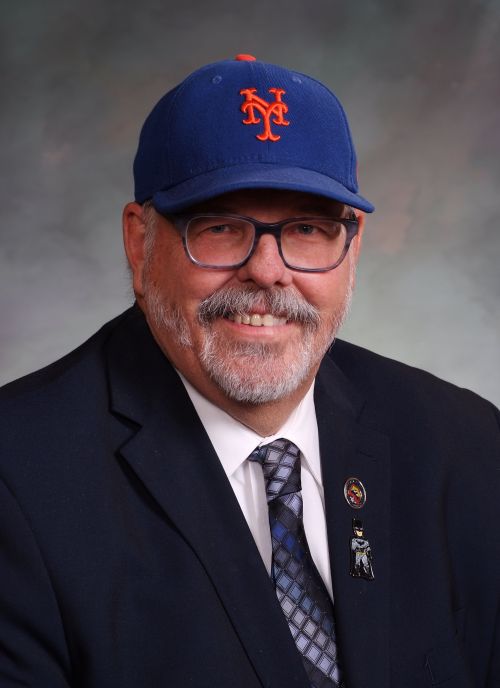
Sen. Tom Sullivan
Sponsored bills
The act establishes the ibogaine research pilot program (pilot program) in the behavioral health administration (BHA) to research the safety and effectiveness of using ibogaine to treat mental health conditions and substance use disorders. The act requires the BHA to establish a committee to review pilot program site applications and make recommendations to the BHA on which applicants to accept. The BHA may select up to 5 ibogaine pilot sites. The act allows the BHA to seek, accept, and expend gifts, grants, and donations and establishes the ibogaine research pilot program cash fund. The pilot program is contingent on the BHA receiving sufficient gifts, grants, and donations to administer the pilot program and award grants to the selected ibogaine pilot sites to help with financing needs. Under current law, the division of natural medicine advisory board consists of 15 voting members, 8 of whom must have general expertise and experience related to natural medicine and 7 of whom must have specialized expertise and experience in various areas of natural medicine. The act amends the expertise and experience requirements to apply equally to all 15 voting members. The act adds that a facilitator of natural medicine services is not liable for a physical or psychological injury that a participant may experience as a result of the facilitator's performance or supervision of the natural medicine services that a participant receives, unless the injury is the result of the facilitator's intentional misconduct, gross negligence, or a deviation from the recognized standard of care. The act authorizes the state licensing authority for natural medicine or natural medicine product (state licensing authority) to adopt rules related to the administration, manufacturing, and use of ibogaine. The act sets requirements for how the state licensing authority must prioritize reviewing applications for licensure to facilitate natural medicine services and allows the state licensing authority to set different licensing fees depending on the type of natural medicine the applicant is seeking licensure for. The act allows the state licensing authority to accept gifts, grants, and donations from public or private sources and requires gifts, grants, or donations received to be deposited in the regulated natural medicine division cash fund. The act requires the BHA to work to secure federal research and development funding available through the advanced research projects agency for health within the federal department of health and human services, or other available funding, in order to advance research on the use of ibogaine for the treatment of serious mental illness. The act updates the powers and duties of the director of the division of professions and occupations to include adopting rules that guide the use and administration of ibogaine. A licensee seeking to cultivate, manufacture, dispense, or administer ibogaine shall, in consultation with Indigenous communities, establish a benefit-sharing plan that directly benefits those Indigenous communities. The act:Updates definition of 'administration session' to include the use of regulated natural medicine and regulated natural medicine product that the participant purchases to consume during the administration session;Prohibits a person from advertising bona fide harm reduction services or bona fide support services offered for remuneration, advertising natural medicine or natural medicine products, or using harm reduction services or support services to conduct sales of natural medicine;Clarifies that the state licensing authority is not required to conduct routine, periodic, or pre-operational inspections as a condition of licensure unless expressly required;Requires state licensing authority to adopt rules regarding licensing privileges and restrictions of a limited regulated natural medicine sales license and eligibility requirements for an applicant to obtain a limited regulated natural medicine sales license;Allows the state licensing authority to adopt rules regarding the application procedures and license requirement for a healing center to operate a temporary premises; and requirements for cultivation, manufacture, testing, or dispensing of ibogaine;Allows the department of public health and environment to issue a temporary premises permit to a licensed natural medicine healing center if certain conditions are met and allows a healing center to apply for a temporary premises permit;Prohibits a healing center licensee from selling regulated natural medicine or regulated natural medicine product unless a co-located limited regulated natural medicine sales licensee conducts the transaction in accordance with certain requirements; andAllows the director of the natural medicine division to issue an order to cease and desist if the director determines that a person is acting or has acted without a license to operate a natural medicine business or to own, grow, harvest, transfer, manufacture, supervise, provide, or administer natural medicine.(Note: This summary applies to this bill as enacted.)
The act exempts Colorado courts' e-filing system from the requirement that users certify that they will not disclose personal identifying information obtained from the system for federal immigration enforcement. The act authorizes a public health agency to inspect or examine a facility that houses or detains individuals who are noncitizens for purposes of civil immigration proceedings. Under current law, the department of public health and environment is authorized to inspect facilities that house or detain individuals who are noncitizens for purposes of civil immigration proceedings. The act expands the inspection authority, including the frequency of inspections and things that are subject to inspection. A facility that refuses to allow the inspection is subject to a civil penalty. The department of public health and environment is authorized to set fees for inspections and deposit the money from the fees in the immigration facility inspection and detention cash fund, which is created in the state treasury. The act authorizes the department of public health and environment to require facilities that house or detain individuals who are noncitizens for purposes of civil immigration proceedings to comply with requirements, including health and safety standards and reporting requirements. A facility that fails to comply is subject to a civil penalty. The act requires the department of public health and environment to submit an annual report to the attorney general concerning facilities' compliance with these new requirements and make the report publicly available on its website. The act requires the P.O.S.T. board to establish training standards related to peace officer compliance with current laws concerning civil immigration detainers. P.O.S.T.-certified peace officers must complete the training before December 31, 2027. The act requires the attorney general to develop and make publicly available a policy regarding current laws concerning the protection of personal identifying information. The act appropriates $107,283 to the department of public health and environment from the immigration facility inspection and detention cash fund.(Note: This summary applies to this bill as enacted.)
The act requires the division of labor standards and statistics (division) in the department of labor and employment (CDLE), on or before January 15, 2027, to begin collecting data concerning temperature-related injury or illness or temperature-related emergencies at worksites and to:Develop a platform on CDLE's website where users can provide information about occurrences of temperature-related injury or illness or temperature-related emergencies;Obtain from the department of public health and environment (CDPHE) data that CDPHE has collected through its syndromic surveillance program regarding occurrences of heat-related injury or illness or heat-related emergencies; andCollect similar data from the division of workers' compensation and the Center for Improving Value in Health Care. On or before July 1, 2028, the act requires the division to develop a model temperature-related injury and illness prevention plan (TRIIPP) that thereafter must be made available on CDLE's website. Additionally, the act requires the division to review and update the model TRIIPP at least every 5 years and grants the division authority to adopt rules necessary to implement the act. $76,651 is appropriated from the general fund to the department for use by the division.(Note: This summary applies to this bill as enacted.)
Maddy summarySB 132, known as the "Magnus Law," requires Colorado law enforcement officers to offer drivers involved in collisions resulting in death or suspected serious injury the opportunity to voluntarily take a breath test for alcohol. The bill mandates officers provide clear, plain-language advisement that the test is voluntary, refusal carries no penalty, and results cannot be used in court. It applies when officers reasonably suspect the driver was at fault and the driver isn't critically injured, creating a standardized protocol to ensure consistent investigation of potential impairment at serious crash scenes. This change aims to preserve evidence that might otherwise be lost, without altering existing legal standards for driving under the influence.
Maddy summaryThis bill designates a two-mile stretch of Colorado Highway 14 in Weld County as 'Mono & Matt Road' to honor Edwardo 'Mono' Hernandez and Matthew Garcia, two high school basketball players who died in a 2014 traffic accident. The legislation authorizes the Colorado Department of Transportation to install signs for the new name and allows the department to accept donations for this purpose while exploring a cooperative agreement with Weld County for future maintenance. By placing the names on a specific roadway, the bill creates a permanent physical tribute to the students in the location where the accident occurred.
The act clarifies that video and audio recordings (recordings) depicting an incident of a peace officer's use of force that resulted in death (incident) must be provided to the decedent's immediate family within 21 days after the incident regardless of whether there is a complaint of peace officer misconduct for the incident. The act requires the multi-agency team investigating the incident or the law enforcement agency that employs the peace officer who used force in the incident to notify the decedent's immediate family about the multi-agency team investigation into the incident within 24 hours after the scene of the incident is cleared. The notification must include the names of the law enforcement agencies that comprise the multi-agency investigating team and the status of the investigation. The act prohibits a peace officer participating in the investigation of a criminal matter involving an incident from making an extrajudicial statement on behalf of a law enforcement agency that the peace officer knows or reasonably should know will be disseminated by means of public communication and will have a substantial likelihood of materially prejudicing an adjudicative proceeding on the matter. Video of an incident produced for purposes of a community or critical incident briefing must include certain disclaimers, and narration or commentary must be limited to the facts of the incident.(Note: This summary applies to this bill as enacted.)
Maddy summaryHJR 1028 is a joint resolution that declares the Colorado House of Representatives' intent to honor a $2 million investment in school funding studies by creating a multi-year plan to address their findings. The bill directs the legislature to review the recommendations from two recent studies, which found that current school funding levels are inadequate and teacher salaries are too low, and to decide which study's methodology to follow for implementation. It requires the development of a structured plan that includes revenue triggers to phase in changes aimed at improving school funding equity and teacher compensation.
The act prohibits employers from making deductions from the wages or compensation of an employee for personal protective equipment. The act also requires an employer with 500 or more employees who are engaged in the slaughter of livestock or the rendering or packaging of meat to provide its employees reasonable access to restrooms. The division of labor standards and statistics in the department of labor and employment may fine an employer who fails to provide restroom access.(Note: This summary applies to this bill as enacted.)
Currently, the 'Workers' Compensation Act of Colorado' provides that certain cancers contracted by firefighters are considered occupational diseases presumed to have been a result of the firefighters' employment. A firefighter's employer or an insurer may rebut this presumption by showing by a preponderance of the medical evidence that the cancer did not occur on the job. The act expands the types of cancer that are considered occupational diseases and strengthens the rebuttable presumption to require an employer to show clear and convincing evidence that the cancer did not occur on the job. The act exempts firefighters who are employed by the state.(Note: This summary applies to this bill as enacted.)