

The act updates provisions of the existing article 1.9 of title 18, Colorado Revised Statutes, concerning the treatment of persons with mental health disorders in the criminal and juvenile justice systems. Substantive changes include: Broadening the name and scope of the legislative oversight committee (committee) and associated task force (task force) from concerning the treatment of "persons with mental health disorders" to "persons with behavioral health disorders"; Allowing the task force to research topics for members of the committee upon request; Adjusting task force membership and creating term limits for task force members; Further defining issues for the task force to study; and Extending the repeal date to July 1, 2027. The act appropriates $108,131 to the legislative department from the general fund to implement the provisions of the act. (Note: This summary applies to this bill as enacted.)
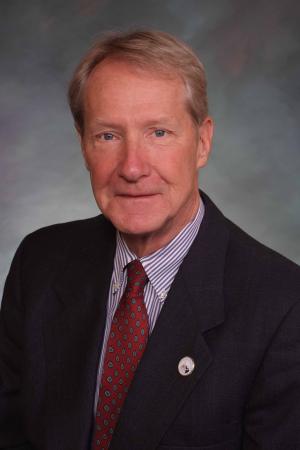
Sponsored bills
To improve the clarity and certainty of the statutes, the act amends, repeals, and reconstructs various statutory provisions of law that are obsolete, imperfect, or inoperative. The specific reasons for each amendment or repeal are set forth in the appendix to the act. The amendments made by the act are not intended to change the meaning or intent of the statutes, as amended. (Note: This summary applies to this bill as enacted.)
The act allows the department of human services (department) to spend money appropriated to the department from the general fund in House Bill 22-1329 to expand career and technical education and vocational training programs in designated youth facilities for juveniles in the custody of the department. The act prevents an employer from requiring an applicant for employment of any age to disclose information related to an arrest, detention, processing, diversion, supervision, adjudication, or court disposition that occurred while the applicant was subject to the process and jurisdiction of the juvenile court, and an applicant of any age is not required to disclose such information in response to an employer inquiry. The act does not apply to the screening of applicants who have direct contact with vulnerable persons or the screening of applicants required by licensed child care, nor does it apply to any law enforcement agency or to any political subdivision. The act prohibits state or local agencies from denying or taking adverse action against an applicant who has been adjudicated for a delinquent act in a juvenile proceeding, but who is otherwise qualified for a license, certification, permit, or registration. (Note: This summary applies to this bill as enacted.)
The act requires the state treasurer to establish the Colorado household financial recovery pilot program (program) in the department of the treasury to partner with financial institutions to incentivize lending to low-income individuals and households, including households impacted by the COVID-19 pandemic or its negative economic impacts. Money available for the program must be used for one or more of the following purposes: To establish a loan loss reserve to partially offset risk to lenders in making loans to individuals and households impacted by the COVID-19 pandemic; To make payments to lenders to buy down interest rates on loans made to individuals and households impacted by the COVID-19 pandemic; To provide lending capital for affordable, small loans to individuals and households impacted by the COVID-19 pandemic; or To award grants to nonprofit community-based organizations to conduct marketing and outreach to individuals and households impacted by the COVID-19 pandemic who may be eligible to participate in the program. The state treasurer may select one or more community development financial institutions to administer all or a portion of the money available for the program. The administrator or administrators are selected based, in part, on their proposed use of the money, their ability to partner with nonprofit community-based organizations that work with individuals and households impacted by the COVID-19 pandemic, and to connect borrowers to affordable banking products and other financial services. The act specifies program policies, including loan terms, and requires the state treasurer and administrators to establish and publicize additional program policies as necessary. The state treasurer or an administrator may establish a loan loss reserve to partially offset loan losses and thereby incentivize lending by financial institutions to individuals and households impacted by the COVID-19 pandemic. The state treasurer shall determine the amount of the offset and shall establish and publicize policies for participating financial institutions. On or before November 1, 2023, and on or before November 1 each year thereafter, the selected administrators shall report to the governor and to house of representatives business affairs and labor committee and the senate business, labor, and technology committee, or any success committees, concerning the use of program money and other information concerning the program. The act creates the Colorado household financial recovery pilot program fund (fund) and identifies allowable uses of the money in the fund. $5,200,000 is appropriated from the general fund to the fund to implement the pilot program. From this appropriation, $59,142 is reappropriated to the department of law for legal services for the department of the treasury. The appropriation is based on the assumption that the department of law will require an additional 0.3 FTE. (Note: This summary applies to this bill as enacted.)
The act requires the state forest service, on and after September 1, 2022, to develop a publicly accessible statewide carbon accounting framework that yields carbon stock and flux estimates for: Ecosystems by county and forest cover type; and Wood products. The state forest service must also develop a forest carbon co-benefit framework for project-level forest management practices, including wildfire mitigation. The state forest service must use this framework to train practitioners in adaptive management practices to be incorporated into current forest management practices, including wildfire mitigation. The state forest service must provide technical expertise to assist industry and landowners with carbon inventories and monitoring. The act also allows money from the existing healthy forests and vibrant communities fund to be used for new purposes, including the new statewide carbon accounting framework. For the 2022-23 state fiscal year, the act: Transfers $3,000,000 and appropriates $95,407 from the general fund to the healthy forests and vibrant communities fund; Transfers $2,200,000 from the general fund to the forest restoration and wildfire risk mitigation grant program cash fund; and Transfers $2,00,000 from the general fund to the wildfire mitigation capacity development fund.(Note: This summary applies to this bill as enacted.)
The act establishes the wildfire mitigation resources and best practices grant program (grant program) within the Colorado state forest service (forest service). To be eligible to receive a grant, a recipient must be an agency of local government, a county, a municipality, a special district, a tribal agency or program, or a nonprofit organization. The forest service is tasked with reviewing grant applications. Grants must be awarded only to applicants proposing to conduct outreach among landowners in high wildfire hazard areas, and the forest service must consider the potential impact of an applicant's proposed outreach when awarding grants. The forest service must report to the wildfire matters review committee on the grant program. Commencing no later than the 2023-24 state fiscal year, the act requires the general assembly to annually appropriate money from the general fund to the healthy forests and vibrant communities fund to implement the grant program. The act extends the existing income tax deduction created to offset the landowner's costs incurred in performing wildfire mitigation measures, currently set to expire with the 2024 income tax year, through the 2025 income tax year. The act also creates a state income tax credit to reimburse a landowner for the costs incurred in performing wildfire mitigation measures on the landowner's property. Specifically, a landowner with a federal taxable income at or below $120,000, annually adjusted for inflation and rounded to the nearest hundred dollars, for any income tax year commencing on or after January 1, 2023, but prior to January 1, 2026, is allowed a state income tax credit in an amount equal to 25% of up to $2,500 in costs for wildfire mitigation measures. (Note: This summary applies to this bill as enacted.)
The act establishes the wildfire mitigation incentives for local government grant program (grant program) in the Colorado state forest service (forest service). The grant program is established to provide state funding assistance in the form of grant awards to local governments to either match revenue raised by such governments from a dedicated revenue source or to expand existing programs administered by the local government on a long-term basis, which efforts are intended to be used for forest management or wildfire mitigation efforts at the local level. Such wildfire mitigation efforts include, without limitation, projects that promote fuel breaks, forest thinning, a reduction in the amount or extent of fuels contributing to wildfires, outreach and education efforts directed at property owners and other members of the public, and any other means of forest management or wildfire mitigation as determined appropriate for funding by the forest service. On or before March 1, 2023, the forest service is required to adopt polices, procedures, and guidelines for the grant program that include, without limitation: Procedures and timelines by which an eligible recipient may apply for a grant; Criteria for determining grant eligibility and grant amounts; and Reporting requirements for grant recipients. Any funding awarded under the grant program must match either revenues raised by the local government from a dedicated revenue source or supplement existing programs administered by the local government on a long-term basis, which efforts are intended to be used for forest management or wildfire mitigation efforts at the local level in accordance with policies, procedures, and guidelines developed by the forest service. A local government is eligible for funding under the grant program even in the absence of a dedicated revenue source if the local government has created and administers an existing program, project, or funding mechanism that creates long-term funding at the local level for wildfire mitigation or forest health or has created and administers other creative and innovative approaches for promoting wildfire mitigation and forest health. In allocating funding under the grant program, preference must be given to certain eligible recipients based on prioritization factors enumerated in the act. Eligible recipients may apply for funding from the grant program, and the recipient's application for funding may be approved by the forest service before the local government has created a dedicated revenue source that forms the basis for the match if the electors of the local government approve a ballot issue creating the revenue source at an election that takes place in the same calendar year in which the funding is awarded. The act creates the wildfire mitigation incentives local government grant program fund (fund) in the state treasury. On July 1, 2022, the state treasurer is required to transfer $10 million from the general fund to the fund. The forest service is to use the money transferred to fund awards under the grant program and pay the administrative costs of the forest service in administering the grant program. On or before November 1, 2024, and on or before November 1 of each year thereafter, the forest service is required to publish a report summarizing the use of all of the money that was awarded under the grant program in the preceding fiscal year. The act specifies additional required components of the report. The report must be posted on the website of the forest service. The act requires the Colorado department of higher education to summarize the information contained in the report in its "State Measurement for Accountable, Responsive, and Transparent (SMART) Government Act" hearings. The act requires the forest service to prepare educational materials concerning the grant program and to display such materials on its official website. The forest service is also required to undertake outreach activities to inform local governments located in priority areas for wildfire mitigation of the grant program. The grant program is repealed, effective September 1, 2027. Before its repeal, the department of regulatory agencies is required to review the grant program as part of the general assembly's review of regulatory agencies and functions for repeal, continuation, or reestablishment. (Note: This summary applies to this bill as enacted.)
The act enacts the "Perfluoroalkyl and Polyfluoroalkyl Chemicals Consumer Protection Act" to establish a regulatory scheme that prohibits the sale or distribution of certain products that contain intentionally added perfluoroalkyl and polyfluoroalkyl chemicals (PFAS chemicals). On and after January 1, 2024, a person shall not sell or distribute in the state any products in the following product categories if the products contain intentionally added PFAS chemicals: Carpets or rugs; Fabric treatments; Food packaging; Juvenile products; and Oil and gas products. On and after January 1, 2024, a manufacturer of cookware sold in the state that contains intentionally added PFAS chemicals in the handle of the product or in any product surface that comes into contact with food, foodstuffs, or beverages is required to: List the presence of PFAS chemicals on the product label of the cookware; and Include a statement on the product label of the cookware that directs the consumer to a website with information about why PFAS chemicals were intentionally added to the product. On and after January 1, 2024, a manufacturer of cookware is prohibited from making a statement that the cookware is free of PFAS chemicals unless no individual PFAS chemical is intentionally added to the cookware. On and after January 1, 2025, a person shall not sell or distribute in the state any products in the following product categories if the products contain intentionally added PFAS chemicals: Cosmetics; Indoor textile furnishings; and Indoor upholstered furniture. On and after January 1, 2027, a person shall not sell or distribute in the state any products in the following product categories if the products contain intentionally added PFAS chemicals: Outdoor textile furnishings; and Outdoor upholstered furniture. The act includes products that do not contain intentionally added PFAS chemicals in the definition of "environmentally preferable products" for the purposes of state agency procurement. The act also: Requires a person that uses class B firefighting foam that contains intentionally added PFAS chemicals (firefighting foam) to prohibit a release of the firefighting foam into the environment, fully contain the firefighting foam during its use, safely store the firefighting foam, and report certain information to the water quality spills hotline within 24 hours if there is a release of the firefighting foam into the environment; Requires a person that uses firefighting foam to report its use to the water quality spills hotline within 24 hours after the use; Authorizes the attorney general to enforce laws regulating firefighting foams that contain PFAS chemicals; and Extends to January 1, 2024, the effective date of an existing restriction on the use of firefighting foam that contains intentionally added PFAS chemicals at certain airports.(Note: This summary applies to this bill as enacted.)
The act requires the Colorado state forest service (forest service) to convene a working group (working group) that includes the division of fire prevention and control in the department of public safety (DFPC) and the United States forest service (USFS), and that may include other local, state, or federal partners and entities engaged in wildfire risk mitigation in the wildland-urban interface (WUI). The working group shall consider how best to conduct enhanced outreach campaigns during wildfire awareness month in 2023 and 2024, as well as other outreach efforts that inform and motivate residents in the WUI to engage in more wildfire risk mitigation. After considering feedback from the working group, the forest service shall implement an enhanced wildfire awareness month outreach campaign in conjunction with the DFPC and the USFS in 2023 and 2024, as well as other outreach efforts in the 2022-23 and 2023-24 state fiscal years. In implementing an enhanced wildfire awareness month outreach campaign and other outreach efforts, the forest service may, subject to available appropriations: Develop or contract for the development or placement of marketing and educational materials, including videos, direct mail, social media, print media, television and radio spots, and billboards; Conduct or contract for educational events targeted to residents in the WUI; Retain consultants, as necessary, to implement all or part of an outreach campaign, as well as other outreach efforts; Make enhancements to the forest service's web-based clearinghouse for technical assistance and funding resources and coordinate with working group partners and other entities to provide links to web-based educational resources and information; and Secure necessary staff to implement the outreach efforts. The act requires the state forester to report to the wildfire matters review committee during the 2023 and 2024 legislative interims concerning the outreach efforts implemented pursuant to the act, including the amount and use of money appropriated for outreach efforts and the impact of those efforts in increasing awareness of wildfire risk mitigation in the WUI. For the 2022-23 state fiscal year, the act appropriates $800,000 from the general fund to the healthy forest and vibrant communities fund for use by the Colorado state forest service in implementing the act. The act also authorizes the appropriation of money to the DFPC as necessary to implement the outreach plan. (Note: This summary applies to this bill as enacted.)
The act creates the CASA special license plate. In addition to the standard motor vehicle fees, the plate requires 2 one-time fees of $25. One of the fees is credited to the highway users tax fund and the other to the licensing services cash fund. For the 2022-23 state fiscal year, $28,943 is appropriated for use by the division of motor vehicles in the department of revenue (department) to implement the act, of which amount $1,979 is reappropriated to the office of the governor for use by the office of information technology to provide information technology services for the department. (Note: This summary applies to this bill as enacted.)