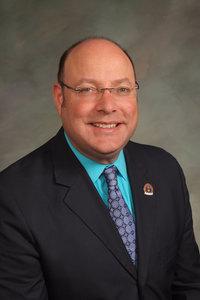
Photo of Paul Rosenthal
D Colorado House · District 9

Rep. Paul Rosenthal

Compare
Total votes
1,080
all sessions
Attendance
100%
of floor votes
Higher than 92% of chamber peers
With party
97%
of cast votes
Near the chamber average
Bipartisan score
2%
crosses aisle rarely
Near the chamber average
Sponsored
20
bills & resolutions
Lower than 94% of chamber peers
Committees
0
assignments
20 bills and resolutions

Sponsored bills

Total
20
Primary
20
Co-sponsor
0
This page
20
matching current filters
Primary HB 18-1257
Signed into law · Colorado House · Lead sponsor
Correction To House Bill16-1316 Reinsert "Not"

House Bill 16-1316 amended the venue statute for transferring child welfare proceedings between counties and inadvertently struck the word 'not' in one sentence. Due to this error, courts are not allowed to transfer child welfare proceedings between counties after adjudication even though the intent of House Bill 16-1316 was to allow post-adjudication transfers. The bill reinserts the word 'not' to allow such transfers. (Note: This summary applies to the reengrossed version of this bill as introduced in the second house.) , Read More

Signed into law May 3, 2018 0 co-sponsors
Primary HB 18-1292
Passed · Colorado House · Lead sponsor
Pilot Program Assistance Person Experiencing Homelessness

The bill establishes the state access to resources and training grant program for persons experiencing homelessness (START grant program) in the department of local affairs (department). The purpose of the START grant program is to make grant money available to public safety, social services, or nonprofit agencies that have contact with persons experiencing homelessness. A grant recipient shall use grant money only to provide personnel and resources to persons experiencing homelessness. The START grant program is also designed to develop and institute community-centered programs with proactive solutions to provide assistance to persons experiencing homelessness and may include, but need not be limited to, training, work programs, housing vouchers, transportation, counseling or therapy, and food assistance. The department is responsible for establishing procedures, timelines, and criteria for the START grant program. A public safety, social services, or nonprofit agency may apply for a grant, provided it clearly demonstrates a plan for collaboration with municipal or county courts, local law enforcement, local human or social services agencies, and nonprofit agencies that have contact with persons experiencing homelessness. The general assembly is authorized to make an appropriation from the marijuana tax cash fund to fund the START grant program. Each START grant recipient is required to provide a report to the department on activities and outcomes related to the START grant, and the department is required to provide a summary of the outcomes of the START grant program in its annual report to the general assembly. The bill establishes the state access to resources and training grant program for persons experiencing homelessness (START grant program) in the department of local affairs (department). The purpose of the START grant program is to make grant money available to public safety, social services, or nonprofit agencies that have contact with persons experiencing homelessness. A grant recipient shall use grant money only to provide personnel and resources to persons experiencing homelessness. The START grant program is also designed to develop and institute community-centered programs with proactive solutions to provide assistance to persons experiencing homelessness and may include, but need not be limited to, training, work programs, housing vouchers, transportation, counseling or therapy, and food assistance. The department is responsible for establishing procedures, timelines, and criteria for the START grant program. A public safety, social services, or nonprofit agency may apply for a grant, provided it clearly demonstrates a plan for collaboration with municipal or county courts, local law enforcement, local human or social services agencies, and nonprofit agencies that have contact with persons experiencing homelessness. The general assembly is authorized to make an appropriation from the marijuana tax cash fund to fund the START grant program. Each START grant recipient is required to provide a report to the department on activities and outcomes related to the START grant, and the department is required to provide a summary of the outcomes of the START grant program in its annual report to the general assembly. (Note: This summary applies to the reengrossed version of this bill as introduced in the second house.) Read More

Passed May 2, 2018 0 co-sponsors
Primary HB 18-1245
Passed · Colorado House · Lead sponsor
Prohibit Conversion Therapy Mental Health Provider

The bill prohibits a licensed physician specializing in psychiatry or a licensed, certified, or registered mental health care provider from engaging in conversion therapy with a patient under 18 years of age. A licensee who engages in these efforts is subject to disciplinary action by the appropriate licensing board. 'Conversion therapy' means efforts that seek to change an individual's sexual orientation, including efforts to change behaviors or gender expressions or to eliminate or reduce sexual or romantic attraction or feelings toward individuals of the same sex. (Note: This summary applies to the reengrossed version of this bill as introduced in the second house.) , Read More

Passed Apr 23, 2018 0 co-sponsors
Primary HB 18-1126
In committee · Colorado House · Lead sponsor
Limit Homeowners' Association Regulation Of Dogs By Size Or Breed

In the law governing common interest communities, the bill invalidates any covenant that prohibits the keeping of certain types of dogs based solely on a breed, weight, or size classification. Other regulations, such as the prevention of nuisance barking and requirements concerning the number of dogs per household and the disposal of waste, remain valid. (Note: This summary applies to this bill as introduced.) , Read More

In committee Feb 26, 2018 0 co-sponsors
Primary HB 18-1054
In committee · Colorado House · Lead sponsor
Affordable Housing Plastic Shopping Bag Tax

Contingent on prior voter approval, if a store that meets certain criteria provides any plastic shopping bags to a customer, then the store is required to collect a tax of 25 cents from the customer. The tax is the same regardless of the number of bags provided as part of a transaction, but does not apply if the customer is enrolled in the federal supplemental nutrition assistance program. The store is required to remit the tax revenue to the department of revenue (department) after keeping 1% of the taxes to cover the store's collection and remittance expenses. The department may require a store to make returns and payments electronically. To comply with the Taxpayer's Bill of Rights (TABOR), a ballot issue about the plastic shopping bag tax is referred to the voters at the November 2018 election. If the voters reject the tax, then the entire article containing the tax is repealed. If the voters approve the tax, then the tax will be imposed beginning January 1, 2019. The tax revenue is deposited in the general fund via the old age pension fund. Then, an amount equal to the department's administrative expenses is transferred to the newly created plastic shopping bag tax administration cash fund and the remainder of the tax revenue is deposited in the housing development grant fund. The division of housing in the department of local affairs is required to use the money in the housing development grant fund for the existing purposes of the fund, which is to improve, preserve, or expand the supply of affordable housing in Colorado. (Note: This summary applies to this bill as introduced.) , Read More

In committee Jan 31, 2018 0 co-sponsors
Primary HB 17-1212
Signed into law · Colorado House · Lead sponsor
Colorado Aviation Special License Plate

The bill creates the aviation special license plate. In addition to the standard motor vehicle fees, the plate requires 2 one-time fees of $25. One of the fees is credited to the highway users tax fund and the other to the licensing services cash fund. (Note: This summary applies to the reengrossed version of this bill as introduced in the second house.)

Signed into law Jun 6, 2017 0 co-sponsors
Primary SB 17-232
Signed into law · Colorado Senate · Lead sponsor
Sunset Bingo-raffle Advisory Board

Sunset Process - Senate State, Veterans, and Military Affairs Committee. The bill implements the recommendations of the sunset review and report on the licensing of bingo and other games of chance through the secretary of state by: Extending the automatic termination date of the Colorado bingo-raffle advisory board to September 1, 2026, pursuant to the sunset law ( section 1 of the bill); Reducing the number of times that the board must meet each year from 6 to 2; Specifying that a person whose license has been revoked or surrendered in lieu of revocation must wait for 3 years to reapply for a license; Clarifying that a licensee may not change the location of a pull-tab device without the secretary's approval; Prohibiting a person who has been convicted of a felony or a misdemeanor involving gambling from being a games manager, caller, or caller assistant; Allowing a person who has not been convicted within the previous 10 years of a felony or a gambling-related offense to apply for a license; Authorizing a bingo-raffle licensee to presell tickets to a charitable gaming event; Increasing the number of bingo cards that a player may use from 36 to 54; Clarifying that licensees may donate bingo equipment to entities that offer free bingo and other licensees; and Making a variety of technical changes to the law. The bill also relocates the bingo-raffle law from the title governing professions and occupations to the secretary of state's article ( section 2 ).(Note: This summary applies to the reengrossed version of this bill as introduced in the second house.)

Signed into law May 23, 2017 0 co-sponsors
Primary SB 17-061
Passed · Colorado Senate · Lead sponsor
Additional Funding Charter School Operating Costs

The bill requires a school district to distribute revenue it receives from ongoing local property tax mill levies equally, on a per-student basis, to the school district charter schools. Under specified circumstances, the school district may distribute the revenue using a different calculation. The bill does not require a school district to redistribute to charter schools any amount of the mill levy revenue that it distributed in budget years before the 2017-18 budget year. The requirement to distribute local property tax mill levy revenue to the district charter schools is phased in over 3 years starting in the 2018-19 budget year. In that year, a school district must calculate the per-student amount based on 33% of the amount of local property tax revenue collected. In the 2019-20 budget year, the per-student amount is calculated based on 66% of the amount of revenue collected. In the 2020-21 budget year and each budget year thereafter, the per-student amount is calculated based on 100% of the amount of revenue collected. But, if a school district in the 2016-17 budget year distributed to the district charter schools more than the amount required for the 2018-19 budget year or the 2019-20 budget year, it must continue distributing the higher amount in each of those budget years. A school district may place a question on the ballot in the next school district election after the bill passes asking the school district voters whether they want the school district to distribute to the district charter schools the amount of local property tax mill levy revenue that was approved before July 1, 2017, as required in the bill. If a majority votes 'no', the local school board may choose whether to distribute any portion of the local property tax mill levy revenue to the district charter schools. If a majority votes 'yes', then the local school board must distribute the local property tax mill levy revenue to the district charter schools as required in the bill. The election does not apply to any local property tax mill levies that are approved on or after July 1, 2017. The bill creates the mill levy equalization fund for charter schools authorized by the state charter school institute (institute charter schools). The general assembly chooses whether to appropriate money to the fund. The department of education is required to distribute any amount appropriated to the institute charter schools on a per-pupil basis in recognition of the institute charter schools' inability to access any amount of local property tax mill levy revenue. (Note: This summary applies to the reengrossed version of this bill as introduced in the second house.)

Passed May 9, 2017 0 co-sponsors
Primary HB 17-1358
In committee · Colorado House · Lead sponsor
Disclose Amounts Payable To Real Estate Brokers

The bill requires that, in any sale or lease of real estate, the amounts payable to anyone acting as a broker in the transaction (e.g., buyer's agent, seller's agent, transaction-broker) be disclosed in writing, either as part of the contract or otherwise, and accounted for. If the amount payable is allocated between the parties, the portion for which each party is responsible must be separately stated. Brokers are required to disclose their fees or the basis for calculating their fees on all marketing materials relating to any specific property, including on-line multiple listing services. (Note: This summary applies to this bill as introduced.)

In committee Apr 27, 2017 0 co-sponsors
Showing 1 to 10 of 20 bills