

Joint Budget Committee. Under the existing statute, an early college is not subject to the requirements of the 'Concurrent Enrollment Programs Act'. The bill amends the definition of 'early college' to specify that an early college must provide only a curriculum that is designed to be completed within 4 years and includes concurrent enrollment in high school and postsecondary courses such that, when a student completes the curriculum, the student has attained a high school diploma and a postsecondary credential or at least 60 credit hours toward completion of a postsecondary credential. The state board of education must review all of the schools that it has designated as early colleges to ensure that each school meets the revised definition. A school that does not meet the revised definition will no longer be designated as an early college. The bill allows a school that is designated as an early college prior to passage of the bill to continue to receive funding through the school finance formula for students who, after completing 4 years of high school at an early college, enroll in postsecondary courses for the 2018-19 and 2019-20 school years. (Note: This summary applies to the reengrossed version of this bill as introduced in the second house.) , Read More
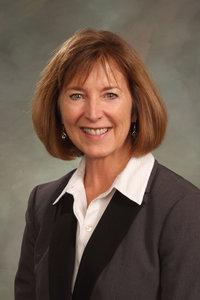
Sponsored bills
Joint Budget Committee. Prior to July 1, 2017, the workers' compensation cash fund was exempt from the maximum reserve for a cash fund, which limits the year-end uncommitted reserves in a cash fund to 16.5% of the amount expended from the cash fund during the fiscal year. The bill once again exempts the workers' compensation cash fund from the maximum reserve.(Note: This summary applies to the reengrossed version of this bill as introduced in the second house.) , Read More
Joint Budget Committee. The bill requires the state treasurer to transfer $19,965,068 from the general fund to the tobacco litigation settlement cash fund on July 1, 2018. This money is allocated for the 2018-19 fiscal year to the programs, services, and funds that receive tobacco litigation settlement money to supplement the allocation of settlement money that those programs, services, and funds will otherwise receive.(Note: This summary applies to the reengrossed version of this bill as introduced in the second house.) , Read More
The bill updates the current newborn screening program to require more timely newborn hearing screenings. The department of public health and environment (department) is authorized to assess a fee for newborn screening and necessary follow-up services. The bill creates the newborn hearing screening cash fund for the purpose of covering the costs of the program. The bill requires the state board of health to promulgate rules: Concerning the requirements of the newborn screening program for genetic and metabolic disorders; Requiring entities with information pertinent to newborn screening to report to the department; and To establish and maintain appropriate follow-up services for newborns at risk of hearing loss and newborns who fail to receive screening. The bill requires the department to develop and publish materials on its website for education and training on cytomegalovirus. The bill appropriates money to the department from: The information technology cash fund for use by the center for health and environmental data for an information and technology system for hearing loss screening; The newborn screening and genetic counseling cash fund for use by the laboratory services division; and The newborn hearing screening cash fund for use by the center for health and environmental data.(Note: This summary applies to the reengrossed version of this bill as introduced in the second house.) , Read More
Joint Budget Committee. For the fiscal year 2018-19, and each fiscal year thereafter, the bill increases the statutorily required general fund reserve from 6.5% to 7.25% of the amount appropriated for expenditure from the general fund. The bill also repeals the following exceptions from the definition of expenditure that is used to calculate the general fund reserve: Rental and other payments under a lease-purchase agreement for real property included in a separate, operating line item; and Money that the state controller credits from the general fund to the capital construction fund or to the principal of the controlled maintenance trust fund.(Note: This summary applies to the reengrossed version of this bill as introduced in the second house.) , Read More
Joint Budget Committee. For the 2018-19 fiscal year, the bill transfers: $71,431,345 from the general fund to the capital construction fund; $15,206,760 from the general fund to the information technology capital account of the capital construction fund; $500,000 from the general fund exempt account of the general fund to the capital construction fund; $30 million from the general fund to the controlled maintenance trust fund; $150,000 from the preservation grant program account of the state historical fund for historical property rehabilitation in the capitol complex; and $495 million from the general fund to the state highway fund if Senate Bill 18-001 does not pass. Of this amount, 25% is allocated to counties, 25% is allocated to municipalities, and 15% is allocated to the multimodal transportation options fund created in the bill.(Note: This summary applies to the reengrossed version of this bill as introduced in the second house.) , Read More
Under existing law, the state board of education (state board) is required to adopt an approved list of reading assessments, and the department of education (department) is required to adopt advisory lists of literacy programming and professional development in literacy. With regard to the list of approved assessments and the advisory lists, the bill: Clarifies that the assessments and literacy programming must be evidence-based or scientifically based and must be aligned with the state academic standards; Directs the state board and the department to review the approved list of assessments every 4 years and the advisory lists of literacy programming and professional development programs every 2 years; Requires the process for appealing the materials placed on the assessment list or the advisory lists to include appeals by school districts, boards of cooperative services, and charter schools (local education providers) and directs the department to consider certain materials provided by appellants; and Requires the department to ensure that the process for reviewing and adding assessments to the approved list and materials to the advisory lists must include consultation with local education providers and be transparent. The existing statutes specify the portion of the early literacy fund that the department must distribute as grants through the early literacy grant program. The bill allows for an increase in the amount distributed through the early literacy grant program. The bill requires a local education provider, upon the request of the department, to provide specific information explaining how the local education provider spent the per-pupil intervention money it received. The bill expands the purposes for which a local education provider may use the per-pupil intervention money and requires the local education provider to use the money for early-grade reading initiatives rather than replacing money received from other sources. The bill directs the state board, in adopting rules for applying for grants through the early literacy grant program, to ensure that rural school districts and small rural school districts, and district and institute charter schools located within rural and small rural school districts, can submit simplified grant applications. The bill directs the state board to award specified percentages of the total amount allocated for the grant program to applications to fund certain types of programs. The bill directs the commissioner of education (commissioner), by September 1, 2018, to convene a working group to review the creation and use of reading-to-ensure-academic-development (READ) plans by local education providers and to recommend any necessary regulatory or implementation changes to continue and improve the use and effectiveness of READ plans. The commissioner must submit a report of the findings and recommendations to the state board and the education committees of the general assembly by February 1, 2020. (Note: This summary applies to the reengrossed version of this bill as introduced in the second house.) Read More
The bill directs the department of education to identify geographic areas within the state and specific subjects for which there is a teacher shortage. Under the bill, a rural school district, rural charter school, or rural board of cooperative services (rural local education provider) and a public or private institution of higher education (institution) may enter into an agreement to provide a teaching fellowship program for students enrolled in the fourth year of the approved educator preparation program. The rural local education provider must be located within an identified area or need a teacher for one of the identified subjects and demonstrate chronic hiring difficulty and financial need; the institution must offer an approved educator preparation program. The agreement must include the commitments of both the rural local education provider and the institution, including the commitments of both the rural local education provider and the institution to jointly design an individualized fellowship plan for each teaching fellow that addresses necessary competencies, the rural local education provider's commitment to extend an offer of employment to the teaching fellow when he or she successfully completes the fellowship year, and the institution's commitment to pay a percentage of a stipend to the teaching fellow during the fellowship year. Each teaching fellow receives a stipend of $10,000 to use for costs of attendance during the fellowship year. The department of higher education, based on the rural local education provider's demonstrated chronic hiring difficulties and financial need, will annually select up to 100 teaching fellows for which the state will provide 50% of the stipend through the state financial assistance program. For these teaching fellows, the institution must provide the remaining 50% from institutional financial assistance. If the teaching fellow receives an offer of employment from the rural local education provider for the 2 school years following completion of the fellowship and does not work for the rural local education provider for those 2 school years, the teaching fellow must repay the amount of the stipend. The rural local education provider and institution must prepare an annual report concerning implementation of the teaching fellowship program and submit it to the department of higher education. The department must prepare a summary report concerning the implementation and effect of the teaching fellowship programs throughout the state and submit the report to the state board of education, the Colorado commission on higher education, and the joint budget committee and education committees of the general assembly. (Note: This summary applies to the reengrossed version of this bill as introduced in the second house.) , Read More
The bill authorizes the creation of early childhood development service districts (districts) to provide services for children from birth through 8 years of age. Early childhood development services are defined to include early care and educational, health, mental health, and developmental services, including prevention and intervention. Districts are authorized to seek voter approval to levy property taxes and sales taxes in the district to generate revenues to provide early childhood development services. The district must be organized pursuant to the 'Special District Act' as modified by the bill. Under the bill, all eligible electors in the proposed district, rather than only property owners, are able to vote on the organization of the district and related ballot issues. The service plan for a proposed district is not required to be submitted to the planning commission for each county in which the special district is proposed to be located, and instead is submitted directly to the board of county commissioners (board) for such counties. In addition, the bill directs that the board shall not accept or act upon the request of a person owning property in the proposed service area to have his or her property excluded from the special district. The court conducting a hearing for the petition is also directed to not accept or act upon such a petition to exclude property from the district. The districts are governed by the 'Special District Act'; except that they are not subject to provisions concerning the inclusion or exclusion of property, procedures for the levy and collection of taxes, the certification and notice of special district taxes for general obligation indebtedness, property tax reduction agreements, and public improvement contracts. A district is authorized to contract with or work with another district or other provider of early childhood development services to provide services throughout the district. (Note: This summary applies to the reengrossed version of this bill as introduced in the second house.) , Read More
Joint Budget Committee. The transitional jobs program is currently set to end on June 30, 2019, and no new transitional jobs are to be offered after December 31, 2018. The bill extends the program for 5 additional years. The bill appropriates money to the department of human services for the program.(Note: This summary applies to the reengrossed version of this bill as introduced in the second house.) , Read More