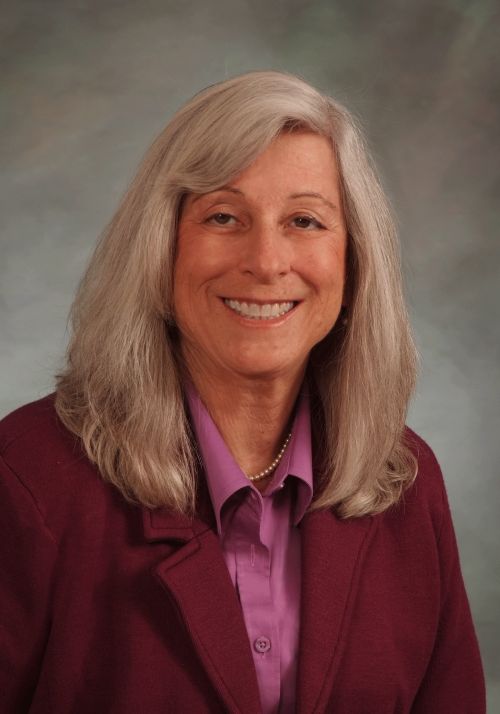
Photo of Lori Goldstein
D Colorado House · District 29 On the 2026 ballot

Rep. Lori Goldstein

Contact Email
Compare
Total votes
582
all sessions
Attendance
100%
2 missed
Higher than 83% of chamber peers
With party
97%
of cast votes
Near the chamber average
Bipartisan score
1%
crosses aisle rarely
Near the chamber average
Sponsored
187
bills & resolutions
Near the chamber average
Committees
2
assignments
187 bills and resolutions

Sponsored bills

Total
187
Primary
23
Co-sponsor
164
This page
187
matching current filters
Co-sponsor HB 1428
Signed into law · Colorado House · Co-sponsor
Administration of Publicly Funded Education Programs

The act requires the department of education (department) to submit a report to the joint budget committee regarding part-time enrichment programs and single- and multi-district online education programs, including online schools, online programs, and supplemental online courses offered by in-person schools.     The act authorizes the department to extend the authorization for the board of cooperative services that is currently administering the statewide supplemental online and blended learning program for up to 2 additional years prior to initiating a new 5-year designation.(Note: This summary applies to this bill as enacted.)

Signed into law Jun 4, 2026 1 co-sponsor
Co-sponsor HB 1357
Signed into law · Colorado House · Co-sponsor
Phase-Out of Teacher Recruitment Education and Preparation Program

The act repeals the teacher recruitment education and preparation program (TREP) after the 2026-27 budget year. The act repeals the teacher recruitment and preparation program and pathways in early technology early college high schools working group on July 1, 2027.     On July 1, 2026, the act requires the state treasurer to transfer $799,200 from the electrifying school buses grant program cash fund to the state education fund. The general assembly declares that TREP may receive funding from the state education fund.     For the 2026-27 state fiscal year, the act caps the amount that a district receives for a student participating in TREP under the school finance formulas at $7,104.     The act increases the cash fund appropriation to the department of education for state share of districts' total program funding and decreases the cash fund appropriation for extended high school in the 2026-27 long bill in order to fund TREP for the 2026-27 state fiscal year. The amount of the changes is contingent on whether House Bill 26-1364, concerning the calculation of the consumer price index for the 2025 calendar year, becomes law.(Note: This summary applies to this bill as enacted.)

Signed into law Jun 4, 2026 1 co-sponsor
Co-sponsor HB 1411
Signed into law · Colorado House · Co-sponsor
Changes to Cover All Coloradans Program

The act limits the benefits pregnant women and children with a certain family household income and citizen or immigration status are eligible for under the state medical assistance program and the medical assistance program.     Eligible pregnant women and children are subject to the following limitations on benefits:Beginning July 1, 2026, there is an annual cap on dental services in the amount of $1,100;Beginning January 1, 2027, behavioral health services offered must be provided on a fee-for-service basis only;Beginning January 1, 2027, services offered through the accountable care collaborative are no longer covered; andBeginning January 1, 2027, managed care services through the medical assistance program are no longer covered.     Beginning January 1, 2027, children under 19 years old whose family household income does not exceed 260% of the federal poverty line, adjusted for family size, and who are not eligible for the medical assistance program due to their immigration status, are not eligible for home- and community-based services, community first choice, long-term home health, private duty nursing, hospice care, and nursing home care unless those children already receive those services on or before December 31, 2026.     Beginning January 1, 2027, the act caps enrollment of children in the state medical assistance program at 25,000 children if either enrollment exceeds 25,000 or the expenditures for a fiscal quarter exceeds one-quarter of the appropriation for state medical assistance plus 5% to account for seasonality fluctuations. If one of the conditions is met, the enrollment cap begins on the first day of the month following 60 days after the department of health care policy and financing (state department) determines that the condition was met.     The act repeals provisions requiring the state department to develop an outreach and enrollment strategy for enrolling eligible groups into new coverage options and repeals the state children's basic health plan.     The act appropriates $3,378,166 from the general fund to the state department to implement the act and reduces appropriations to the state department by $14,202,723 if certain conditions are met.(Note: This summary applies to this bill as enacted.)

Signed into law Jun 4, 2026 1 co-sponsor
Co-sponsor HB 1417
Signed into law · Colorado House · Co-sponsor
Colorado Anti-Discrimination Act Testing Entities

Current law requires a testing entity to provide accommodations for an individual with a disability who is taking an exam for professional licensing. The current definition of 'testing entity' includes a private entity or a state or local governmental entity offering such an exam and having control over testing accommodation decisions.     The act changes the definition of 'testing entity' to include any person, business, or state or local government agency that offers an examination or course related to an application, license, certification, or credential for secondary or postsecondary education, professional, or trade purposes. The act further requires a testing entity to offer the exam or course in a place and manner that is accessible to an individual with a disability or offer an alternative accessible arrangement in order to accommodate an individual with a disability who has met the requirements to receive the accommodation.(Note: This summary applies to this bill as enacted.)

Signed into law Jun 4, 2026 1 co-sponsor
Co-sponsor HB 1345
Signed into law · Colorado House · Co-sponsor
Higher Education Funding Allocation Model Changes

Maddy summaryThis bill updates how Colorado state colleges and universities receive performance-based funding starting in the 2027-28 fiscal year. It renames "performance funding" to "results-informed funding" and modifies the metrics used to calculate these funds, including graduation rates, student retention, and Pell-eligible student enrollment. The legislation also introduces a new definition for "co-located degree partnerships" and excludes students in these programs from certain graduation rate calculations. Additionally, the bill changes how funding components are ordered and removes requirements for sequential calculation of funding amounts.

Signed into law Jun 4, 2026 1 co-sponsor
Primary HB 1276
Signed into law · Colorado House · Lead sponsor
Protect Safety of Individuals Who Are Immigrants

The act exempts Colorado courts' e-filing system from the requirement that users certify that they will not disclose personal identifying information obtained from the system for federal immigration enforcement.     The act authorizes a public health agency to inspect or examine a facility that houses or detains individuals who are noncitizens for purposes of civil immigration proceedings.     Under current law, the department of public health and environment is authorized to inspect facilities that house or detain individuals who are noncitizens for purposes of civil immigration proceedings. The act expands the inspection authority, including the frequency of inspections and things that are subject to inspection. A facility that refuses to allow the inspection is subject to a civil penalty. The department of public health and environment is authorized to set fees for inspections and deposit the money from the fees in the immigration facility inspection and detention cash fund, which is created in the state treasury.     The act authorizes the department of public health and environment to require facilities that house or detain individuals who are noncitizens for purposes of civil immigration proceedings to comply with requirements, including health and safety standards and reporting requirements. A facility that fails to comply is subject to a civil penalty. The act requires the department of public health and environment to submit an annual report to the attorney general concerning facilities' compliance with these new requirements and make the report publicly available on its website.     The act requires the P.O.S.T. board to establish training standards related to peace officer compliance with current laws concerning civil immigration detainers. P.O.S.T.-certified peace officers must complete the training before December 31, 2027.     The act requires the attorney general to develop and make publicly available a policy regarding current laws concerning the protection of personal identifying information.     The act appropriates $107,283 to the department of public health and environment from the immigration facility inspection and detention cash fund.(Note: This summary applies to this bill as enacted.)

Signed into law Jun 4, 2026 0 co-sponsors
Primary HB 1226
Signed into law · Colorado House · Lead sponsor
Manage Emissions from Electric Generating Units

The act requires the division of administration in the department of public health and environment (division), no later than July 2029, to propose a final rule (rule) establishing certain limits on the emission of nitrogen oxides and sulfur dioxide (emission limits) from an electric generating unit (unit) that is owned or operated by an electric utility; is located in the state; and emitted 200 tons or more of nitrogen oxides, or sulfur dioxide, or both in calendar year 2024 (covered unit). The rule must require compliance with the emission limits as soon as practicable after December 31, 2034, and must not cover units that, before December 31, 2029, have ceased operations; burn natural gas, fuel oil, or both only; or have certain systems installed. A unit that operates after December 31, 2034, must install certain pollution controls and comply with the emission limits on or before December 31, 2034.     An owner or operator of a unit is required to provide quarterly emission reports showing compliance with the rule to the division. On August 1, 2029, the air quality control commission in the department of public health and environment (AQCC) must submit to the general assembly a list of any units that are subject to a federal order. If there are any units subject to a federal order, the AQCC must also submit to the general assembly recommendations on whether to amend the requirements for units subject to federal order.     An investor-owned utility or wholesale electric cooperative that is the owner or operator of a unit is required, beginning 150 days after the issuance of a federal order requiring the unit to remain operating after the unit was scheduled to retire (order) and continuing every 90 days until the order is no longer in effect, to file a report with the public utilities commission (commission) that contains certain information about the costs to operate the unit and the amount of electricity generated by the unit. The commission must make these reports publicly available. An investor-owned utility is also permitted to submit an application for a financing order to recover the costs of complying with an order.     Any decision by the commission approving or modifying a portfolio in an electric resource plan of an investor-owned utility serving more than 500,000 customers must approve an amount of accredited capacity that allows the investor-owned utility to reliably achieve certain retirement and carbon dioxide emission reduction requirements. This requirement applies to an investor-owned utility serving more than 500,000 customers until the division determines that the investor-owned utility has achieved certain carbon dioxide emission reductions or until the investor-owned utility has retired all covered units, whichever is later.(Note: This summary applies to this bill as enacted.)

Signed into law Jun 4, 2026 0 co-sponsors
Co-sponsor SB 132
Signed into law · Colorado Senate · Co-sponsor
Voluntary Alcohol Breath Test

Maddy summarySB 132, known as the "Magnus Law," requires Colorado law enforcement officers to offer drivers involved in collisions resulting in death or suspected serious injury the opportunity to voluntarily take a breath test for alcohol. The bill mandates officers provide clear, plain-language advisement that the test is voluntary, refusal carries no penalty, and results cannot be used in court. It applies when officers reasonably suspect the driver was at fault and the driver isn't critically injured, creating a standardized protocol to ensure consistent investigation of potential impairment at serious crash scenes. This change aims to preserve evidence that might otherwise be lost, without altering existing legal standards for driving under the influence.

Signed into law Jun 4, 2026 1 co-sponsor
Co-sponsor HJR 1030
Passed · Colorado House · Co-sponsor
Mono & Matt Road Designation

Maddy summaryThis bill designates a two-mile stretch of Colorado Highway 14 in Weld County as 'Mono & Matt Road' to honor Edwardo 'Mono' Hernandez and Matthew Garcia, two high school basketball players who died in a 2014 traffic accident. The legislation authorizes the Colorado Department of Transportation to install signs for the new name and allows the department to accept donations for this purpose while exploring a cooperative agreement with Weld County for future maintenance. By placing the names on a specific roadway, the bill creates a permanent physical tribute to the students in the location where the accident occurred.

Passed Jun 3, 2026 1 co-sponsor
Co-sponsor HJR 1031
Passed · Colorado House · Co-sponsor
2027 Session Convening Date & Deadlines

Maddy summaryThis bill sets the official start date for Colorado's 2027 legislative session to Monday, January 11, 2027, and establishes a detailed schedule of deadlines for introducing and passing laws. It directly affects state legislators and legislative staff by creating a new set of rules that specify when bills must be filed, introduced, and passed by various committees. The bill includes specific dates for actions such as submitting bill drafts, introducing new legislation, and final passage, with special provisions for school funding bills and appropriation bills. These deadlines are designed to organize the legislative process and ensure timely completion of the session's work.

Passed Jun 3, 2026 1 co-sponsor
Showing 1 to 10 of 187 bills
1 2 3 19 Next