

The act creates the displaced Aurarian scholarship (scholarship) to fully fund scholarships to attend Metropolitan state university of Denver, the university of Colorado at Denver, or the community college of Denver for descendants of people displaced by the development of the Auraria higher education center. The act requires Metropolitan state university of Denver, the university of Colorado at Denver, and the community college of Denver, in collaboration, to establish criteria for scholarship recipients. The act appropriates $2 million from the general fund to the department of higher education to be distributed equally to Metropolitan state university of Denver, the university of Colorado at Denver, and the community college of Denver for the scholarships. (Note: This summary applies to this bill as enacted.)
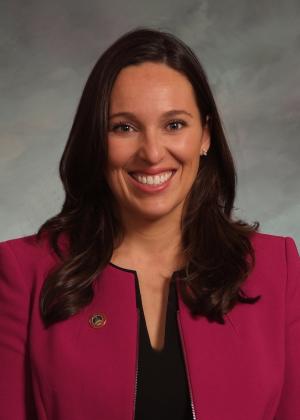
Sponsored bills
The act allows a member of the general assembly who is absent when the general assembly is in session for a long-term illness, parental leave in excess of the permitted maximum period, or another similar purpose, subject to approval by the president of the senate or the speaker of the house of representatives, respective to the member's house, to be exempted from forfeiture of their compensation. Previously, the exemption from forfeiture of compensation was only for an approved absence for a long-term illness. The act also allows a member of the general assembly to receive compensation for an absence due to parental leave for a maximum of 12 weeks, plus up to an additional 4 weeks for a serious health condition related to complications of pregnancy or childbirth. (Note: This summary applies to this bill as enacted.)
Current law declares that a covenant not to compete that restricts the right of any person to receive compensation for performance of labor for any employer is void, with certain exceptions. The act adds exceptions for: A covenant not to compete governing a person who, at the time the covenant not to compete is entered into and at the time it is enforced, earns an amount of annualized cash compensation equivalent to or greater than the threshold amount for highly compensated workers, if the covenant not to compete is for the protection of trade secrets and is no broader than is reasonably necessary to protect the employer's legitimate interest in protecting trade secrets; and A covenant not to solicit customers governing a person who, at the time the covenant is entered into and at the time it is enforced, earns an amount of annualized cash compensation equivalent to or greater than sixty percent of the threshold amount for highly compensated workers if the nonsolicitation covenant is no broader than reasonably necessary to protect the employer's legitimate interest in protecting trade secrets. Additionally, if the employer provides proper notice of the covenant not to compete to the worker or prospective worker, the following covenants are not prohibited: A provision providing for recovery of the expense of educating and training a worker where the training is distinct from normal, on-the-job training, the employer's recovery is limited to the reasonable costs of the training and decreases over the course of the two years subsequent to the training proportionately based on the number of months that have passed since the completion of the training, and recovery for the costs of the training would not violate federal law; A reasonable confidentiality provision relevant to the employer's business that does not prohibit disclosure of information that arises from the worker's general training, knowledge, skill, or experience, whether gained on the job or otherwise, information that is readily ascertainable to the public, or information that a worker otherwise has a right to disclose as legally protected conduct; A covenant for the purchase and sale of a business or the assets of a business; or A provision requiring the repayment of a scholarship provided to an individual working in an apprenticeship if the individual fails to comply with the conditions of the scholarship agreement. The act prohibits an employer from entering into, presenting to a worker or prospective worker as a term of employment, or attempting to enforce any covenant not to compete that is void under the act. An employer who violates this provision is subject to a penalty of $5,000 for each worker or prospective worker, injunctive relief, and actual damages. In a private right of action, an employer may also be required to pay reasonable costs and attorney fees. (Note: This summary applies to this bill as enacted.)
The act requires a state or local government agency (agency), including an institution of higher education, that uses or intends to develop, procure, or use a facial recognition service (FRS) to file with its reporting authority a notice of intent to develop, procure, or use the FRS and specify a purpose for which the technology is to be used. For a state agency, the reporting authority is the office of information technology in the governor's office; for a local government agency, the reporting agency is the city council, county commission, or other local government agency vested with legislative powers. After filing the notice of intent, the agency must produce an accountability report that includes certain information and policies regarding the proposed use of the FRS. The act establishes requirements for the adoption, implementation, disclosure, and updating of accountability reports. The act also requires an agency using an FRS to subject to meaningful human review any decisions that result from such use and produce legal or similarly significant effects concerning individuals. An agency must test the FRS in operational conditions before deploying the FRS in a context in which it will be used to make such decisions. An agency using an FRS must conduct periodic training of all individuals who operate the FRS or who process personal data obtained from the FRS. An agency must maintain records that are sufficient to facilitate public reporting and auditing of compliance with the agency's facial recognition policies. The act also prohibits a law enforcement agency (LEA) from: Using an FRS to engage in ongoing surveillance; conduct real-time or near real-time identification; or start persistent tracking unless the LEA obtains a warrant authorizing such use, such use is necessary to develop leads in an investigation, the LEA has established probable cause for such use, or the LEA obtains a court order authorizing the use of the service for the sole purpose of locating or identifying a missing person or identifying a deceased person; Applying an FRS to any individual based on the individual's religious, political, or social views or activities; participation in a particular noncriminal organization or lawful event; or any other characteristic protected by law; Using an FRS to create a record depicting any individual's exercise of rights guaranteed by the first amendment of the United States constitution and by section 10 of article II of the Colorado constitution; Using the results of an FRS as the sole basis to establish probable cause in a criminal investigation; or Substantively manipulating an image for use in an FRS in a manner not consistent with the FRS provider's intended use and training. An agency must disclose its use of an FRS on a criminal defendant to that defendant in a timely manner prior to trial. In January of each year: Any judge who has issued or extended a warrant for the use of an FRS during the preceding year, or who has denied approval of such a warrant during that year, must report certain information to the state court administrator; and Any agency that has applied for a warrant or an extension of a warrant for the use of an FRS to engage in any surveillance must provide to the agency's reporting authority a report summarizing nonidentifying demographic data of individuals named in warrant applications as subjects of surveillance. The requirements of the act do not apply to: An agency that is required to use a specific FRS pursuant to a federal regulation or order or that uses an FRS in partnership with a federal agency to fulfill a congressional mandate, fulfill aviation security directives, or comply with federal law; that uses an FRS in association with a federal agency to verify the identity of individuals presenting themselves for travel at an airport; or that uses an FRS in connection with a physical access control system in order to grant or deny access to a sterile area of an airport; The use of an FRS solely for research purposes by a state agency, so long as the use does not result in or affect any decisions that produce legal effects concerning individuals or similarly significant effects concerning individuals; or A utility. The act also prohibits a school district or a public school, charter school, or institute charter school from contracting with a vendor for the purchase of, or services related to, an FRS until July 1, 2025. However, the prohibition does not apply to a contract: That was executed before the effective date of the act; or For the purchase of, or for services related to, a generally available consumer product that allows for the analysis of facial features in order to facilitate the user's ability to manage an address book or images for personal or household use. The act also creates a task force for the consideration of FRSs (task force) and requires the task force to examine and report to the joint technology committee of the general assembly concerning the extent to which state and local government agencies are currently using FRSs and provide recommendations concerning the extent to which such agencies should be permitted to continue to do so, including certain specific considerations. The task force must submit a report on or before October 1, 2023, and on or before each October 1 thereafter, to the joint technology committee. The report must include a recommendation as to whether the scope of the issues for study by the task force should be expanded to include consideration of artificial intelligence other than FRSs, or even artificial intelligence itself, and whether the membership of the task force should be adjusted accordingly. The task force is repealed, effective September 1, 2027, subject to a sunset review by the department of regulatory agencies. The act also states that an individual may authorize an agent to access and process the individual's personal data or other information held by a controller and that is otherwise accessible to the individual, and such an authorization does not constitute cybercrime. For the 2022-23 state fiscal year, the act appropriates $11,109 from the general fund to the legislative department. (Note: This summary applies to this bill as enacted.)
The act requires the board of directors (board) of the Colorado health benefit exchange (exchange) to create and implement a consumer outreach campaign (campaign) to educate consumers regarding options for health-care coverage. To pay for the campaign, the amount of the tax credits that the commissioner of insurance is allowed to allocate to insurers that contribute to the exchange increases from $5 million to $9 million for a 6-year period. The board is required to annually report its progress and accounting to the Colorado health insurance exchange oversight committee at the committee's first meeting of the calendar year starting in 2024. The requirements of the act repeal on December 31, 2028. (Note: This summary applies to this bill as enacted.)
The act permits an institution of higher education (institution), or a group of institutions that is managed by a single governing board, that was designated as an enterprise by the institution's or facility's governing body as of January 1, 2021, and that subsequently disqualifies as an enterprise, to qualify and be redesignated as an enterprise without voter approval. The act permits an auxiliary facility, or group of auxiliary facilities with similar functions, that is managed by the governing body of an institution or by the board of directors of the Auraria higher education center that was designated as an enterprise by the institution's or facility's governing body as of January 1, 2021, and that subsequently disqualifies as an enterprise, to qualify and be redesignated as an enterprise without voter approval. The act prohibits a state enterprise that was qualified or created after January 1, 2021, from receiving more than $100,000,000 in revenue from fees and surcharges in its first 5 fiscal years unless approved at a statewide general election. The act repeals the requirement that an election be held based on an enterprise's projected revenue. If a state enterprise has collected $100,000,000 in fees and surcharges in its first 5 fiscal years prior to approval, the state enterprise must stop collecting fees and surcharges. The act clarifies that, for the purpose of applying the approval requirements, enterprises serve primarily the same purpose when they provide the same services in the same geographic area and that the first 5 fiscal years of a state enterprise for the purpose of calculating the $100,000,000 amount are the first 5 state fiscal years since the creation or first qualification of the enterprise. (Note: This summary applies to this bill as enacted.)
The act supports various aspects of early childhood and child care by extending current grant programs and developing new programs by making the following appropriations: $50 million from federal funds from child care development funds for the purposes of implementing the child care sustainability grant program; $16 million from the economic recovery and relief cash fund for the emerging and expanding child care grant program. $10 million from the economic recovery and relief cash fund to implement the employer-based child care facility grant program; $15 million from the economic recovery and relief cash fund to implement the early care and education recruitment and retention grant and scholarship program. Of the $15 million, $5 million must be dedicated for home visiting workforce, early childhood mental health consultants, and early intervention providers. $7.5 million from the economic recovery and relief cash fund to implement the family, friend, and neighbor training and support programs; and One million dollars from the economic recovery and relief cash fund for the purposes of implementing the home visiting grant program. The act creates the family, friend, and neighbor (FFN) support programs, which include an advisory group and a training and support program. The family, friend, and neighbor advisory group is created to advise the department on the needs of FFN providers and to make recommendations on changes to regulations, policies, funding, and procedures that would benefit the FFN community. The family, friend, and neighbor support program is created to allow community-based organizations and nonprofit organizations that have expertise working with FFN providers to provide them with information, training, materials, and technical assistance to support best practices. Subject to available appropriations, the department of early childhood shall make existing state programs available to the FFN community, including, but not limited to, home visitation, early intervention, early childhood mental health, workforce recruitment and retention, and family resource center services. The act creates the home visiting grant program, in which "home visiting" means a voluntary, evidence-based, 2-generation, and home-based prevention program for families with children from prenatal to 6 years of age. The purpose of the home visiting grant program is to support school readiness, social-emotional growth, and age-appropriate child development delivered by a trained home visitor. (Note: This summary applies to this bill as enacted.)
The act creates the "Donor-conceived Persons and Families of Donor-conceived Persons Protection Act" (act). The act defines the following terms, among others: "Assisted reproduction" means a method of causing pregnancy other than sexual intercourse; "Donor" means an individual who produces eggs or sperm collected by a gamete agency, gamete bank, or fertility clinic (ART agency) for use in assisted reproduction; "Donor-conceived person" (DCP) means an individual of any age who was born as a result of assisted reproduction; "Fertility clinic" means an entity or organization that performs assisted reproduction medical procedures and receives donor gametes for a recipient in, or who is a resident of, Colorado, and the recipient and gamete donor are unknown to each other at the time of donation; "Gamete" means unfertilized oocytes or sperm; "Gamete agency" means an oocyte or sperm donor matching agency that is located within or outside of Colorado and matches gamete donors with recipients in, or who are residents of, Colorado, and are unknown to each other at the time of donation; "Gamete bank" means an entity or organization that collects gametes from a donor or receives embryos and provides gametes or embryos to a recipient parent or the parent's medical provider and the recipient and donor are unknown to each other at the time of donation and the parent lives in, or is a resident of, Colorado at the time of donation; "Identifying information" means the donor's full name; the donor's date of birth; and the donor's permanent and, if different, current address or other contact information at the time of the donation, or, if different, the donor's current address or other contact information or both as retained by the ART agency; "Medical history" means information regarding any present physical illness of the donor; past illness of the donor; and social, genetic, and family medical history pertaining to the donor's health; and "Recipient" or "recipient parent" means an individual who receives donor gametes or embryos as an intended parent from an ART agency for use in assisted reproduction for the purpose of conceiving a child. The act requires: An ART agency that, on or after January 1, 2025, collects gametes from a donor or matches a donor with a recipient, or receives gametes from a different ART agency, to collect the donor's identifying information and medical history and make a good-faith effort to maintain current contact information and updates on the donor's medical history by requesting updates from the donor at least once every 3 years; Upon request of a DCP who is 18 years of age or older, or less than 18 years of age but legally emancipated, release of identifying and medical information to the DCP or the DCP's legal parent or guardian. An ART agency shall not match or provide gametes from a donor who does not agree to the identity disclosure when a DCP reaches 18 years of age; An ART agency to collect and securely maintain any records of the donor's identifying information and medical history. The ART agency shall also regularly request at least once every 3 years that a donor provide updates to the donor's contact information and medical history. An ART agency that matches or collects gametes from a donor on or after January 1, 2025, who is unknown to the recipient parent at the time of the donation to provide the donor with information about disclosure of information and obtain a declaration from the donor agreeing to identity disclosure when a DCP reaches 18 years of age; An ART agency to make and submit a proposed plan to the department of public health and environment (department) to permanently maintain records of donor identifying information and medical history, the number of families established with each donor's gametes, and genetic screening and testing in the event of dissolution, insolvency, or bankruptcy. In the case of such event, the gamete bank shall inform by mail and email, sent to the last known address, all gamete donors whose gametes were collected, matched, or received, as well as recipient parents who received gametes or embryos from the gamete bank. That, once an ART agency has record of or should reasonably know that 25 families have been established using a single donor's gametes in or outside of Colorado, with no limit on the number of children conceived by each of the families, the gamete bank shall not match or provide gametes from a donor to additional families. On or before January 1, 2025, the department to develop written materials for intended parents and separate materials for donors. An ART agency is required to ensure that, prior to tissue donation or sale of tissue, each tissue donor and intended recipient receives these written materials. The written materials are not meant to be in lieu of any mental health evaluations. That donors be at least 21 years of age at the time of the donation; On or after January 1, 2025, an ART agency operating in Colorado or providing donor gametes for use in assisted reproduction in Colorado to obtain a license that is conditioned on compliance with the act and its implementing rules; The state board of health (board) to establish a schedule of fees for licensure, with the department collecting the appropriate fee at the time of application for licensure; and The department to revoke licensure and issue fines for violations of the license, act, and implementing rules. The department is allowed to assess a civil penalty for violations of the act. The board is granted rule-making authority for the implementation of the act, with rules to be promulgated on or before July 1, 2024. The donor gamete agency, gamete bank, and fertility clinic fund is created. For the 2022-23 state fiscal year, $192,293 is appropriated to the department from the general fund. (Note: This summary applies to this bill as enacted.)
The act requires a consumer reporting agency to exclude sealed and expunged records from a consumer report, unless the user of the report demonstrates that the user is otherwise required to consider the information pursuant to law. Currently, there is a process that allows for automatic sealing of criminal justice records for certain drug offenses. The act extends automatic sealing to all offenses, including civil infractions, that allow a defendant to petition the court for sealing criminal justice records that are not subject to the victims rights act. The act streamlines the automatic record sealing process. The act allows a district attorney to object to the automatic sealing of a felony offense that is not a drug felony and, if the defendant requests a hearing in that case, the court shall schedule a hearing to determine whether to seal the records. The act requires the state court administrator to produce an annual report regarding automatic record sealing. During the 2023 and 2024 legislative sessions, the judicial department shall report on the progress of its implementation of the automatic sealing created by the act, including as part of the department's SMART act hearing. The act requires district attorneys, in the completion of diversion prior to charges being filed, to seal diversion records without a court order. The act provides that a defendant's and a district attorney's access to sealed records do not require a court order. The act provides the conditions that must be met for a researcher to access sealed records without a court order. The act allows a record to be sealed if a defendant owes fines, court fees, late fees, or other court-ordered fees. The act requires the Colorado bureau of investigation to produce an annual report regarding record sealing. The act makes clarifying and organizational changes to the record sealing statutes. The act appropriates $725,145 from the general fund to the judicial department to implement the act. (Note: This summary applies to this bill as enacted.)
The act repeals an existing income tax credit available to taxpayers who make contributions to enterprise zone administrators to promote temporary, emergency, or transitional housing programs for persons experiencing homelessness (repealed credit) and replaces the repealed credit with a credit that is available in the entire state (new credit). Instead of having enterprise zone administrators and the office of economic development administer the new credit, as was how the old credit was administered, the act places that responsibility on the division of housing in the department of local affairs. A taxpayer may claim the new credit when permissible contributions are made not only to an approved project, but also to an approved nonprofit organization providing certain qualifying activities. The amount of the new credit remains the same as the amount of the repealed credit for each contribution; except that, for contributions made in an underserved, rural county, the amount is 30% rather than 25% and is capped at $750,000 in contributions per income tax year for the nonprofit organization, and, if the nonprofit organization also administers one or more approved projects, is capped at an additional $750,000 per income tax year. The new credit's availability is limited to 4 years, and, as was the case for the repealed credit, any credit in excess of a taxpayer's liability for the income tax year for which the credit is claimed may be carried forward for up to 5 years. (Note: This summary applies to this bill as enacted.)