

In 2022, the general assembly enacted Senate Bill 22-110, concerning a requirement that a wind-powered energy generation facility be equipped with light mitigating technology (technology), to require an owner or operator of a new wind-powered energy generation facility (facility) to install technology at the facility and to obtain federal aviation administration (FAA) approval before installing the technology. An owner or operator of a facility can request from the governing body of the local government in which the facility is located an extension of up to 24 months to install the technology. The act requires the owner or operator of a facility to also obtain federal communications commission (FCC) approval for installation of the technology and requires that a governing body of a local government grant an owner or operator of a facility an extension of time to install the technology if FAA, FCC, or other federal agency approval is delayed. The act also requires that an extension of time granted by the governing body of a local government is at least 24 months in duration.(Note: This summary applies to this bill as enacted.)
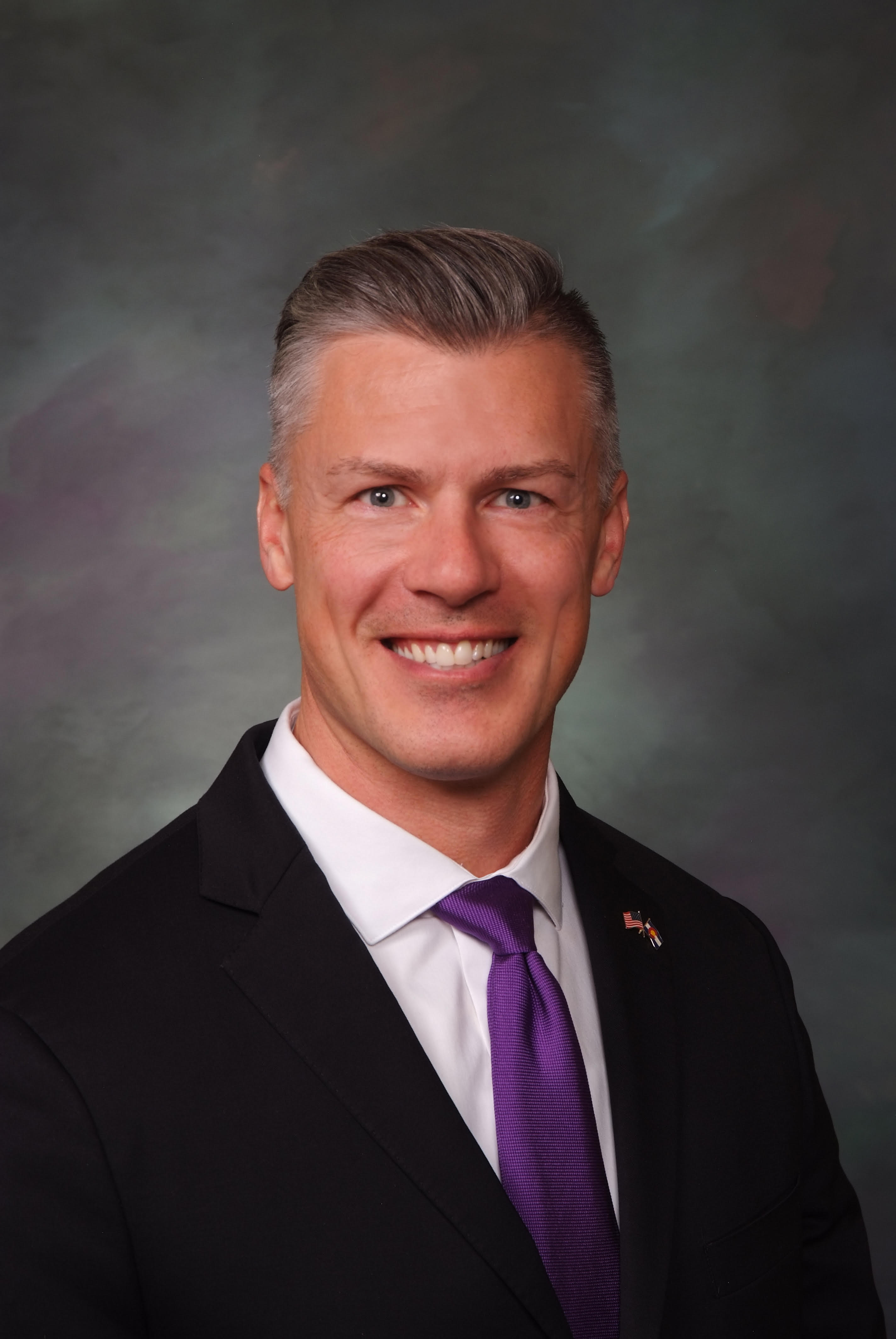
Rep. Dan Woog
Sponsored bills
Maddy summaryThis bill designates a two-mile stretch of Colorado Highway 14 in Weld County as 'Mono & Matt Road' to honor Edwardo 'Mono' Hernandez and Matthew Garcia, two high school basketball players who died in a 2014 traffic accident. The legislation authorizes the Colorado Department of Transportation to install signs for the new name and allows the department to accept donations for this purpose while exploring a cooperative agreement with Weld County for future maintenance. By placing the names on a specific roadway, the bill creates a permanent physical tribute to the students in the location where the accident occurred.
Maddy summaryHR 1007 is a commemorative resolution honoring Colorado's 150th anniversary of statehood in 2026. The bill directly affects the people of Colorado and various government officials by formally recognizing the state's history, culture, and achievements. Its key provisions call on citizens to celebrate this milestone with gratitude and dedication to liberty while committing to preserve natural resources, promote civic education, and strengthen infrastructure. The resolution does not create new laws or funding but serves as a symbolic acknowledgment of the state's legacy and future goals.
The act requires the state treasurer to transfer $1.2 million from the universal high school scholarship cash fund (fund) to the Colorado economic development fund and $2.3 million from the fund to the general fund on June 30, 2026.(Note: This summary applies to this bill as enacted.)
Maddy summaryThis bill is a resolution that formally honors Colorado law enforcement officers for their service and sacrifices. It expresses gratitude for their role in protecting communities and encourages residents to engage with police to build trust. The measure does not create new laws or funding but serves as a public acknowledgment of officers' work and challenges.
The act creates the retail theft prevention advisory board (advisory board) in the division of criminal justice in the department of public safety (division). The advisory board shall develop procedures related to applying for a grant for the retail theft prevention grant program created in the act; review grant applications and award grants; collect and analyze data related to organized felony-level retail theft and gift card fraud trends, losses, prosecutions, and outcomes in Colorado; and develop policy recommendations in coordination with state and federal partners on how to combat felony-level retail theft and gift card fraud. The act creates the retail theft prevention grant program in the division. A state or local law enforcement agency, district attorney's office, multijurisdictional or regional task force, or tribal law enforcement agency may apply for a grant, which may be used to investigate and prosecute organized felony-level retail theft or gift card fraud; develop or invest in technology, data-sharing systems, and analytics tools to analyze felony-level retail theft and gift card fraud metrics; provide training and technical assistance to retailers or law enforcement agencies; and develop prevention and deterrence initiatives specific to felony-level retail theft and gift card fraud. Beginning January 2028, the act requires the division to annually report during its 'SMART Act' hearing certain information about the retail theft prevention grant program and felony-level retail theft in Colorado. The act extends the crime prevention through safer streets grant program (safer streets grant program) to November 1, 2029, and makes the retail theft prevention grant program an allowable use of the money appropriated for the safer streets grant program. On July 1, 2027, $200,000 of the unexpended and unencumbered money remaining at the end of the 2026-27 state fiscal year from the money appropriated for the safer streets grant program reverts to the general fund.(Note: This summary applies to this bill as enacted.)
The act changes terminology related to child prostitution to commercial sexual activity with a child in the crimes of soliciting for child prostitution, pandering of a child, keeping a place of child prostitution, pimping a child, inducement of child prostitution, and patronizing a prostituted child, including changing the name of the offenses for soliciting for child prostitution, keeping a place of child prostitution, inducement of child prostitution, and patronizing a prostituted child. A court is required to sentence an offender convicted of one of the listed offenses, other than soliciting for commercial sexual activity with a child, to at least the minimum of the presumptive range for the level of offense associated with the crime. For an offense of soliciting for commercial sexual activity with a child, if the court sentences the person to probation, the court shall order as a condition of probation that the person serve 364 days in the county jail. In the crime of soliciting for commercial sexual activity with a child, the act adds knowingly soliciting a child for commercial sexual activity as a means of committing the offense and requires that when arranging or offering to arrange a meeting, the offender must know that meeting will facilitate commercial sexual activity with a child. The act removes the spousal exception from the crime of engaging in commercial sexual activity with a child. The act makes the penalty for internet luring of a child a class 3 felony when the offense is committed with the intent to meet for the purpose of engaging in commercial sexual activity. In this circumstance, a court is required to sentence the offender to at least the minimum of the presumptive range for the class 3 felony.(Note: This summary applies to this bill as enacted.)
For purposes of the 'Victim Rights Act', the act prohibits a defendant or alleged offender in the underlying case from being the 'lawful representative' of a victim or the victim's designee if the victim is a child or an at-risk adult. The act creates new rights for a victim under the 'Victim Rights Act', including the right to:Be notified by the district attorney if the district attorney receives a notice that a crime laboratory employee engaged in a wrongful action that includes a crime against the victim and a notice that an evidentiary hearing on post-conviction petition for relief is held;Request to be referred to by an abbreviation, pseudonym, initials, or another preferred name during hearings; andBe heard at a restitution assessment hearing.(Note: This summary applies to this bill as enacted.)
The act defines 'first responder' to include:A peace officer;A firefighter;A volunteer firefighter;An emergency medical service provider; orA mental health professional who responds in a professional capacity to a justifiable medical emergency. Existing law requires the emergency medical and trauma services advisory council (council) to review and approve new rules and modifications to rules prior to the adoption of such rules or modifications by the state board of health. The act requires the council to make recommendations for, instead of approve, rules and modifications to rules concerning emergency medical and trauma services prior to the adoption of such rules or modifications by the state board of health. Beginning January 1, 2027, the act requires the department of health care policy and financing (state department) to reimburse the following entities under the 'Colorado Medical Assistance Act':An ambulance service for ground transportation by an ambulance or other vehicle to a hospital or other destination as deemed appropriate by the ambulance service's medical director;An ambulance service for treatment on the scene of a medical emergency, which treatment does not result in ground transportation; andA qualified provider, an ambulance service, or an agency for evaluation by telemedicine of a person being treated by an ambulance service or an agency for the purpose of preventing the need to transport the person to a hospital.(Note: This summary applies to this bill as enacted.)
The act extends the availability of the conservation easement tax credit from income tax year 2031 through income tax year 2036. The act also prohibits the division of conservation from issuing any additional credit certificates or amending previously issued credit certificates as a result of the additional authority granted by the act for a donation made prior to the effective date of the act.(Note: This summary applies to this bill as enacted.)