

The act repeals the teacher recruitment education and preparation program (TREP) after the 2026-27 budget year. The act repeals the teacher recruitment and preparation program and pathways in early technology early college high schools working group on July 1, 2027. On July 1, 2026, the act requires the state treasurer to transfer $799,200 from the electrifying school buses grant program cash fund to the state education fund. The general assembly declares that TREP may receive funding from the state education fund. For the 2026-27 state fiscal year, the act caps the amount that a district receives for a student participating in TREP under the school finance formulas at $7,104. The act increases the cash fund appropriation to the department of education for state share of districts' total program funding and decreases the cash fund appropriation for extended high school in the 2026-27 long bill in order to fund TREP for the 2026-27 state fiscal year. The amount of the changes is contingent on whether House Bill 26-1364, concerning the calculation of the consumer price index for the 2025 calendar year, becomes law.(Note: This summary applies to this bill as enacted.)
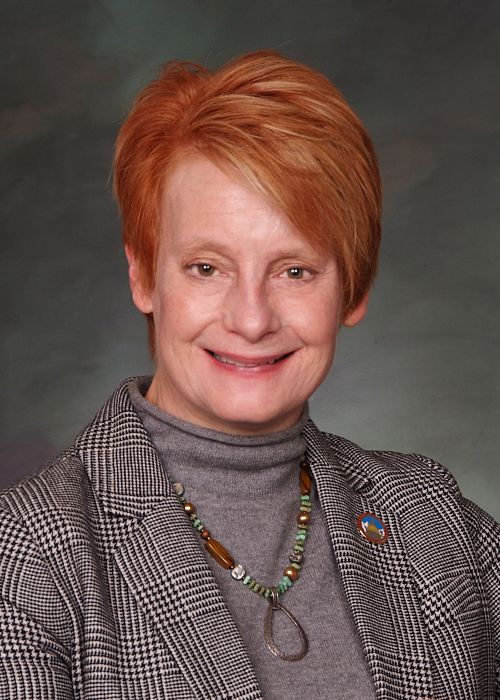
Rep. Amy Paschal
Sponsored bills
The act creates the strengthen Colorado homes enterprise (enterprise), which is a government-owned business created in the division of insurance (division) in the department of regulatory agencies. The enterprise is governed by a 7-member board (board), including the commissioner of insurance (commissioner), or their designee; members with expertise in home hardening, risk mitigation, resilient roof systems, and insurance underwriting or actuarial analysis; and members representing the interests of insurance companies, consumers, and counties. The primary purpose of the enterprise is to impose and collect an annual fee (fee) from an admitted insurance company that offers multiperil homeowner's insurance policies in the state and is subject to certain filing requirements with the division, not including the fair access to insurance requirements association (insurer). The enterprise shall use fee revenue to provide business services to insurers that pay the fee, including:Reducing insurer losses and administrative expenses due to hail damage claims by defraying the cost of retrofitting residential property by providing grants for the installation of resilient roof systems (grants). At least 85% of the fee revenue must be used for grants to Colorado homeowners to retrofit residential property to reduce insurer losses due to hail and windstorms.Analyzing data on hail losses to identify areas of the state to target for installation of resilient roof systems;Setting standards for resilient roof systems and awarding workforce training grants for installing and certifying resilient roof systems;Creating codes of conduct for roofing contractors to ensure roofs are properly and appropriately installed;Evaluating roofing protocols to ascertain if the protocols meet science-based, certifiable standards; Conducting or contracting with a third party to conduct a study to analyze insurance risk in high-risk wildfire areas of the state; andImproving market stability throughout the state. Beginning in the 2027 calendar year, the amount of the fee imposed and collected by the enterprise is an amount equal to 0.5% of the total premium collected by an insurer on multiperil homeowner's insurance policies in the state in the immediately preceding calender year. The insurer shall not surcharge the fee amount to policyholders. The enterprise may lower or cease collecting the fee from an insurer in any calendar year to ensure that total fee revenue does not exceed $100 million in the first 5 years of the enterprise's existence. In awarding grants, the board shall prioritize homes that are the homeowner applicant's (applicant) primary residence and shall consider other criteria, including applicant income, the age of the roof, the size of the home, the number of grant applicants, whether the home is in a locality with hail-resistant building codes, and whether the applicant lives in a location that has historically had a higher susceptibility to extreme weather events. In order to ensure the necessary workforce, fee revenue may also be used to award grants to defray the costs of training and certification related to installing and certifying resilient roof systems. A contractor that is awarded bids and receives money from a grant is prohibited from waiving homeowner's insurance deductibles. In addition, the board shall use fee revenue to conduct or contract with a third party to conduct a study to analyze insurance risk in high-risk wildfire areas of the state, including an analysis of market competition in those areas and the impact of a high risk program on the potential losses in the high-risk wildfire areas of the state and the availability of homeowner's insurance in those areas. The board or third party conducting the study shall engage with relevant stakeholders that include, at a minimum, representatives of reinsurers and reinsurance brokers, insurers writing homeowner's insurance contracts or policies in Colorado, individuals with expertise in complex financial instruments and debt instruments, and consumers or other individuals with expertise in wildfire mitigation. The board shall send the study to certain committees of the general assembly. The board shall adopt rules and policies for the regulation of the enterprise's affairs and the conduct of enterprise business, including standards for resilient roof systems and standards for contractor-specialized training in the installation of impact-resistant roof systems. No sooner than January 1, 2027, and upon the commissioner adopting rules, an insurer offering multiperil homeowner's insurance for property or risks located in the state is required to submit an annual filing to the commissioner that includes the number of policies in force, the number of homes that have installed a resilient roof system, the discount applied to homes due to the presence of a resilient roof system, and the wind and hail claims frequency and severity for homes with and without a resilient roof system. $66,250 is appropriated from the legal services cash fund to the department of law to provide legal services to the department of regulatory agencies to implement the act. The appropriation is from revenue received from the department of regulatory agencies that is continuously appropriated to the department of regulatory agencies from the strengthen Colorado homes enterprise fund. The appropriation to the department of law is based on an assumption that the department of law will require an additional 0.3 FTE to implement the act.(Note: This summary applies to this bill as enacted.)
In 2022, the general assembly enacted Senate Bill 22-110, concerning a requirement that a wind-powered energy generation facility be equipped with light mitigating technology (technology), to require an owner or operator of a new wind-powered energy generation facility (facility) to install technology at the facility and to obtain federal aviation administration (FAA) approval before installing the technology. An owner or operator of a facility can request from the governing body of the local government in which the facility is located an extension of up to 24 months to install the technology. The act requires the owner or operator of a facility to also obtain federal communications commission (FCC) approval for installation of the technology and requires that a governing body of a local government grant an owner or operator of a facility an extension of time to install the technology if FAA, FCC, or other federal agency approval is delayed. The act also requires that an extension of time granted by the governing body of a local government is at least 24 months in duration.(Note: This summary applies to this bill as enacted.)
The act requires the nonemergency medical transportation broker (broker) to establish the transportation community advisory board (TCAB) and requires the state department of health care policy and financing (state department) to collaborate with the TCAB prior to establishing rules and processes for the safety and oversight of nonmedical transportation services and nonemergency medical transportation (NEMT) services. The act requires, in collaboration with the TCAB, certain rules for NEMT the state department must adopt. The state department may impose trip caps or market-share restrictions on a transportation provider (provider) as part of corrective action plan. The act requires providers to use vehicles equipped with 2-way video cameras and a video recording system when transporting members. The act establishes how the broker must roll out their implementation and requires the broker to provide all providers with software, a communication toolkit, training, and technical assistance to facilitate NEMT services. The broker may encourage medicaid members (members) to book transportation services at least 2 days before their requested transportation date, and the broker shall accept and make reasonable efforts to fulfill same-day and next-day transportation requests. The act requires providers, only after all service regions have been implemented, to accommodate member requests for preferred or alternate drivers when operationally feasible. The act requires the broker, and, if there is no broker, the providers to verify that individuals using the transportation services are eligible members during the scheduling of transportation services. The act prohibits the broker from operating, owning, or controlling a provider in Colorado. The act requires the broker to provide their trip assignment rules and procedures to the state department for approval and for publication on the state department's website. The act allows a transportation network company to provide NEMT services when a provider is unavailable. The state department shall ensure all transportation providers, drivers, and vehicles are credentialed, and services provided by noncredentialed drivers or in noncredentialed vehicles are not eligible for reimbursement. The act prohibits the state department from denying payment of services to providers if the provider provides scheduled transportation services in good faith based on the information provided by the broker or if the provider had no knowledge of an inaccuracy and the provider followed all applicable rules and procedures. Subject to available appropriations, the act requires the state department to audit providers and audit the broker annually. The act requires the state department to categorize all NEMT expenditures as medical services and make changes to the NEMT program as necessary to obtain medical services federal match rates for NEMT services. The act also eliminates the requirement that the state department provide transportation services as an administrative cost. The act reduces appropriations to the state department from the general fund by $76,639 and from the healthcare affordability and sustainability hospital provider fee cash fund by $20,941,853.(Note: This summary applies to this bill as enacted.)
Maddy summaryThis bill updates how Colorado state colleges and universities receive performance-based funding starting in the 2027-28 fiscal year. It renames "performance funding" to "results-informed funding" and modifies the metrics used to calculate these funds, including graduation rates, student retention, and Pell-eligible student enrollment. The legislation also introduces a new definition for "co-located degree partnerships" and excludes students in these programs from certain graduation rate calculations. Additionally, the bill changes how funding components are ordered and removes requirements for sequential calculation of funding amounts.
The act exempts Colorado courts' e-filing system from the requirement that users certify that they will not disclose personal identifying information obtained from the system for federal immigration enforcement. The act authorizes a public health agency to inspect or examine a facility that houses or detains individuals who are noncitizens for purposes of civil immigration proceedings. Under current law, the department of public health and environment is authorized to inspect facilities that house or detain individuals who are noncitizens for purposes of civil immigration proceedings. The act expands the inspection authority, including the frequency of inspections and things that are subject to inspection. A facility that refuses to allow the inspection is subject to a civil penalty. The department of public health and environment is authorized to set fees for inspections and deposit the money from the fees in the immigration facility inspection and detention cash fund, which is created in the state treasury. The act authorizes the department of public health and environment to require facilities that house or detain individuals who are noncitizens for purposes of civil immigration proceedings to comply with requirements, including health and safety standards and reporting requirements. A facility that fails to comply is subject to a civil penalty. The act requires the department of public health and environment to submit an annual report to the attorney general concerning facilities' compliance with these new requirements and make the report publicly available on its website. The act requires the P.O.S.T. board to establish training standards related to peace officer compliance with current laws concerning civil immigration detainers. P.O.S.T.-certified peace officers must complete the training before December 31, 2027. The act requires the attorney general to develop and make publicly available a policy regarding current laws concerning the protection of personal identifying information. The act appropriates $107,283 to the department of public health and environment from the immigration facility inspection and detention cash fund.(Note: This summary applies to this bill as enacted.)
The act requires the division of administration in the department of public health and environment (division), no later than July 2029, to propose a final rule (rule) establishing certain limits on the emission of nitrogen oxides and sulfur dioxide (emission limits) from an electric generating unit (unit) that is owned or operated by an electric utility; is located in the state; and emitted 200 tons or more of nitrogen oxides, or sulfur dioxide, or both in calendar year 2024 (covered unit). The rule must require compliance with the emission limits as soon as practicable after December 31, 2034, and must not cover units that, before December 31, 2029, have ceased operations; burn natural gas, fuel oil, or both only; or have certain systems installed. A unit that operates after December 31, 2034, must install certain pollution controls and comply with the emission limits on or before December 31, 2034. An owner or operator of a unit is required to provide quarterly emission reports showing compliance with the rule to the division. On August 1, 2029, the air quality control commission in the department of public health and environment (AQCC) must submit to the general assembly a list of any units that are subject to a federal order. If there are any units subject to a federal order, the AQCC must also submit to the general assembly recommendations on whether to amend the requirements for units subject to federal order. An investor-owned utility or wholesale electric cooperative that is the owner or operator of a unit is required, beginning 150 days after the issuance of a federal order requiring the unit to remain operating after the unit was scheduled to retire (order) and continuing every 90 days until the order is no longer in effect, to file a report with the public utilities commission (commission) that contains certain information about the costs to operate the unit and the amount of electricity generated by the unit. The commission must make these reports publicly available. An investor-owned utility is also permitted to submit an application for a financing order to recover the costs of complying with an order. Any decision by the commission approving or modifying a portfolio in an electric resource plan of an investor-owned utility serving more than 500,000 customers must approve an amount of accredited capacity that allows the investor-owned utility to reliably achieve certain retirement and carbon dioxide emission reduction requirements. This requirement applies to an investor-owned utility serving more than 500,000 customers until the division determines that the investor-owned utility has achieved certain carbon dioxide emission reductions or until the investor-owned utility has retired all covered units, whichever is later.(Note: This summary applies to this bill as enacted.)
Maddy summarySB 132, known as the "Magnus Law," requires Colorado law enforcement officers to offer drivers involved in collisions resulting in death or suspected serious injury the opportunity to voluntarily take a breath test for alcohol. The bill mandates officers provide clear, plain-language advisement that the test is voluntary, refusal carries no penalty, and results cannot be used in court. It applies when officers reasonably suspect the driver was at fault and the driver isn't critically injured, creating a standardized protocol to ensure consistent investigation of potential impairment at serious crash scenes. This change aims to preserve evidence that might otherwise be lost, without altering existing legal standards for driving under the influence.
Maddy summaryHJR 1028 is a joint resolution that declares the Colorado House of Representatives' intent to honor a $2 million investment in school funding studies by creating a multi-year plan to address their findings. The bill directs the legislature to review the recommendations from two recent studies, which found that current school funding levels are inadequate and teacher salaries are too low, and to decide which study's methodology to follow for implementation. It requires the development of a structured plan that includes revenue triggers to phase in changes aimed at improving school funding equity and teacher compensation.
Maddy summaryHR 1007 is a commemorative resolution honoring Colorado's 150th anniversary of statehood in 2026. The bill directly affects the people of Colorado and various government officials by formally recognizing the state's history, culture, and achievements. Its key provisions call on citizens to celebrate this milestone with gratitude and dedication to liberty while committing to preserve natural resources, promote civic education, and strengthen infrastructure. The resolution does not create new laws or funding but serves as a symbolic acknowledgment of the state's legacy and future goals.