

Revenue Classification Taxpayers Bill of Rights
Summary
Section 20 of article X of the state constitution (the Taxpayer's Bill of Rights or TABOR) defines 'fiscal year spending' as excluding 'collections for another government' and 'damage awards'. Although TABOR does not define either 'collections for another government' or 'damage awards', the TABOR implementing statutes define both terms. The act clarifies both of these definitions for state fiscal years commencing on or after July 1, 2025. The act clarifies that 'collections for another government', as used for the purpose of determining whether specific money received by the state is subject to the TABOR limitation on state fiscal year spending, includes:Revenue from the excise tax and sales and use tax on gasoline used as fuel for the propulsion of specified aircraft that is collected by the state and distributed to governmental or airport entities operating a federal aviation administration-designated public use airport; andRevenue from fees that are collected by the department of public safety for the purpose of criminal history record checks and that is transmitted to the federal bureau of investigation for a required federal component of such criminal history record checks. The act also clarifies that 'damage award', as used for the purpose of determining whether specific money received by the state is subject to the TABOR limitation on state fiscal year spending, includes money from certain sources that is deposited in the crime victim compensation fund of each judicial district. The act specifies that for fiscal years commencing on or after July 1, 2026, the general assembly shall appropriate money to the district attorney in each judicial district in an amount equal to 20% of the total amount of money in the fund in that judicial district for administrative costs and to the court executive in each judicial district in an amount equal to 2.5% of the total amount of money in the fund in that judicial district for administrative costs. For the 2026-27 state fiscal year, the act appropriates $2,250,000 from the general fund to the judicial department for use by state courts administration for victim's compensation administration.(Note: This summary applies to this bill as enacted.)
Bill status
signed
all 5 stages cleared
Introduction
Jan 2026
Committee Review
May 2026
Senate Passage
May 2026
House Passage
May 2026
Signed into Law
May 2026
Introduced Jan 27, 2026
Signed May 29, 2026
Maddy AI version diff · 5 comparisons
What changed between versions
Rerevised
→
Final Act
·
4 edits
·
May 21, 2026
MODERATE
This bill clarifies which specific types of state revenue are exempt from TABOR spending limits under the constitutional categories of 'collections for another government' and 'damage awards.' It updates statutory definitions to explicitly include aviation fuel taxes and federal criminal background check fees as exempt collections, while also establishing new effective dates for these changes.
Scope change
The bill expands the scope of exempt revenue by adding specific aviation fuel taxes and federal background check fees to the list of 'collections for another government,' and it narrows the scope of 'damage awards' by setting a future start date for their inclusion in the definition.
DEFINITION
Added specific aviation fuel excise and sales taxes to the definition of 'collections for another government' to ensure they are exempt from TABOR spending limits.
Added federal criminal history record check fees transmitted to the FBI to the definition of 'collections for another government'.
Added new statutory definitions for 'collections for another government' and 'damage awards' to clarify how these terms apply to state fiscal year spending calculations.
TIMELINE
Set July 1, 2023, as the effective date for the general definition of 'collections for another government' and July 1, 2024, as the effective date for the inclusion of 'damage awards' in the definition.
Floor votes
How they voted
This bill passed the Senate by voice vote (no roll call recorded).
Full legislative history
Actions timeline
Total actions
15
Key actions
7
Committee
4
Amendments
1
May 29, 2026
Signed into law
Governor Signed
executive
May 22, 2026
Lower · Passed
Signed by the Speaker of the House
lower
May 22, 2026
Upper · Passed
Signed by the President of the Senate
upper
May 13, 2026
Introduced
Senate Considered House Amendments - Result was to Concur - Repass
upper
May 9, 2026
Lower · Passed
House Third Reading Passed - No Amendments
lower
May 8, 2026
Lower · Passed
House Committee on Appropriations Refer Amended to House Committee of the Whole
lower
Apr 27, 2026
Committee
House Committee on Finance Refer Amended to Appropriations
lower
Apr 22, 2026
Introduced
Introduced In House - Assigned to Finance
lower
Apr 22, 2026
Upper · Passed
Senate Third Reading Passed - No Amendments
upper
Apr 21, 2026
Upper · Passed
Senate Committee on Appropriations Refer Amended to Senate Committee of the Whole
upper
Feb 10, 2026
Committee
Senate Committee on Finance Refer Amended to Appropriations
upper
Jan 27, 2026
Introduced
Introduced In Senate - Assigned to Finance
upper
4 primary · 16 co-sponsors
Sponsors
Role
Legislator
Party
State
District
P

Emily Sirota
DDemocratic
P

Judy Amabile
DDemocratic
P

Mike Weissman
DDemocratic
P

Yara Zokaie
DDemocratic
Co
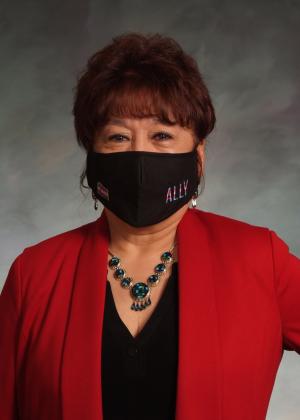
Adrienne Benavidez
DDemocratic
Co

Andy Boesenecker
DDemocratic
Co

Cathy Kipp
DDemocratic
Co
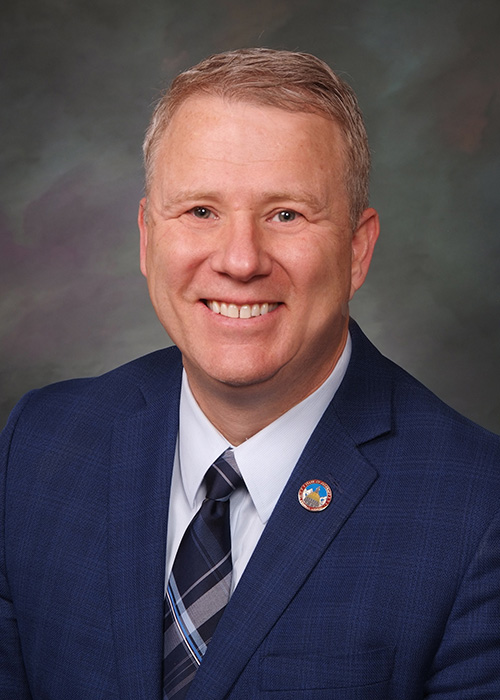
Chris Kolker
DDemocratic
Co

Iman Jodeh
DDemocratic
Co

James Coleman
DDemocratic
Co

Javier Mabrey
DDemocratic
Co

Jennifer Bacon
DDemocratic
Co
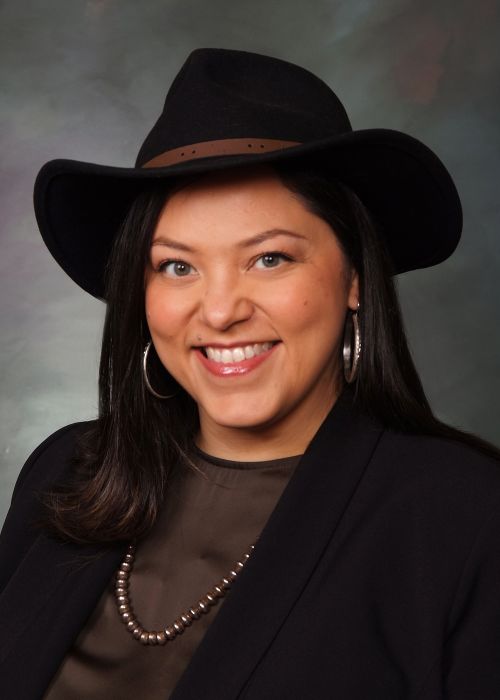
Julie Gonzales
DDemocratic
Co

Julie McCluskie
DDemocratic



Ask Maddy
·
AI policy assistant
Ask Maddy about SB 42
Scope: CO
Hi! I can help you understand SB 42. What would you like to know?
Try one of these
i
Maddy answers using official bill text and legislative records. Always verify before sharing.
Sources cited inline