SB 142 Colorado Senate · 2026 Regular Session

Development of Thermal Energy Resources

Summary
The act authorizes a local government or a special district (local government) to enter into an agreement with one or more entities for the purpose of providing the local government with service from a thermal energy network. A local government that is authorized by law to issue bonds may issue bonds for the purpose of financing thermal energy infrastructure, interconnections, or customer connections within the jurisdiction of the local government.     The act increases the net electric generating capacity of a community geothermal garden from 5 megawatts to 25 megawatts.     The act requires the Colorado energy and carbon management commission (commission) and the Colorado geological survey to collect data and information related to geological resources in the state. The commission shall make recommendations to encourage safe and effective development of geothermal resources and report those recommendations to the general assembly on or before November 15, 2026.     The act requires investor-owned electric utilities (utilities) to identify small-scale geothermal projects and large-scale geothermal projects (geothermal projects). The utility must solicit proposals for the development of small-scale geothermal projects of up to 25 megawatts of net electric generating capacity and large-scale geothermal projects that are greater than 25 megawatts of net electric generating capacity. The utility shall submit applications for the development of the geothermal projects to the public utilities commission if the utility receives a bid in response to the request for proposals. The public utilities commission must review the application and approve, conditionally approve, deny, or modify the application within 120 days after receiving the application.(Note: This summary applies to this bill as enacted.)
Bill status signed all 5 stages cleared
Introduction
Mar 2026
Committee Review
Apr 2026
Senate Passage
May 2026
House Passage
May 2026
Signed into Law
Jun 2026
Introduced Mar 19, 2026 Signed Jun 1, 2026
Maddy AI version diff · 6 comparisons

What changed between versions

Final Act Signed Act · 5 edits · Jun 2, 2026
MODERATE
This bill amends the Colorado Revised Statutes to formally define and expand the authority for local governments to aggregate thermal energy demand and operate thermal energy networks. It clarifies that these local entities and private operators are not considered public utilities, thereby exempting them from regulation by the Public Utilities Commission. The changes also establish specific rules for financing these projects through revenue or general obligation bonds and allow local governments to provide thermal energy services to participants located outside their jurisdictional boundaries.
Scope change
The bill expands the scope of local government authority to include explicit powers for aggregating thermal energy demand and entering into service agreements, while simultaneously narrowing regulatory oversight by excluding these specific activities from Public Utilities Commission jurisdiction.
DEFINITION

Added precise definitions for 'thermal energy service agreement' and clarified the meaning of 'thermal energy' and 'thermal energy network' within the statute.

ELIGIBILITY

Granted local governments explicit authority to aggregate thermal energy demand from both public buildings and private entities that choose to participate.

REGULATION

Modified the regulatory framework by stating that local governments aggregating thermal energy and private operators managing these networks are not considered public or municipal utilities.

ADDED

Added provisions allowing local governments to provide thermal energy services to participants located outside their own jurisdictional boundaries.

FISCAL

Added specific authorization for local governments to issue revenue bonds or general obligation bonds to finance the design, construction, and operation of thermal energy network infrastructure.

Floor votes

How they voted

This bill passed the Senate by voice vote (no roll call recorded).
Full legislative history

Actions timeline

Total actions
13
Key actions
7
Committee
2
Amendments
1
Jun 1, 2026
Signed into law
Governor Signed
executive
May 22, 2026
Lower · Passed
Signed by the Speaker of the House
lower
May 22, 2026
Upper · Passed
Signed by the President of the Senate
upper
May 5, 2026
Introduced
Senate Considered House Amendments - Result was to Concur - Repass
upper
May 4, 2026
Lower · Passed
House Third Reading Passed - No Amendments
lower
Apr 30, 2026
Lower · Passed
House Committee on Energy & Environment Refer Amended to House Committee of the Whole
lower
Apr 28, 2026
Introduced
Introduced In House - Assigned to Energy & Environment
lower
Apr 28, 2026
Upper · Passed
Senate Third Reading Passed - No Amendments
upper
Apr 22, 2026
Upper · Passed
Senate Committee on Transportation & Energy Refer Amended to Senate Committee of the Whole
upper
Mar 19, 2026
Introduced
Introduced In Senate - Assigned to Transportation & Energy
upper
4 primary · 25 co-sponsors

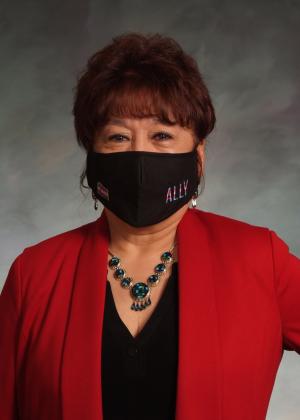
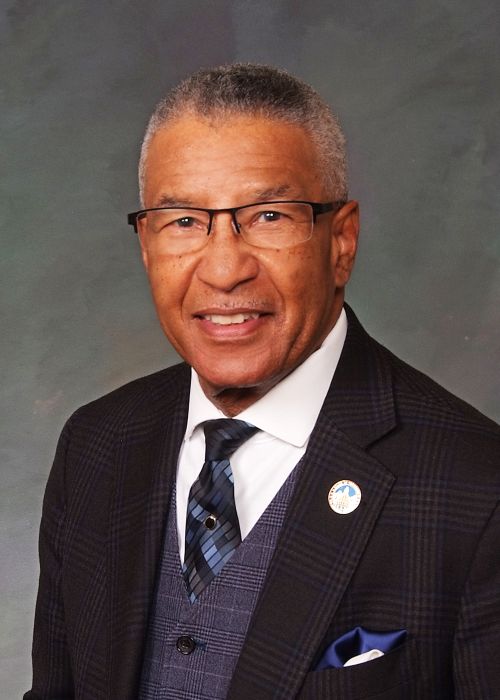
Sponsors