

Colorado Artist Companies
Summary
The act creates the 'Colorado Artist Company Act', which authorizes a person in the state to create a limited liability company with a stated artistic mission (artist company), which artist company is subject to state law applicable to limited liability companies except where specified in the act. An artist company must state its artistic mission in its articles of organization or operating agreement and be formed and owned by one or more individuals that create works of authorship or artistic expression comprising written, oral, visual, graphic, literary, musical, audiovisual, digital, or performing art in any medium (artists). Artists must own not less than 51% of all voting securities of the artist company at all times (required ownership percentage). A limited liability company that meets the required ownership percentage may elect to become an artist company by amending its articles of organization or its operating agreement to state its artistic mission and by complying with certain other requirements. A person may form an artist company by filing with the Colorado secretary of state articles of organization. The articles of organization may specify certain ownership, governance, artistic work distribution, tax treatment, and dissolution structures. An artist company may accept capital in any form and its members and managers have certain duties specified in the artist company's articles of organization or operating agreement along with the duties imposed by state law applicable to limited liability companies. Members of an artist company may assign or exclusively license intellectual property to an artist company as an in-kind capital contribution. An artist company's articles of organization or operating agreement may require artist-members to assign or exclusively license to the artist company artistic work created during membership that relates to the artistic mission of the artist company. An artist company's articles of organization or operating agreement may provide for certain procedures and terms regarding the admission and departure of members. An artist company may elect at formation, or at the time of election to become an artist company, to be a public benefit artist company (public benefit artist company) by stating in its articles of organization or operating agreement, if any, that it is a public benefit artist company and setting forth in its articles of organization or operating agreement, if any, one or more specific public benefits to be promoted by the artist company. The members and managers of a public benefit artist company are subject to certain additional duties. A public benefit artist company must provide its members and donors with an annual statement specifying certain information as to the public benefits and artistic mission of the public benefit artist company. Upon the dissolution of an artist company or public benefit artist company, artistic work assigned or licensed by artist-members to the artist company or created by artist-members of the artist company reverts to the artist-member, except as specified in the articles of organization or operating agreement and subject to certain security interests, licenses, and obligations. After giving effect to artistic work reversionary rights, the assets of the artist company must be distributed in accordance with the articles of organization or operating agreement or, if not specified in the articles of organization or operating agreement, pro rata to members based on ownership percentages. $93,878 is appropriated from the department of state cash fund to the department of state. To implement this act, the department of state may use the appropriation as follows:$5,478 for use by the business and licensing division for personal services; and$88,400 for use by the information technology division for personal services.(Note: This summary applies to this bill as enacted.)
Bill status
signed
all 5 stages cleared
Introduction
Mar 2026
Committee Review
May 2026
Senate Passage
May 2026
House Passage
May 2026
Signed into Law
Jun 2026
Introduced Mar 4, 2026
Signed Jun 2, 2026
Maddy AI version diff · 5 comparisons
What changed between versions
Rerevised
→
Final Act
·
5 edits
·
May 20, 2026
MODERATE
The bill was transitioned from a draft version to a final act, incorporating amendments that expanded the list of sponsors and finalized the legal text. The core policy changes include establishing a new 'Colorado Artist Company Act' that creates a specific legal framework for limited liability companies focused on artistic missions. Key additions define 'artist' and 'artistic mission' broadly, mandate that artists own at least 51% of voting securities, and allow these companies to prioritize artistic goals over financial ones.
Scope change
The bill now applies to limited liability companies that formally elect to be governed by this new part of the statutes, expanding the scope to include existing LLCs that wish to convert to artist companies.
DEFINITION
Added specific legal definitions for 'artist', 'artist company', 'artistic mission', and 'public benefit' to clarify the scope of the new entity type.
REQUIREMENT
Established a mandatory requirement that artists must own at least 51% of all voting securities of the company at all times.
Allowed artist companies to specify in their articles of organization that their artistic mission has primacy over financial objectives.
ADDED
Introduced a mechanism for existing limited liability companies to convert into artist companies by amending their articles of organization.
TECHNICAL
Updated the bill header and sponsorship lists to reflect the final adoption by the Senate and House, replacing draft session information.
Floor votes
How they voted
This bill passed the Senate by voice vote (no roll call recorded).
Full legislative history
Actions timeline
Total actions
18
Key actions
7
Committee
4
Amendments
1
Jun 2, 2026
Signed into law
Governor Signed
executive
May 21, 2026
Lower · Passed
Signed by the Speaker of the House
lower
May 21, 2026
Upper · Passed
Signed by the President of the Senate
upper
May 13, 2026
Introduced
Senate Considered House Amendments - Result was to Concur - Repass
upper
May 11, 2026
Lower · Passed
House Third Reading Passed - No Amendments
lower
May 8, 2026
Lower · Passed
House Committee on Appropriations Refer Unamended to House Committee of the Whole
lower
May 6, 2026
Committee
House Committee on Business Affairs & Labor Refer Amended to Appropriations
lower
Apr 22, 2026
Introduced
Introduced In House - Assigned to Business Affairs & Labor
lower
Apr 22, 2026
Upper · Passed
Senate Third Reading Passed - No Amendments
upper
Apr 21, 2026
Upper · Passed
Senate Committee on Appropriations Refer Amended - Consent Calendar to Senate Committee of the Whole
upper
Apr 9, 2026
Committee
Senate Committee on Business, Labor, & Technology Refer Unamended to Appropriations
upper
Mar 4, 2026
Introduced
Introduced In Senate - Assigned to Business, Labor, & Technology
upper
4 primary · 38 co-sponsors
Sponsors
Role
Legislator
Party
State
District
P

Jeff Bridges
DDemocratic
P

Marc Catlin
RRepublican
P

Matt Martinez
DDemocratic
P

Rick Taggart
RRepublican
Co
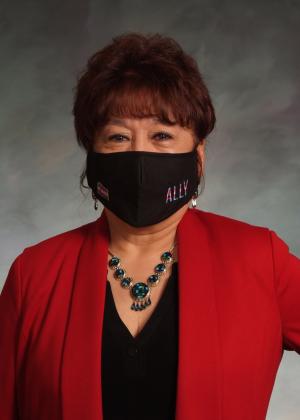
Adrienne Benavidez
DDemocratic
Co

Amy Paschal
DDemocratic
Co

Andy Boesenecker
DDemocratic
Co

Barbara Kirkmeyer
RRepublican
Co

Brianna Titone
DDemocratic
Co

Cathy Kipp
DDemocratic
Co
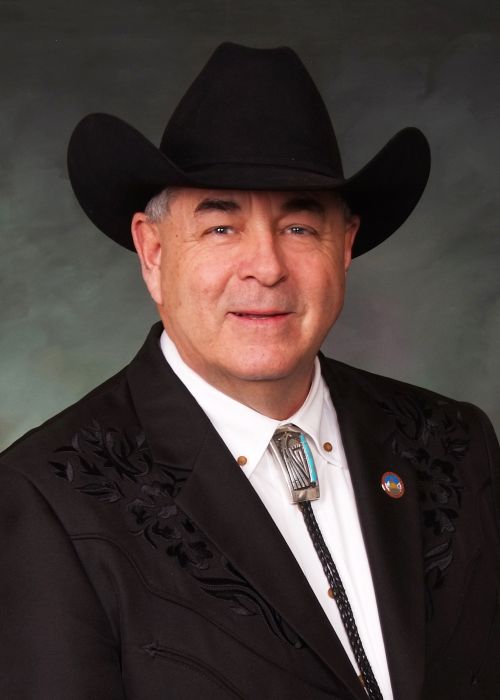
Cleave Simpson
RRepublican
Co

Eliza Hamrick
DDemocratic
Co

Emily Sirota
DDemocratic
Co

Gretchen Rydin
DDemocratic























Ask Maddy
·
AI policy assistant
Ask Maddy about SB 133
Scope: CO
Hi! I can help you understand SB 133. What would you like to know?
Try one of these
i
Maddy answers using official bill text and legislative records. Always verify before sharing.
Sources cited inline