

Large Employer Worker Health-Care Support
Summary
The bill creates the large employer health-care support enterprise (enterprise) to impose, assess, and collect the large employer health-care support fee (enterprise fee) in the amount of $2,300 for each supported worker for the calendar year in an amount determined by the enterprise board (enterprise board) that reflects the costs of the services provided by the enterprise . A worker who is receiving medical assistance benefits under the state medical assistance program, except for a worker eligible for medical assistance benefits based on disability, is a supported worker (supported worker). An employer is subject to the enterprise fee if the employer is a large employer, which is defined in the bill as an employer that has 500 or more supported workers (large employer). An employer is exempted from paying the enterprise fee if the employer:Provides affordable health coverage to all workers working 20 or more hours per week or 80 or more hours per month;Is a franchisee of the employer;Is a nonprofit employer;Is a public employer; orHas a collective bargaining agreement with its employees that includes health-care coverage. The business purpose s of the enterprise are to use enterprise fee revenue to help large employers retain supported workers who are not provided employer-sponsored affordable health coverage by using enterprise fee revenue to:Help finance the costs for medical assistance benefits for large employers' supported workers ; and Provide reimbursement grants to large employers for some or all of an employer's costs incurred for allowing a worker to buy into an employer-sponsored health benefit plan, should the employer choose to participate in the worker buy-in program created in the bill.This These business service s reduce s lost productivity due to worker illness and training costs to replace workers who may otherwise seek employment that provides affordable health coverage. Starting with a review of the 2027 calendar year, the department of health care policy and financing (HCPF) every employer that employed 500 or more workers in the state shall prepare an annual employer report on or before January 31, 2028, and on or before the same date each year thereafter, that includes information about the employer's employees, including the employee's name, date of birth, hours worked, and dates of employment for the preceding calendar year. An employer may seek an exemption from the requirement to file the annual employer report by demonstrating that it provides affordable health coverage to all workers working 20 or more hours per week or 80 or more hours per month. Upon receipt of the annual employer report, the enterprise shall determine whether an employer is a large employer and shall issue a report by March of the following same calendar year that identifies large employers by their number of supported workers for the preceding calendar year and impose the enterprise fee on each large employer . An employer may contest the employer's identification as a large employer. Once identified, a large employer shall either pay the enterprise fee for each of the large employer's supported workers or demonstrate that it provides will offer affordable health coverage to all workers working 20 or more hours per week or 80 or more hours per month. The enterprise may adjust the amount of the enterprise fee to reflect the cost of the services, for inflation, or for other reasons. A large employer commits a petty offense and is subject to a civil penalty for The enterprise shall contract with the department of revenue to collect and enforce the payment of the enterprise fee on behalf of the enterprise, including the failure to provide information necessary to calculate the enterprise fee or to either timely pay the enterprise fee or demonstrate that the large employer offers affordable health coverage as specified in the bill. The department of revenue may collect interest and penalties and institute collection actions on behalf of the enterprise. Enterprise revenue is used to support the pay for payment of medical assistance benefits for working-age adults under the state medical assistance program, and to increase reimbursement rates for ensure access to health-care providers providing medical assistance program services, to ensure worker access to medical services and to pay for large employer reimbursement grants under the worker buy-in program for large employers that pay the enterprise fee. The enterprise is governed by the enterprise board, and the enterprise board shall report annually to the general assembly on the enterprise revenue and the enterprise's use of the enterprise revenue in support of large employers. If the enterprise determines that the enterprise to would receive more than $100 million dollars in its first 5 fiscal years, the state treasurer shall credit the additional fee revenue to the large employer fee cash fund created in the state treasury for administration by HCPF, and that fee revenue is subject to the state fiscal year spending limit imposed by section 20 of article X of the state constitution and the excess revenues cap. The money in the large employer fee cash fund shall be used by HCPF to pay for costs for medical assistance benefits to support large employers' supported workers enterprise shall reduce the amount of the enterprise fee.(Note: Italicized words indicate new material added to the original summary; dashes through words indicate deletions from the original summary.)(Note: This summary applies to the reengrossed version of this bill as introduced in the second house.)
Bill status
passed
3 of 5 stages cleared
Introduction
Mar 2026
Committee Review
May 2026
House Passage
May 2026
Senate Passage
Governor
Introduced Mar 9, 2026
Last action May 7, 2026
Maddy AI version diff · 2 comparisons
What changed between versions
Engrossed
→
Reengrossed
·
3 edits
·
May 5, 2026
MINOR
The bill title was updated from 'Engrossed' to 'Reengrossed' to reflect that it now includes all amendments adopted during the House of Introduction. The sponsor list was expanded to include four new legislators: Lindsay, Nguyen, Ricks, and Zokaie. A new section was added explaining that the current summary applies to the bill as introduced and will be updated later for the reengrossed version. Additionally, a significant portion of the bill's original text regarding worker productivity and employer health care investments was removed.
Scope change
The bill's scope appears to have narrowed or been restructured, as a substantial section detailing the rationale for worker retention and employer health care investments was deleted.
REQUIREMENT
Deleted a section explaining that the state's investment in health care supports large employers' decisions to hold down hours and wages, which reduced costs.
TECHNICAL
Added a notice stating the current summary applies to the bill as introduced and will be updated for the reengrossed version.
ELIGIBILITY
Expanded the list of House sponsors to include Lindsay, Nguyen, Ricks, and Zokaie.
Floor votes · House May 5, 2026
How they voted
34–30
Passed
Total votes 64
May 5, 2026
D
Democratic42
80% Yea
R
Republican22
100% Nay
Vote distribution
All Yea
All Nay
Mixed
No data
Full legislative history
Actions timeline
Total actions
8
Key actions
3
Committee
4
May 7, 2026
Upper · Passed
Senate Committee on Finance Postpone Indefinitely
upper
May 5, 2026
Introduced
Introduced In Senate - Assigned to Finance
upper
May 5, 2026
Lower · Passed
House Third Reading Passed - No Amendments
lower
May 1, 2026
Lower · Passed
House Committee on Appropriations Refer Amended to House Committee of the Whole
lower
Mar 30, 2026
Committee
House Committee on Finance Refer Amended to Appropriations
lower
Mar 24, 2026
Committee
House Committee on Health & Human Services Refer Amended to Finance
lower
Mar 9, 2026
Introduced
Introduced In House - Assigned to Health & Human Services
lower
15 primary · 3 co-sponsors
Sponsors
Role
Legislator
Party
State
District
P

Brianna Titone
DDemocratic
P

Chad Clifford
DDemocratic
P

Elizabeth Velasco
DDemocratic
P

Gretchen Rydin
DDemocratic
P

Jennifer Bacon
DDemocratic
P

Kyle Brown
DDemocratic
P

Kyle Mullica
DDemocratic
P

Lisa Feret
DDemocratic
P
LG
Lorena García
DDemocratic
P

Manny Rutinel
DDemocratic
P

Rebekah Stewart
DDemocratic
P

Sheila Lieder
DDemocratic
P

Steven Woodrow
DDemocratic
P
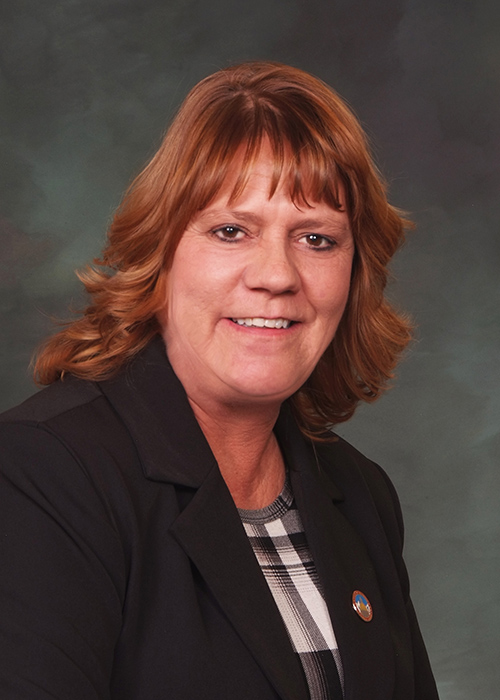
Tisha Mauro
DDemocratic
P

Yara Zokaie
DDemocratic
Co

Kenny Nguyen
DDemocratic
Co

Mandy Lindsay
DDemocratic
Co

Naquetta Ricks
DDemocratic
Ask Maddy
·
AI policy assistant
Ask Maddy about HB 1327
Scope: CO
Hi! I can help you understand HB 1327. What would you like to know?
Try one of these
i
Maddy answers using official bill text and legislative records. Always verify before sharing.
Sources cited inline