

Abuse in Cases of Separation
Summary
The act clarifies that, for the purposes of the 'Uniform Dissolution of Marriage Act', domestic violence includes specified acts or threatened acts of harm or property damage against a family or household member; and clarifies that the conduct in the definition of domestic violence is domestic violence regardless of whether it constitutes a criminal offense. A person's protective behaviors do not constitute domestic violence. For purposes of determining the allocation of parental responsibilities based on the best interests of the child, the act requires that for any evidence submitted to the court concerning whether a party has committed domestic violence, child abuse or neglect, or sexual assault that resulted in the conception of a child, the court may consider any relevant and admissible evidence, and the court shall make findings on the record by a preponderance of the evidence whether the party has committed domestic violence, child abuse or neglect, or sexual assault that resulted in the conception of a child. If the court determines by a preponderance of the evidence that a party has committed domestic violence, child abuse or neglect, or sexual assault that resulted in the conception of a child, the act outlines the considerations that the court must undertake when determining decision-making responsibility and parenting time. Under current law, prior to a court ordering a party accused of domestic violence or child abuse to take steps to improve a relationship with a protected party, a mental health professional who is approved by the domestic violence offender management board must verify the accused party's behavior. Instead, the act requires that the accused party participate in treatment with a mental health professional who holds a master's or doctoral degree and a mental health professional license and has specialized training and expertise in treating survivors and perpetrators of domestic violence and child abuse and the effects of domestic violence and child abuse.(Note: This summary applies to this bill as enacted.)
Bill status
signed
all 5 stages cleared
Introduction
Mar 2026
Committee Review
May 2026
House Passage
May 2026
Senate Passage
May 2026
Signed into Law
May 2026
Introduced Mar 2, 2026
Signed May 27, 2026
Maddy AI version diff · 5 comparisons
What changed between versions
Rerevised
→
Final Act
·
4 edits
·
May 21, 2026
MODERATE
This bill transitions from a draft proposal to a final act, adding specific legislative findings that highlight the dangers of domestic violence during child custody disputes. It formally defines 'coercive control' with detailed examples of abusive behaviors and establishes a legal presumption that it is not in a child's best interest to award parental responsibilities to a parent who has committed domestic violence.
Scope change
The bill's scope remains focused on family court proceedings regarding the allocation of parental responsibilities, but it now explicitly includes a broad definition of coercive control to guide judicial decisions.
DEFINITION
Added a comprehensive definition of 'coercive control' listing specific behaviors like isolation, financial monitoring, and threats to harm animals or oneself.
REQUIREMENT
Established a statutory presumption that courts should not award parental responsibilities to a parent found to have committed domestic violence.
Included legislative findings citing statistics on domestic violence fatalities, the high rate of unrepresented litigants, and the link between custody litigation and lethal violence.
TECHNICAL
Updated the bill header to reflect 'Final Act' status, including the Governor's signature note and revised reading dates.
Floor votes
How they voted
This bill passed the Senate by voice vote (no roll call recorded).
Full legislative history
Actions timeline
Total actions
15
Key actions
7
Committee
3
Amendments
1
May 27, 2026
Signed into law
Governor Signed
executive
May 21, 2026
Upper · Passed
Signed by the President of the Senate
upper
May 21, 2026
Lower · Passed
Signed by the Speaker of the House
lower
May 13, 2026
Introduced
House Considered Senate Amendments - Result was to Concur - Repass
lower
May 13, 2026
Upper · Passed
Senate Third Reading Passed - No Amendments
upper
May 7, 2026
Upper · Passed
Senate Committee on State, Veterans, & Military Affairs Refer Amended to Senate Committee of the Whole
upper
May 7, 2026
Introduced
Introduced In Senate - Assigned to State, Veterans, & Military Affairs
upper
May 6, 2026
Lower · Passed
House Third Reading Passed - No Amendments
lower
May 5, 2026
Lower · Passed
House Committee on Appropriations Refer Amended to House Committee of the Whole
lower
Mar 31, 2026
Committee
House Committee on Judiciary Refer Amended to Appropriations
lower
Mar 2, 2026
Introduced
Introduced In House - Assigned to Judiciary
lower
3 primary · 18 co-sponsors
Sponsors
Role
Legislator
Party
State
District
P

Katie Wallace
DDemocratic
P

Meg Froelich
DDemocratic
P

Tammy Story
DDemocratic
Co

Cathy Kipp
DDemocratic
Co

Chad Clifford
DDemocratic
Co

Emily Sirota
DDemocratic
Co

Gretchen Rydin
DDemocratic
Co
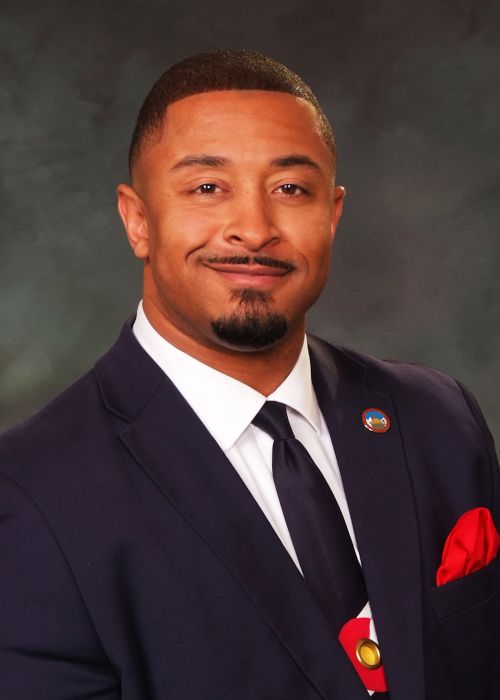
James Coleman
DDemocratic
Co

Janice Marchman
DDemocratic
Co

Jenny Willford
DDemocratic
Co

Judy Amabile
DDemocratic
Co

Kenny Nguyen
DDemocratic
Co

Kyle Brown
DDemocratic






Ask Maddy
·
AI policy assistant
Ask Maddy about HB 1309
Scope: CO
Hi! I can help you understand HB 1309. What would you like to know?
Try one of these
i
Maddy answers using official bill text and legislative records. Always verify before sharing.
Sources cited inline