

Proposition 130 Implementation
Summary
At the November 2024 statewide election, voters approved proposition 130, which requires the state to provide $350 million in additional funding to local law enforcement agencies to improve recruitment, training, and retention of local law enforcement officers and to provide a $1 million death benefit to the family of a first responder who is killed in the line of duty. The act modifies and implements proposition 130. The act creates the peace officer training and support fund (fund), and establishes a formula by which the department of public safety (department) disburses $350 million in additional funding to local law enforcement agencies from the fund for permissible purposes. Permissible purposes include initial and continuing education and training for peace officers and the compensation of peace officers. Beginning July 1, 2026, the formula requires the department to disburse an amount to each law enforcement agency equal to the total of $15,000 and an amount multiplied by the number of P.O.S.T-certified officers, noncertified deputy sheriffs, and detention officers budgeted by a local government for the law enforcement agency. Law enforcement agencies and local governments may not use these funds to supplant or supplement other spending. Local governments must include evidence of compliance with the no supplanting or supplementing requirement in their annual audit and provide a copy of this audit to the department. The department must review a subset of the audits provided by local governments for compliance with the requirements of the act. The act also establishes funding for the fund. First, the act directs the state treasurer to transfer $15 million from the general fund to the fund on July 1, 2026. Second, the act directs the state treasurer to issue warrants from the general fund totaling $500 million to the public employees' retirement association (PERA) between July 1, 2025, and September 30, 2025. Beginning July 1, 2027, until the state treasurer has transferred a total of $350 million from the general fund to the fund: The amount of each annual direct distribution made by the state to PERA is reduced by the amount of PERA's earnings from the $500 million, up to a maximum of $35 million; and The state treasurer annually transfers an amount equal to the amount of PERA's earnings from the $500 million, up to a maximum of $35 million, from the general fund to the fund. However, beginning July 1, 2027, and each July 1 thereafter until the state treasurer has transferred a total of $350 million from the general fund to the fund, the state treasurer is required to transfer at least $15 million from the general fund to the fund regardless of the amount of PERA's earnings from the $500 million. The general assembly may annually appropriate to the department no more than 2.5% of the amount that the state treasurer annually transfers from the general fund to the fund for the department's direct and indirect costs of administering the distribution of money from the fund. The act clarifies that the $500 million in the warrants that the state treasurer issues to PERA are included in the general fund reserve. Accordingly, the act prohibits a future general assembly from lowering the general fund reserve to an amount less than $1 billion. If the general assembly does so reduce the reserve, the general assembly shall also make corresponding reductions to the direct distributions made by the state to PERA. The act also requires the governor to adjust general fund expenditures so that they do not result in the general fund reserve being reduced to an amount less than $1 billion. The act establishes a process by which the department distributes a $1 million death benefit to the family of a first responder who dies on or after November 5, 2024, as either the direct and proximate result of a personal injury sustained while performing official duties as a first responder or because of an occupational disease arising out of and in the course of the first responder's employment or service as a first responder. These payments are paid out of the death benefit fund, which is created in the act. The act requires the state treasurer to transfer $5 million from the general fund to the death benefit fund on both July 1, 2026, and July 1, 2027, and to make annual transfers from the general fund thereafter as necessary to ensure that the fund maintains a balance of $10 million. The act also requires a survivor of an eligible first responder to deduct an amount equal to the amount of any death benefit received from their federal taxable income for the purpose of determining their state income tax liability unless the survivor qualifies for a corresponding federal income tax deduction. The act also requires the department to provide technical assistance to law enforcement agencies and local governments in complying with the requirements of the act and allows the executive director of the department to adopt rules as necessary to implement the act. For the 2025-26 fiscal year, $5,046,967 is appropriated from the death benefit fund to the department for implementation of the death benefit program. (Note: This summary applies to this bill as enacted.)
Bill status
signed
all 5 stages cleared
Introduction
Apr 2025
Committee Review
May 2025
Senate Passage
Apr 2025
House Passage
May 2025
Signed into Law
Jun 2025
Introduced Apr 24, 2025
Signed Jun 2, 2025
Maddy AI version diff · 8 comparisons
What changed between versions
Revised (05/03/2025)
→
PA1 (04/29/2025)
·
5 edits
MODERATE
The bill was amended from a revised version adopted on May 3, 2025, to a preamended version from April 29, 2025, which includes committee amendments not yet adopted. The substantive policy content remains largely the same, focusing on funding for law enforcement training and death benefits for first responders under Proposition 130. The main change is the status of the bill and the inclusion of unofficial committee amendments.
TECHNICAL
The document header was changed from 'REVISED' to 'PREAMENDED', indicating this version includes committee amendments that have not yet been adopted on second reading.
The Senate sponsorship list was shortened, removing names 'Amabile, Carson, Catlin, Mullica, Pelton B.' from the list of co-sponsors.
The House sponsorship list was shortened, removing names 'Bird and Taggart, Sirota' from the list of co-sponsors.
Committee assignments were updated, removing 'Appropriations' from the House Committees section.
Amendment status markers were removed, changing from 'Amended 2nd Reading' and 'Amended 3rd Reading' to 'PREAMENDED' with dates reflecting the April 29, 2025 version.
Floor votes · Senate Apr 30, 2025 · House May 5, 2025
How they voted
34–0
Passed
Total votes 34
Apr 30, 2025
D
Democratic22
100% Yea
R
Republican12
100% Yea
Vote distribution
All Yea
All Nay
Mixed
No data
Full legislative history
Actions timeline
Total actions
14
Key actions
5
Committee
2
Amendments
1
Jun 2, 2025
Signed into law
Governor Signed
executive
May 6, 2025
Introduced
Senate Considered House Amendments - Result was to Concur - Repass
upper
May 5, 2025
Lower · Passed
House Third Reading Passed with Amendments - Floor
lower
May 1, 2025
Lower · Passed
House Committee on Appropriations Refer Amended to House Committee of the Whole
lower
Apr 30, 2025
Introduced
Introduced In House - Assigned to Appropriations
lower
Apr 30, 2025
Upper · Passed
Senate Third Reading Passed with Amendments - Floor
upper
Apr 29, 2025
Upper · Passed
Senate Committee on Appropriations Refer Amended - Consent Calendar to Senate Committee of the Whole
upper
Apr 24, 2025
Introduced
Introduced In Senate - Assigned to Appropriations
upper
4 primary · 15 co-sponsors
Sponsors
Role
Legislator
Party
State
District
P

Barbara Kirkmeyer
RRepublican
P

Jeff Bridges
DDemocratic
P

Rick Taggart
RRepublican
P
SB
Shannon Bird
DDemocratic
Co

Brianna Titone
DDemocratic
Co

Byron Pelton
RRepublican
Co
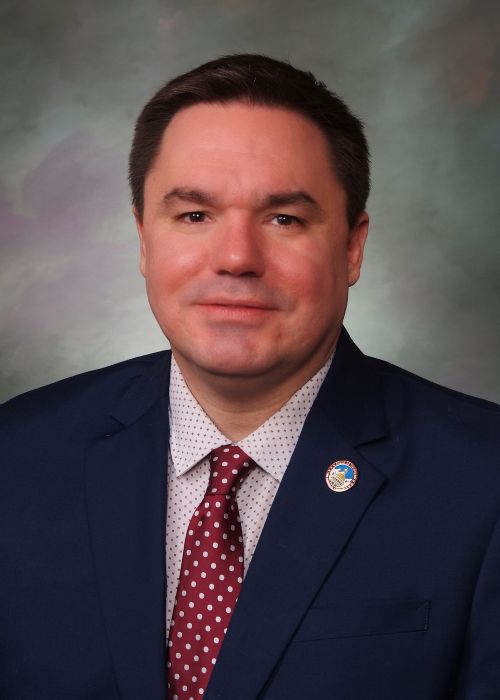
Chad Clifford
DDemocratic
Co

Eliza Hamrick
DDemocratic
Co

Emily Sirota
DDemocratic
Co
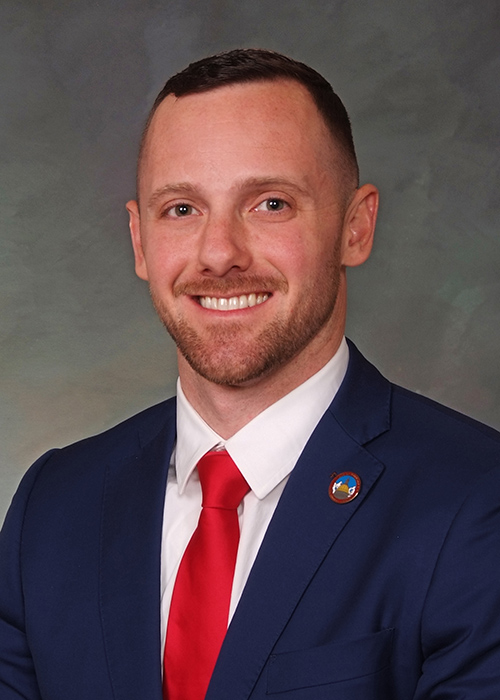
Jarvis Caldwell
RRepublican
Co
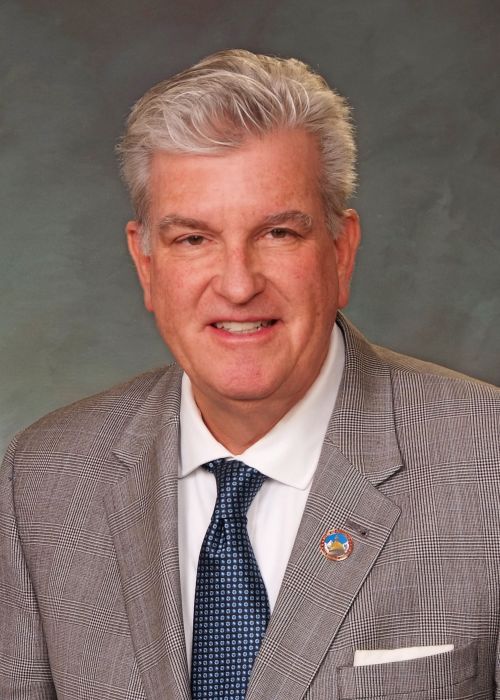
John Carson
RRepublican
Co

Judy Amabile
DDemocratic
Co

Julie McCluskie
DDemocratic
Co
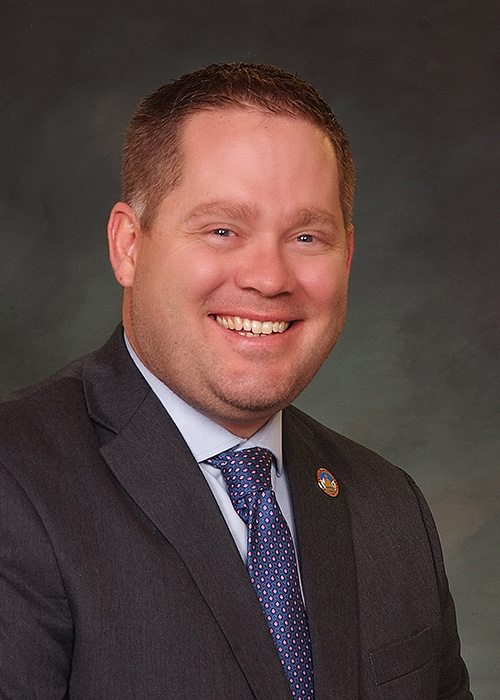
Kyle Mullica
DDemocratic



Ask Maddy
·
AI policy assistant
Ask Maddy about SB 25-310
Scope: CO
Hi! I can help you understand SB 25-310. What would you like to know?
Try one of these
i
Maddy answers using official bill text and legislative records. Always verify before sharing.
Sources cited inline