

Railroad Safety Requirements
Summary
The act requires that, immediately after a railroad notifies the state's watch center in the department of public safety (watch center) of an emergency involving a train, the watch center must notify the public utilities commission (commission) and the office of rail safety (office) of the incident. The commission is required to submit a report to specified committees of the general assembly on the information reported by railroads regarding an emergency involving a train. A crew member of a train operated by a railroad may communicate with first responders during an emergency situation after notifying the railroad dispatch. A crew member has discretion in determining the appropriate response to the emergency situation, including cutting the railroad crossing. A railroad employee or a crew member is immune from civil liability and is not liable in civil damages for actions taken in good faith in the course of a response to an emergency situation involving a train. The act eliminates the shared authority that the commission, the department of public safety, and the department of transportation had to inspect and investigate railroads and grants the commission alone the authority to engage in inspection, investigation, and enforcement activities regarding the following railroads: A class I railroad; A railroad operating on any line that was used by class I railroads as of July 1, 2024; and A passenger railroad. The act requires the office to gather, analyze, and assess information, including: Data to create a more comprehensive understanding of railroad safety; Wayside detector information; Information regarding blocked public crossing locations; Information regarding railroad maintenance activity; An assessment of the state's ability to respond to a large-scale release of hazardous materials from railroad transportation; The best practices for ensuring financial responsibility for response, cleanup, and damages from major rail events, including reviewing best practices from other states; and Communication issues impacting railroad lines in the state. Beginning on or before July 1, 2027, a railroad regulated by the commission is required to pay a fee to cover the costs incurred by the commission and the office in relation to the act. The commission shall determine a methodology for calculating the fee by rule, and the commission may include specified criteria in the calculation. The total amount collected pursuant to the annual fee must not exceed $2,900,000 in a calendar year. A railroad regulated by the commission must pay the fee in equal quarterly installments and is subject to penalties and interest if they fail to timely pay the fee. (Note: This summary applies to this bill as enacted.)
Bill status
signed
all 5 stages cleared
Introduction
Feb 2025
Committee Review
May 2025
Senate Passage
Apr 2025
House Passage
May 2025
Signed into Law
Jun 2025
Introduced Feb 11, 2025
Signed Jun 4, 2025
Maddy AI version diff · 8 comparisons
What changed between versions
Revised (05/01/2025)
→
PA1 (03/06/2025)
·
4 edits
MODERATE
This bill was amended to change its status from a revised version to a pre-amended version, indicating the text now includes committee amendments that have not yet been adopted. The substantive content shows additions to the bill's findings and definitions, specifically adding new sections about the need for a state office of rail safety and defining new terms like 'corrective action' and 'environmentally critical area'.
Scope change
The bill's scope appears to expand by adding new findings about Colorado's rail safety needs and establishing new definitions that will support the creation of a dedicated state office of rail safety.
DEFINITION
Added new definitions for 'CORRECTIVE ACTION' and 'ENVIRONMENTALLY CRITICAL AREA' to the Colorado Revised Statutes.
SCOPE
Added findings emphasizing the need for a state office of rail safety due to Colorado's unique geography and infrastructure challenges.
FISCAL
Added language supporting a single funding source for rail safety to avoid multiple fee structures for railroad companies.
TECHNICAL
Removed references to 'Amended 2nd Reading' and specific dates, indicating the document is now a pre-amended version with committee amendments included but not yet adopted.
Floor votes · Senate Apr 23, 2025 · House May 2, 2025
How they voted
22–12
Passed
Total votes 34
Apr 23, 2025
D
Democratic22
100% Yea
R
Republican12
100% Nay
Vote distribution
All Yea
All Nay
Mixed
No data
Full legislative history
Actions timeline
Total actions
15
Key actions
5
Committee
4
Amendments
1
Jun 4, 2025
Signed into law
Governor Signed
executive
May 6, 2025
Introduced
Senate Considered House Amendments - Result was to Concur - Repass
upper
May 2, 2025
Lower · Passed
House Third Reading Passed - No Amendments
lower
May 1, 2025
Lower · Passed
House Committee on Appropriations Refer Unamended to House Committee of the Whole
lower
Apr 29, 2025
Committee
House Committee on Finance Refer Amended to Appropriations
lower
Apr 28, 2025
Introduced
Introduced In House - Assigned to Finance
lower
Apr 23, 2025
Upper · Passed
Senate Third Reading Passed - No Amendments
upper
Apr 17, 2025
Upper · Passed
Senate Committee on Appropriations Refer Amended to Senate Committee of the Whole
upper
Mar 5, 2025
Committee
Senate Committee on Transportation & Energy Refer Amended to Appropriations
upper
Feb 11, 2025
Introduced
Introduced In Senate - Assigned to Transportation & Energy
upper
4 primary · 41 co-sponsors
Sponsors
Role
Legislator
Party
State
District
P

Elizabeth Velasco
DDemocratic
P

Javier Mabrey
DDemocratic
P

Lisa Cutter
DDemocratic
P
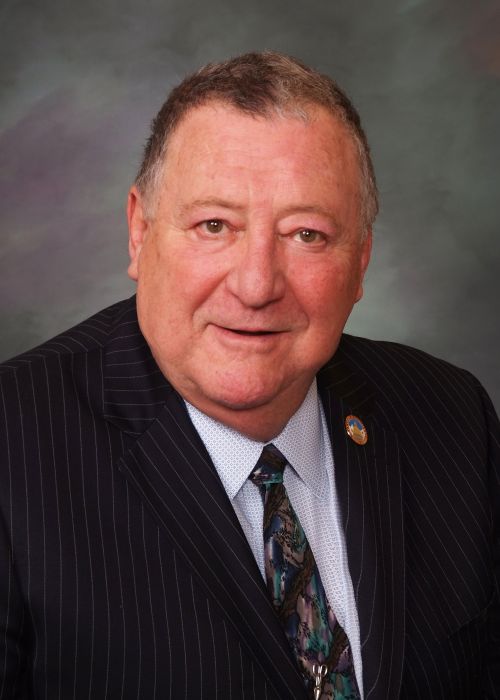
Marc Snyder
DDemocratic
Co

Amy Paschal
DDemocratic
Co

Andy Boesenecker
DDemocratic
Co

Brianna Titone
DDemocratic
Co

Cathy Kipp
DDemocratic
Co

Chad Clifford
DDemocratic
Co

Chris Kolker
DDemocratic
Co

Dafna Michaelson Jenet
DDemocratic
Co

Dylan Roberts
DDemocratic
Co

Eliza Hamrick
DDemocratic
Co

Emily Sirota
DDemocratic























Ask Maddy
·
AI policy assistant
Ask Maddy about SB 25-162
Scope: CO
Hi! I can help you understand SB 25-162. What would you like to know?
Try one of these
i
Maddy answers using official bill text and legislative records. Always verify before sharing.
Sources cited inline