

School Finance Act
Summary
Under current law, there are 2 total program formulas to finance public schools. Absent the satisfaction of a statutorily specified condition, the first formula is scheduled to stop determining total program after the 2024-25 budget year (expiring formula), and the second formula is scheduled to determine total program beginning in the 2030-31 budget year (new formula). For the 2025-26 budget year through the 2029-30 budget year (transition period), total program is scheduled to be determined by using figures that were calculated under both the expiring formula and the new formula. The act: Extends the transition period by one year, so that it is from the 2025-26 budget year through the 2030-31 budget year; and Postpones the exclusive use of the new formula to determine total program until the 2031-32 budget year. The act changes how each school district's and institute charter school's annual total program is determined during the transition period. For the 2025-26 and 2026-27 budget years, each school district's and institute charter school's annual total program is the greater of the school district's or institute charter school's total program for the 2024-25 budget year or the amount calculated under the expiring formula plus an amount equal to 15% in 2025-26 and 30% in 2026-27 of the difference between the amounts calculated under the new formula and the expiring formula. For the 2027-28 budget year through the 2030-31 budget year, each school district's and institute charter school's annual total program is the greater of the district's or institute charter school's calculation under the expiring formula plus 1% of that calculation, or: For the 2027-28 budget year, the amount calculated under the expiring formula plus an amount equal to 45% of the difference between the amounts calculated under the new formula and the expiring formula; For the 2028-29 budget year, the amount calculated under the expiring formula plus an amount equal to 60% of the difference between the amounts calculated under the new formula and the expiring formula; For the 2029-30 budget year, the amount calculated under the expiring formula plus an amount equal to 75% of the difference between the amounts calculated under the new formula and the expiring formula; and For the 2030-31 budget year, the amount calculated under the expiring formula plus an amount equal to 90% of the difference between the amounts calculated under the new formula and the expiring formula. Under current law, there are specified conditions that apply to the transition period. If the joint budget committee determines that a specified condition occurs in a budget year during the transition period, then for the next budget year and each budget year thereafter, the transition is suspended, and each school district's total program is determined pursuant to the calculation and determination required for the budget year when the condition occurred. For one of the existing conditions, the act specifies that an income tax deposit to the state education fund that was made to correct an error does not count toward determining whether the condition has been satisfied. A school district's funded pupil count is a figure that is used as a part of determining a school district's total program. Under the expiring formula, a school district's funded pupil count is calculated by determining the greater of the school district's pupil enrollment for the applicable budget year or the average of the school district's pupil enrollment for the applicable budget year and the immediately preceding 4 budget years. Under current law, the new formula calculates a school district's funded pupil count by determining the greater of the school district's pupil enrollment for the applicable budget year or the average of the school district's pupil enrollment for the applicable budget year and the immediately preceding 3 budget years. The act changes the new formula so that: For the 2025-26 budget year, a school district's funded pupil count is calculated by determining the greater of the school district's pupil enrollment for the applicable budget year or the average of the school district's pupil enrollment for the applicable budget year and the immediately preceding 3 budget years; and For the 2026-27 budget year and each budget year thereafter, a school district's funded pupil count is calculated by determining the greater of the school district's pupil enrollment for the applicable budget year or the average of the district's pupil enrollment for the applicable budget year and the immediately preceding 2 budget years. However: If a statutorily specified condition is satisfied, and consequently for the 2026-27 budget year, a district's total program is not determined as scheduled under the transition period, then for the 2026-27 budget year, and each budget year thereafter, funded pupil count will continue to be determined by the greater of the school district's pupil enrollment for the applicable budget year or the average of the school district's pupil enrollment for the applicable budget year and the immediately preceding 3 budget years; and If, for the 2027-28 budget year, the state education fund balance is projected to be less than $200 million, then the general assembly is required to implement a smoothing factor or the funded pupil count will be determined by the greater of the school district's pupil enrollment for the applicable budget year or the average of the school district's pupil enrollment for the applicable budget year and the immediately preceding budget year for the 2027-28 budget year and each budget year thereafter. The act expiring formula is changed so that, starting in the 2027-28 budget year, the funded pupil count used in the expiring formula is the same funded pupil count that is used in the new formula to determine a district's total program during the transition period. The total program for the 2025-26 budget year is determined using the formula changes in the act. The act: Increases the statewide base per pupil funding for the 2025-26 budget year by $195.42 to account for inflation; Sets a new statewide base per pupil funding amount for the 2025-26 budget year at $8,691.80; and Sets the total program funding for the 2025-26 budget year for all school districts and institute charter schools to at least $10,036,070,748 or $10,031,606,090, depending upon whether Senate Bill 25-315 becomes law. Under current law, a new at-risk measure is required to be implemented in the 2025-26 budget year. The act repeals this requirement and requires the department of education (department) to collect data necessary to identify individual student census block groups to account for students who are at-risk of below-average academic performance and education outcomes because of socioeconomic disadvantages or poverty, but who may not qualify for free or reduced price lunch. Under current law, as a part of the charter contract, a district charter school and the school district, or the institute charter school and state charter school institute (institute), must agree on funding and services provided by the school district or institute to the charter school, subject to parameters. The act: Suspends the use of these provisions after the 2025-26 budget year; Repeals charter school at-risk supplemental aid after the 2026-27 budget year, following its gradual phase out during the 2025-26 and 2026-27 budget years; Creates incremental funding for charter schools for the 2025-26 budget year; and Requires the general assembly to consult with charter school representatives to ensure that charter schools are aligned with the implementation of the new formula. The act raises the limit from $750 million to $1 billion for the amount of money that the general assembly may appropriate to restore any or all qualified charter school debt reserve funds to their qualified charter school debt service fund requirements. Under current law, $41 million of interest and income earned on money in the public school fund is credited to certain purposes, and any remaining interest and income may be credited as specified by the general assembly or remain in the public school fund. The act requires that any remaining interest and income is credited to the public school capital construction assistance fund. The total annual amount of revenue credited to the public school capital construction fund is capped at $150 million, adjusted for inflation; except that money received from public school fund interest and income does not apply toward the cap. Any amount above the cap is credited to the state public school fund instead. The act creates the kids matter account within the state education fund. Beginning July 1, 2026, the state treasurer must deposit in the account all state revenues collected from an existing tax on 0.00065% on federal taxable income, as modified by law, of every individual, estate, trust, and corporation. The money in the account must only be used for district total program funding and total state funding for all categorical programs. Under current law, the department is required to contract with an entity to develop and implement a public information campaign to emphasize the importance of learning to read by third grade and highlight local education providers that are achieving high percentages of third-grade students who demonstrate reading competency. The act repeals the requirement that the department contract with an entity to develop and implement the information campaign. The act authorizes the department to use any unexpended money that was appropriated for the out-of-school time program grant program and is remaining at the end of the 2024-25 or 2025-26 state fiscal years in the 2025-26 or 2026-27 state fiscal years without further appropriation. The act creates and implements certain parameters for multifunction school activity buses. For the 2025-26 state fiscal year, the act: Appropriates $7,009,989 to the department from the state education fund for at-risk supplemental aid; Appropriates $7.6 million to the department from the public school capital construction assistance fund for public school capital construction assistance board cash grants; Appropriates $25 million to the department from the public school capital construction assistance fund for public school capital construction assistance board lease payments; and Adjusts the 2025-26 long bill by decreasing the cash funds appropriation from the state education fund for the state share of district's total program by $15,775,837; decreasing the cash funds appropriation from the state education fund for at-risk per pupil additional funding by $5 million; and decreasing the cash funds appropriation from the public school capital construction assistance fund for public school capital construction assistance board cash grants by $45,648,087.(Note: This summary applies to this bill as enacted.)
Bill status
signed
all 5 stages cleared
Introduction
Apr 2025
Committee Review
May 2025
House Passage
Apr 2025
Senate Passage
May 2025
Signed into Law
May 2025
Introduced Apr 2, 2025
Signed May 23, 2025
Maddy AI version diff · 7 comparisons
What changed between versions
Revised (05/02/2025)
→
PA3 (05/01/2025)
·
3 edits
MINOR
The bill status changed from a revised version with adopted amendments to a preamended version containing committee amendments not yet adopted on second reading. This indicates the bill is in an earlier legislative stage with proposed changes pending final approval.
TECHNICAL
Header changed from 'REVISED' to 'PREAMENDED' indicating the legislative status of the document
Description text updated to reflect that amendments are not yet adopted on second reading
Date changed from May 2, 2025 to May 1, 2025
Floor votes · Senate May 6, 2025 · House Apr 17, 2025
How they voted
34–0
Passed
Total votes 34
May 6, 2025
D
Democratic22
100% Yea
R
Republican12
100% Yea
Vote distribution
All Yea
All Nay
Mixed
No data
Full legislative history
Actions timeline
Total actions
17
Key actions
5
Committee
4
Amendments
2
May 23, 2025
Signed into law
Governor Signed
executive
May 7, 2025
Introduced
House Considered Senate Amendments - Result was to Concur - Repass
lower
May 6, 2025
Introduced
House Considered Senate Amendments - Result was to Laid Over Daily
lower
May 6, 2025
Upper · Passed
Senate Third Reading Passed with Amendments - Floor
upper
May 1, 2025
Upper · Passed
Senate Committee on Appropriations Refer Amended to Senate Committee of the Whole
upper
Apr 30, 2025
Committee
Senate Committee on Education Refer Amended to Appropriations
upper
Apr 22, 2025
Introduced
Introduced In Senate - Assigned to Education
upper
Apr 17, 2025
Lower · Passed
House Third Reading Passed with Amendments - Floor
lower
Apr 15, 2025
Lower · Passed
House Committee on Appropriations Refer Amended to House Committee of the Whole
lower
Apr 7, 2025
Committee
House Committee on Education Refer Amended to Appropriations
lower
Apr 2, 2025
Introduced
Introduced In House - Assigned to Education
lower
4 primary · 73 co-sponsors
Sponsors
Role
Legislator
Party
State
District
P

Jeff Bridges
DDemocratic
P

Julie McCluskie
DDemocratic
P
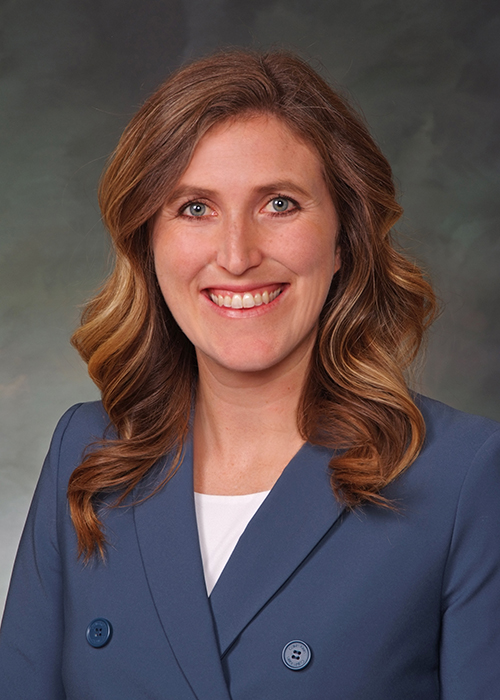
Meghan Lukens
DDemocratic
P
PL
Paul Lundeen
RRepublican
Co

Alex Valdez
DDemocratic
Co

Amy Paschal
DDemocratic
Co

Andy Boesenecker
DDemocratic
Co

Barbara Kirkmeyer
RRepublican
Co

Bob Marshall
DDemocratic
Co

Brianna Titone
DDemocratic
Co

Cathy Kipp
DDemocratic
Co
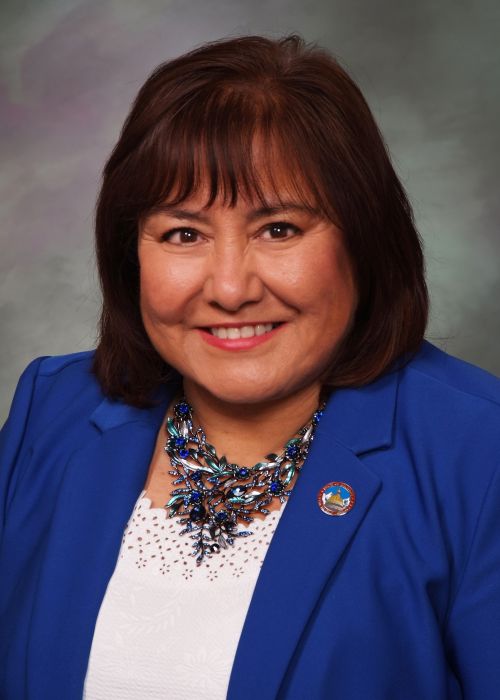
Cecelia Espenoza
DDemocratic
Co

Chad Clifford
DDemocratic
Co
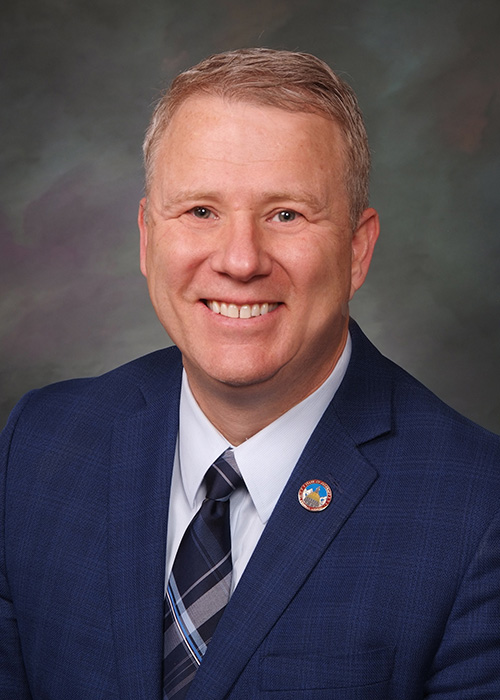
Chris Kolker
DDemocratic







































Ask Maddy
·
AI policy assistant
Ask Maddy about HB 25-1320
Scope: CO
Hi! I can help you understand HB 25-1320. What would you like to know?
Try one of these
i
Maddy answers using official bill text and legislative records. Always verify before sharing.
Sources cited inline