

Special District Emergency Services Funding
Summary
A fire protection district (fire district) has been authorized to receive and spend an impact fee, or other similar development charge, only in connection with a local government's imposition of such fee or charge to fund expenditures by a fire and emergency services provider. The act repeals this limitation and authorizes a fire district to impose its own impact fee on the construction of new buildings, structures, facilities, or improvements on real property within the fire district's jurisdictional boundaries so long as the fee is imposed pursuant to a legislatively adopted schedule that is: Generally applicable to a broad class of property; and Intended to defray the projected impacts on capital facilities caused by the proposed construction. The act imposes the following limitations on a fire district's authority to impose an impact fee: No individual landowner may be required to provide any site-specific dedication or improvement to meet the same need for capital facilities for which an impact fee is imposed; and An impact fee may not be imposed on construction for which an individual or entity has submitted a completed application for a development permit to an approving local government prior to the fire district's adoption of a schedule of impact fees. Additionally, a fire district may waive an impact fee on the development of low- or moderate-income housing or affordable employee housing, as defined by the fire district. The act gives ambulance districts identical authority to that of a fire district to impose an impact fee on the construction of new buildings, structures, facilities, or improvements on real property within the ambulance district's jurisdictional boundaries. The act also gives fire districts and ambulance districts the additional financial power to levy a sales tax within the district's jurisdiction, at a rate determined by the district's board, upon every transaction or other incident with respect to which a sales tax is levied by the state. The tax must be approved by a majority of the eligible electors within the district voting at a regular special district election or at a special election that complies with section 20 of article X of the state constitution and related statutory requirements. Such a sales tax must be collected, administered, and enforced by the executive director of the department of revenue in the same manner as the state sales tax. APPROVED by Governor May 22, 2024 PORTIONS EFFECTIVE August 7, 2024 PORTIONS EFFECTIVE July 1, 2025(Note: This summary applies to this bill as enacted.)
Bill status
signed
all 5 stages cleared
Introduction
Apr 2024
Committee Review
Apr 2024
Senate Passage
Apr 2024
House Passage
Apr 2024
Signed into Law
May 2024
Introduced Apr 2, 2024
Signed May 22, 2024
Floor votes · Senate Apr 18, 2024 · House Apr 26, 2024
How they voted
29–5
Passed
Total votes 34
Apr 18, 2024
D
Democratic22
100% Yea
R
Republican12
58% Yea
Vote distribution
All Yea
All Nay
Mixed
No data
Full legislative history
Actions timeline
Total actions
13
Key actions
5
Committee
2
May 22, 2024
Signed into law
Governor Signed
executive
Apr 26, 2024
Lower · Passed
House Third Reading Passed - No Amendments
lower
Apr 23, 2024
Lower · Passed
House Committee on Transportation, Housing & Local Government Refer Unamended to House Committee of the Whole
lower
Apr 18, 2024
Introduced
Introduced In House - Assigned to Transportation, Housing & Local Government
lower
Apr 18, 2024
Upper · Passed
Senate Third Reading Passed - No Amendments
upper
Apr 11, 2024
Upper · Passed
Senate Committee on Local Government & Housing Refer Amended to Senate Committee of the Whole
upper
Apr 2, 2024
Introduced
Introduced In Senate - Assigned to Local Government & Housing
upper
4 primary · 0 co-sponsors
Sponsors
Role
Legislator
Party
State
District
P
BM
Barbara McLachlan
DDemocratic
P
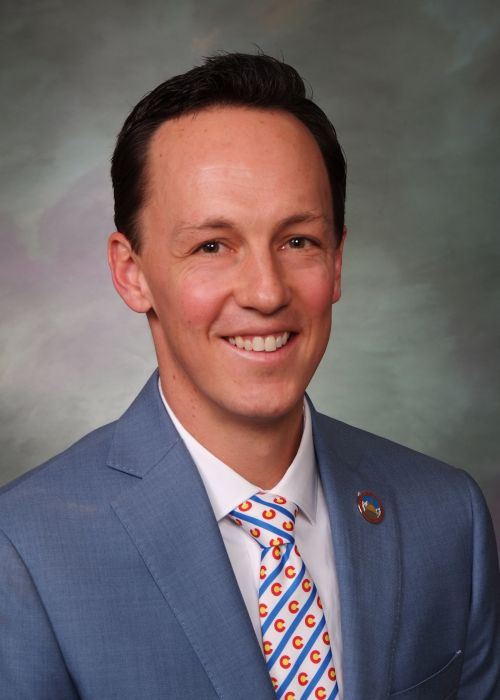
Dylan Roberts
DDemocratic
P
PW
Perry Will
RRepublican
P
RA
Ryan Armagost
RRepublican
Ask Maddy
·
AI policy assistant
Ask Maddy about SB 24-194
Scope: CO
Hi! I can help you understand SB 24-194. What would you like to know?
Try one of these
i
Maddy answers using official bill text and legislative records. Always verify before sharing.
Sources cited inline