

Supports for Youth in Juvenile Justice System
Summary
The act establishes a bill of rights for a K-12 student who is involved in any capacity with the juvenile or criminal justice system (justice-engaged student). School districts, boards of cooperative services, charter schools, and institute charter schools (local education providers) must follow the bill of rights for justice-engaged students. The bill of rights includes, but is not limited to: Providing the justice-engaged student with alternative solutions to a general education, when appropriate; Prompt enrollment or re-enrollment no later than 10 business days after the first request to the local education provider, so long as the student is eligible for enrollment, as determined by the local education provider; Appropriate credit for coursework completed while justice-engaged, and for that coursework to be applied toward graduation or school continuation; Providing the justice-engaged student with a graduation plan, developed in consultation with the justice-engaged student, the student's family, caregiver or advocate; Privacy, including privacy when related to diversion, probation, or questioning about a crime; Protection by the federal "Individuals with Disabilities Act", section 504 of the federal "Rehabilitation Act of 1973", applicable foster care regulations, and the federal "McKinney-Vento Homeless Assistance Act"; Creating evidence of and being evaluated for giftedness; and Allowing the justice-engaged student to participate in school activities or career readiness pathways in accordance with rules promulgated by the state board of education (board). Each local education provider shall publish on its website an explanation of the services and resources available for justice-engaged students, including the name, phone number, and email address of a designated, trained point-of-contact person (contact person) at the local education provider. For small and rural school districts that are not members of a BOCES, a designated support person within the department of education (department) may act as a contact person. The contact person shall read and understand the guidance developed by the department and be knowledgeable about alternative education options and wraparound services. Upon notification or request, a local education provider will work with the team of professionals, including the multi-tiered systems of supports, and appropriate intervention teams, families, and justice-engaged students to ensure a pathway to graduation, including workforce development opportunities, access to alternative educational programming, and mental health and other supports as and if appropriate and available. On or before July 1, 2024, the department shall convene an interagency working group to review and make recommendations to the department and joint education committees of the house of representatives and the senate no later than December 1, 2024 regarding justice-engaged students. The board shall promulgate rules to establish a process and framework for interpreting and transferring credits and schoolwork completed by a justice-engaged student while in custody. Local education providers retain the right to suspend or expel a justice-engaged student pursuant to applicable laws. The department shall provide guidance to local education providers on how to allow a justice-engaged student to receive an accommodation to participate in school activities, including, but not limited to, graduation ceremonies, sporting events, after-school activities, and college or career readiness pathways. On or before September 1, 2026, the act requires the department to select and contract with an entity to establish and maintain a statewide hotline for justice-engaged students, families and caregivers, justice system personnel, and education personnel. Each justice-engaged student shall be provided information about the hotline by law enforcement after ticketing or arrest, by the division of youth services after release from the division, and by local education providers after notification that a student has become justice-engaged. The act requires the entity operating the hotline to submit a written report to the department and board on or before June 30, 2025, and each June 30 thereafter. The report must categorize and summarize the number of calls received, the type of person calling, types of supports or referrals provided, and the geography of calls received so that service gaps can be identified. Beginning July 1, 2025, the department shall assist students from small and rural school districts who have been denied re-entry into school by a local education provider. Under current law, if a child or youth is within a court's jurisdiction, a preliminary investigation is made to determine whether further actions be taken to protect the interests of the child or youth or the community. The court or judge or magistrate is encouraged to take into consideration a juvenile's educational progress and ability to achieve credits toward graduation when considering release options. If the court commits a justice-engaged student to the department of human services who does not include a physical threat or bodily injury to another person, the court is encouraged to order that the commitment take place in a manner that allows the justice-engaged student to continue to attend school prior to commitment to avoid disruption of the justice-engaged student's academic progress and ability to achieve credits for a semester. The act appropriates $82,883 from the general fund for the 2024-25 state fiscal year to the department of education for use by student pathways. APPROVED by Governor May 31, 2024 EFFECTIVE August 7, 2024(Note: This summary applies to this bill as enacted.)
Bill status
signed
all 5 stages cleared
Introduction
Feb 2024
Committee Review
May 2024
House Passage
Apr 2024
Senate Passage
May 2024
Signed into Law
May 2024
Introduced Feb 5, 2024
Signed May 31, 2024
Floor votes · Senate May 4, 2024 · House Apr 30, 2024
How they voted
21–11
Passed · 2 other
Total votes 34
May 4, 2024
D
Democratic22
95% Yea
R
Republican12
91% Nay
Vote distribution
All Yea
All Nay
Mixed
No data
Full legislative history
Actions timeline
Total actions
16
Key actions
5
Committee
4
Amendments
2
May 31, 2024
Signed into law
Governor Signed
executive
May 6, 2024
Introduced
House Considered Senate Amendments - Result was to Concur - Repass
lower
May 5, 2024
Introduced
House Considered Senate Amendments - Result was to Laid Over Daily
lower
May 4, 2024
Upper · Passed
Senate Third Reading Passed - No Amendments
upper
May 3, 2024
Upper · Passed
Senate Committee on Appropriations Refer Unamended to Senate Committee of the Whole
upper
May 1, 2024
Committee
Senate Committee on Education Refer Amended to Appropriations
upper
Apr 30, 2024
Introduced
Introduced In Senate - Assigned to Education
upper
Apr 30, 2024
Lower · Passed
House Third Reading Passed - No Amendments
lower
Apr 26, 2024
Lower · Passed
House Committee on Appropriations Refer Amended to House Committee of the Whole
lower
Mar 7, 2024
Committee
House Committee on Education Refer Amended to Appropriations
lower
Feb 5, 2024
Introduced
Introduced In House - Assigned to Education
lower
3 primary · 0 co-sponsors
Sponsors
Role
Legislator
Party
State
District
P
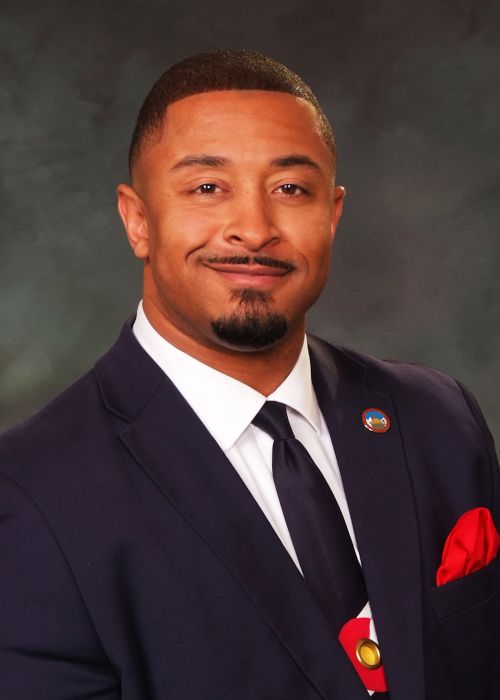
James Coleman
DDemocratic
P

Jennifer Bacon
DDemocratic
P
TH
Tim Hernández
DDemocratic
Ask Maddy
·
AI policy assistant
Ask Maddy about HB 24-1216
Scope: CO
Hi! I can help you understand HB 24-1216. What would you like to know?
Try one of these
i
Maddy answers using official bill text and legislative records. Always verify before sharing.
Sources cited inline