

Boards And Commissions
Summary
The act makes changes related to the requirements for various boards and commissions (boards). Section 1 of the act includes standard provisions that generally apply to boards for which membership is based in full or in part on representation from the congressional districts of the state. Specifically, unless a statute or constitutional provision creating a board provides otherwise: If a member appointed to represent a district no longer resides in the district due solely to a change in the district's boundaries following redistricting, the member may serve the remainder of their term notwithstanding the nonresidency; If a board increases in size due to the addition of a new congressional district in the state, the appointing authority shall appoint a new member to represent the new district as soon as practicable; and If a board decreases in size due to the loss of a congressional district in the state, the appointing authority shall determine which current member's term should be terminated, or, if the member will be replaced by an at-large or other member, which member should be replaced at the expiration of the member's term. The appointing authority must attempt to ensure that the remaining membership adequately represents the remaining congressional districts. Section 2 establishes standard provisions that apply to all boards unless the statute or constitutional provision creating a board provides otherwise. The standard provisions include: Requiring an appointing authority to fill a vacancy for the remainder of the unexpired term; Allowing the designee of a state official who is an ex officio member of a board to fulfill the official's duties on the board; Defining the term "minimum majority" to mean the lowest number of members of a board that is more than half; Allowing members to participate in meetings of the board remotely if allowed by a board's policies or bylaws; and Clarifying that only a partial term that is more than half the length of a standard term counts towards any applicable term limit. Sections 33 and 40 update the statutes that establish the membership of the state board of education and the board of regents of the university of Colorado, respectively, both of which are elected boards created in the state constitution. For the state board of education, section 33 provides for the election of one new member to represent the eighth congressional district and one new member from the state at large at the 2022 general election. For the board of regents, section 40 requires the election of a member to represent the eighth congressional district in place of the election of a member representing the state at large at the 2022 general election. Sections 37, 42, 52, 60, 73, 85, 86, 90, 101, and 107 amend statutes governing boards for which membership is based on the number of congressional districts in the state. For each board, the total number of members is no longer specified. Instead, each statute provides for the appointment of members from each congressional district in the state plus, as applicable, additional members as is currently provided for each board. Provisions requiring staggering of terms and limits on the number of board members who may be affiliated with a single political party are amended to refer to a "minimum majority" of the board to accommodate any future changes in board membership resulting from changes in the number of Colorado congressional districts. Section 133 repeals a statute that addressed the impact of redistricting on boards following the 2000 federal decennial census and a statute that adjusted the lengths of terms of members of certain boards in 1987. The remaining sections of the act make changes to statutory provisions governing various boards with appointed members, including: Repealing deadlines for events or actions that have already occurred; Repealing language setting specific expiration dates or requirements for board members' terms in order to create staggering of the board members' terms and replacing it with a general requirement that terms be staggered; Repealing requirements for notice and hearing before a board member can be removed for cause by an appointing authority; Repealing, for certain boards, the requirement that a board member serve until the board member's successor is confirmed by the senate; Updating archaic language to conform to current drafting standards; Reorganizing sections to clarify requirements related to appointments, qualifications for appointees, and terms of office; Clarifying requirements related to the number of board members that may be affiliated with one political party; and Making conforming amendments.(Note: This summary applies to this bill as enacted.)
Bill status
signed
all 5 stages cleared
Introduction
Jan 2022
Committee Review
Feb 2022
Senate Passage
Feb 2022
House Passage
Feb 2022
Signed into Law
Feb 2022
Introduced Jan 12, 2022
Signed Feb 25, 2022
Floor votes · Senate Feb 3, 2022 · House Feb 18, 2022
How they voted
30–0
Passed · 4 other
Total votes 34
Feb 3, 2022
D
Democratic20
90% Yea
R
Republican14
85% Yea
Vote distribution
All Yea
All Nay
Mixed
No data
Full legislative history
Actions timeline
Total actions
15
Key actions
5
Committee
4
Amendments
1
Feb 25, 2022
Signed into law
Governor Signed
executive
Feb 23, 2022
Introduced
Senate Considered House Amendments - Result was to Concur - Repass
upper
Feb 18, 2022
Lower · Passed
House Third Reading Passed - No Amendments
lower
Feb 17, 2022
Lower · Passed
House Committee on Appropriations Refer Unamended to House Committee of the Whole
lower
Feb 9, 2022
Committee
House Committee on Transportation & Local Government Refer Unamended to Appropriations
lower
Feb 4, 2022
Introduced
Introduced In House - Assigned to Transportation & Local Government
lower
Feb 3, 2022
Upper · Passed
Senate Third Reading Passed with Amendments - Floor
upper
Feb 1, 2022
Upper · Passed
Senate Committee on Appropriations Refer Amended to Senate Committee of the Whole
upper
Jan 27, 2022
Committee
Senate Committee on State, Veterans, & Military Affairs Refer Amended to Appropriations
upper
Jan 12, 2022
Introduced
Introduced In Senate - Assigned to State, Veterans, & Military Affairs
upper
4 primary · 0 co-sponsors
Sponsors
Role
Legislator
Party
State
District
P
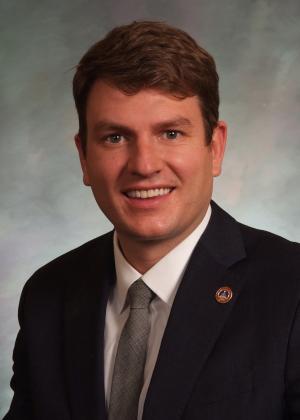
Alec Garnett
DDemocratic
P
CH
Chris Holbert
RRepublican
P

Hugh McKean
RRepublican
P
SF
Steve Fenberg
DDemocratic
Ask Maddy
·
AI policy assistant
Ask Maddy about SB 22-013
Scope: CO
Hi! I can help you understand SB 22-013. What would you like to know?
Try one of these
i
Maddy answers using official bill text and legislative records. Always verify before sharing.
Sources cited inline