

Property Tax Administrative Procedures
Summary
The property tax administrator is required by law, after consultation with the advisory committee to the property tax administrator and subject to the approval of the state board of equalization, to prepare and publish manuals, appraisal procedures, instructions, and guidelines (property tax materials) concerning the administration of property tax. Beginning January 1, 2023, section 1 of the act requires the administrator to conduct a public hearing on a proposed change to the property tax materials before submitting the proposed change to the advisory committee to the property tax administrator. The administrator must publish notice of the hearing and mail notice to those people who so request. At the hearing, interested persons may submit information and the administrator is required to consider any submissions. Any interested person may also file a written petition to the administrator for the issuance, amendment, or repeal of any property tax materials. Currently, a taxpayer who wishes to protest the valuation of their taxable real property must file a notice of their objection and protest with the assessor by June 1. Sections 3 and 4 extend this deadline to June 8. Section 4 also requires an assessor who discovers any error that impacts the valuation of a class or subclass of property to recommend to the county board of equalization an adjustment to the class or subclass of property to correct the error. Section 5 requires the state board of assessment appeals to advance an appeal concerning the valuation of rent-producing commercial real property on the board of assessment appeals' calendar when the taxpayer provides certain relevant information and requests an advancement on or before July 15 of the same calendar year. The board of assessment appeals may charge a fee to a taxpayer, if the board of assessment appeals advances the taxpayer's appeal. Section 6 places a 5% cap on the amount by which a valuation of property set by a county board of equalization can be increased on appeal. $2000 is appropriated from the general fund to the department of local affairs for use by the board of assessment appeals for implementation of the act. (Note: This summary applies to this bill as enacted.)
Bill status
signed
all 5 stages cleared
Introduction
May 2022
Committee Review
May 2022
House Passage
May 2022
Senate Passage
May 2022
Signed into Law
May 2022
Introduced May 2, 2022
Signed May 16, 2022
Floor votes · Senate May 9, 2022 · House May 6, 2022
How they voted
34–0
Passed
Total votes 34
May 9, 2022
D
Democratic20
100% Yea
R
Republican14
100% Yea
Vote distribution
All Yea
All Nay
Mixed
No data
Full legislative history
Actions timeline
Total actions
13
Key actions
5
Committee
3
May 16, 2022
Signed into law
Governor Signed
executive
May 9, 2022
Upper · Passed
Senate Third Reading Passed - No Amendments
upper
May 6, 2022
Upper · Passed
Senate Committee on Appropriations Refer Unamended - Consent Calendar to Senate Committee of the Whole
upper
May 6, 2022
Introduced
Introduced In Senate - Assigned to Appropriations
upper
May 6, 2022
Lower · Passed
House Third Reading Passed - No Amendments
lower
May 5, 2022
Lower · Passed
House Committee on Appropriations Refer Amended to House Committee of the Whole
lower
May 4, 2022
Committee
House Committee on State, Civic, Military, & Veterans Affairs Refer Amended to Appropriations
lower
May 2, 2022
Introduced
Introduced In House - Assigned to State, Civic, Military, & Veterans Affairs
lower
4 primary · 0 co-sponsors
Sponsors
Role
Legislator
Party
State
District
P

Bob Rankin
RRepublican
P
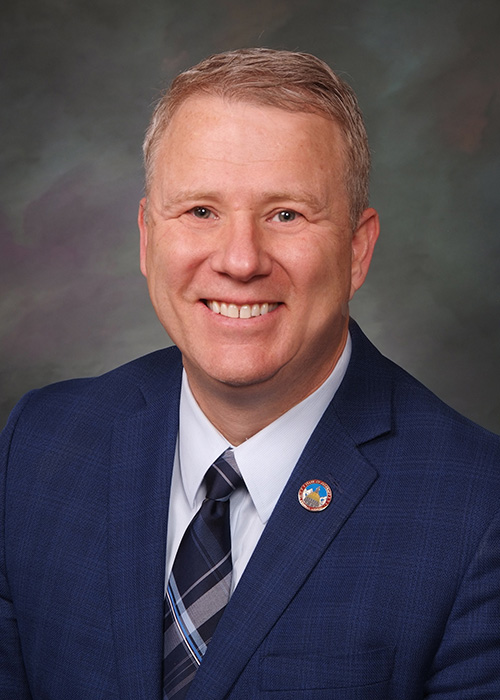
Chris Kolker
DDemocratic
P

Daneya Esgar
DDemocratic
P

Patrick Neville
RRepublican
Ask Maddy
·
AI policy assistant
Ask Maddy about HB 22-1416
Scope: CO
Hi! I can help you understand HB 22-1416. What would you like to know?
Try one of these
i
Maddy answers using official bill text and legislative records. Always verify before sharing.
Sources cited inline