

Culturally Relevant Training Health Professionals
Summary
The act requires the office of health equity (office) in the department of public health and environment to: On or before January 1, 2023, create a culturally relevant and affirming health-care training grant program (program) to provide money to nonprofit entities and statewide associations of health-care providers to develop new, culturally responsive training programs for priority populations; and Contract with a third-party administrator to administer the program. "Priority populations" is defined as people experiencing homelessness; people involved with the criminal justice system; black people, indigenous people, and people of color; American Indians and Alaska natives; veterans; people who are lesbian, gay, bisexual, transgender, queer, or questioning; people of disproportionately affected sexual orientations and gender identities; people who have AIDS or HIV; older adults; children and families; and people with disabilities, including people who are deaf and hard of hearing, people who are blind and deafblind, people with brain injuries, people with intellectual and developmental disabilities, people with other co-occurring disabilities; and other populations as deemed appropriate by the office of behavioral health. The third-party administrator is required to: Issue a grant application for nonprofit entities and statewide associations of health-care providers who wish to participate in the program to develop culturally relevant and affirming health-care training for health-care professionals; and Submit the list of the qualified applicants for the program to the health equity commission in the office for approval. Each regulator in the division of professions and occupations in the department of regulatory agencies for the applicable health-care professional is required to provide information concerning the training courses available to the licensee, certificate holder, or registrant. The regulator is required to encourage participation in the training courses. $900,000 is appropriated from the general fund to the department of public health and environment for allocation to the office to administer and support the program. (Note: This summary applies to this bill as enacted.)
Bill status
signed
all 5 stages cleared
Introduction
Feb 2022
Committee Review
May 2022
House Passage
Apr 2022
Senate Passage
May 2022
Signed into Law
Jun 2022
Introduced Feb 25, 2022
Signed Jun 8, 2022
Floor votes · Senate May 5, 2022 · House Apr 11, 2022
How they voted
21–11
Passed · 2 other
Total votes 34
May 5, 2022
D
Democratic20
100% Yea
R
Republican14
78% Nay
Vote distribution
All Yea
All Nay
Mixed
No data
Full legislative history
Actions timeline
Total actions
17
Key actions
5
Committee
4
Amendments
2
Jun 8, 2022
Signed into law
Governor Signed
executive
May 10, 2022
Introduced
House Considered Senate Amendments - Result was to Concur - Repass
lower
May 9, 2022
Introduced
House Considered Senate Amendments - Result was to Laid Over Daily
lower
May 5, 2022
Upper · Passed
Senate Third Reading Passed - No Amendments
upper
May 3, 2022
Upper · Passed
Senate Committee on Appropriations Refer Amended to Senate Committee of the Whole
upper
Apr 20, 2022
Committee
Senate Committee on Health & Human Services Refer Amended to Appropriations
upper
Apr 13, 2022
Introduced
Introduced In Senate - Assigned to Health & Human Services
upper
Apr 11, 2022
Lower · Passed
House Third Reading Passed - No Amendments
lower
Apr 8, 2022
Lower · Passed
House Committee on Appropriations Refer Amended to House Committee of the Whole
lower
Mar 15, 2022
Committee
House Committee on Public & Behavioral Health & Human Services Refer Amended to Appropriations
lower
Feb 25, 2022
Introduced
Introduced In House - Assigned to Public & Behavioral Health & Human Services
lower
4 primary · 0 co-sponsors
Sponsors
Role
Legislator
Party
State
District
P
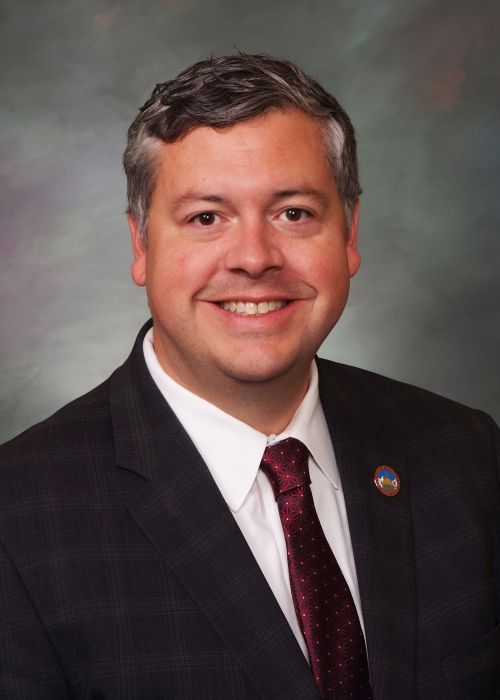
Alex Valdez
DDemocratic
P

Andy Boesenecker
DDemocratic
P
JG
Joann Ginal
DDemocratic
P
RF
Rhonda Fields
DDemocratic
Ask Maddy
·
AI policy assistant
Ask Maddy about HB 22-1267
Scope: CO
Hi! I can help you understand HB 22-1267. What would you like to know?
Try one of these
i
Maddy answers using official bill text and legislative records. Always verify before sharing.
Sources cited inline