

Colorado Fire Commission Recommendations
Summary
The act implements recommendations of the 2020 Colorado Fire Commission Annual Report.The act updates 3 mutual aid statutes affecting the responsibilities of requesting and assisting fire control. Under current statutory provisions, all resources from an agency assisting in fire prevention are under the control of the requesting agency and liability is placed with the requesting agency. Under the changes made by the act, the assisting agency, working under the direction of the incident commander, retains operational control of its resources and, therefore, retains liability for the actions of its crews. The act incorporates the term "emergency responder" to categorize the different agencies assisting in fire prevention.The regional and statewide mutual aid system (RSMAS) is a regional and statewide system that provides for the coordinated initial response of emergency responders to emergency incidents. The act establishes the RSMAS to be administered by the division of fire prevention and control (division) in the department of public safety.The director of the division is required to establish, implement, and maintain the RSMAS. Among the duties of the director in administering the RSMAS is implementing the Colorado coordinated regional mutual aid system (CCRMAS). The CCRMAS establishes geographic areas within the state to be known as division of fire prevention and control (DFPC) districts. Each DFPC district has a regional mutual aid coordinator, whose duties include ensuring that a competent mutual aid plan exists in each DFPC district and who serves as the point of contact within the DFPC district and coordinates mutual aid requests for fire and EMS resources. The act specifies the duties of each regional mutual aid coordinator and of the director of the division with respect to administration of the RSMAS and CCRMAS overall.Unless an emergency responder has opted out of the RSMAS and CCRMAS, all emergency responders are part of the RSMAS and CCRMAS. An emergency responder is relieved from any duty to make its equipment and personnel available to the RSMAS and CCRMAS under circumstances specified in the act. An emergency responder that opts out of the RSMAS and CCRMAS is only eligible for reimbursement to the extent authorized in the rules promulgated by the director of the division.The RSMAS and CCRMAS do not affect any other mutual aid agreement that may be entered into by one or more emergency responders.The act mandates consultation between the director of the office of emergency management (OEM) and the director of the division of fire prevention and control with respect to the CCRMAS. The act requires the director of the OEM to ensure that resources in the CCRMAS are included in the all-hazards resource mobilization system. The director of the OEM is also required to coordinate with the state coordination center to ensure sufficient and effective implementation and integration of the state resources mobilization plan and state and local emergency operations plans.At the end of any state fiscal year commencing with the 2022 state fiscal year, the act requires the state treasurer to transfer any money in the aviation resources line of the annual general appropriation act for that same state fiscal year that would otherwise revert to the general fund into the wildfire preparedness fund (WPF). Money transferred by the state treasurer into the WPF must be used for the purpose of traditional mitigation efforts. As long as money transferred into the WPF is being expended for one of the purposes specified in the act, the division may allocate the money to any such purpose as will maximize the impact of such funding as the division may determine in its sole discretion.Not less than once every 3 years commencing January 15, 2025, the division is required to report to the joint budget committee concerning its expenditures from the transfers made into the WPF under the act.The act appropriates $1,108,800 from the general fund to the department of public safety for the 2021-22 state fiscal year for its implementation.(Note: This summary applies to this bill as enacted.)
Bill status
signed
all 5 stages cleared
Introduction
Mar 2021
Committee Review
May 2021
Senate Passage
Apr 2021
House Passage
Jun 2021
Signed into Law
Jun 2021
Introduced Mar 2, 2021
Signed Jun 22, 2021
Floor votes · Senate Apr 26, 2021 · House May 28, 2021
How they voted
33–0
Passed · 1 other
Total votes 34
Apr 26, 2021
D
Democratic20
100% Yea
R
Republican14
92% Yea
Vote distribution
All Yea
All Nay
Mixed
No data
Full legislative history
Actions timeline
Total actions
16
Key actions
6
Committee
4
Amendments
1
Jun 22, 2021
Signed into law
Governor Signed
executive
Jun 1, 2021
Introduced
Senate Considered House Amendments - Result was to Concur - Repass
upper
Jun 1, 2021
Lower · Passed
House Third Reading Passed - No Amendments
lower
May 28, 2021
House · Passed
House Vote: pass (62-0-3)
house
May 25, 2021
Lower · Passed
House Committee on Appropriations Refer Amended to House Committee of the Whole
lower
May 5, 2021
Committee
House Committee on Energy & Environment Refer Unamended to Appropriations
lower
Apr 26, 2021
Introduced
Introduced In House - Assigned to Energy & Environment
lower
Apr 26, 2021
Upper · Passed
Senate Third Reading Passed - No Amendments
upper
Apr 23, 2021
Upper · Passed
Senate Committee on Appropriations Refer Amended - Consent Calendar to Senate Committee of the Whole
upper
Mar 25, 2021
Committee
Senate Committee on Agriculture & Natural Resources Refer Amended to Appropriations
upper
Mar 2, 2021
Introduced
Introduced In Senate - Assigned to Agriculture & Natural Resources
upper
4 primary · 0 co-sponsors
Sponsors
Role
Legislator
Party
State
District
P
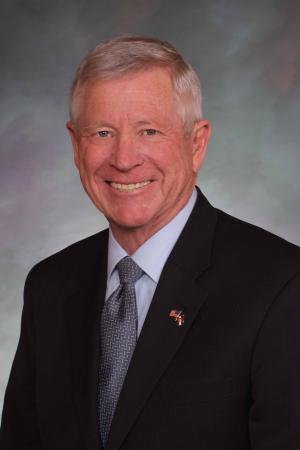
Bob Rankin
RRepublican
P

Julie McCluskie
DDemocratic
P
PW
Perry Will
RRepublican
P
SF
Steve Fenberg
DDemocratic
Ask Maddy
·
AI policy assistant
Ask Maddy about SB 21-166
Scope: CO
Hi! I can help you understand SB 21-166. What would you like to know?
Try one of these
i
Maddy answers using official bill text and legislative records. Always verify before sharing.
Sources cited inline