

Historically Underutilized Businesses Local Government Procurement
Summary
The act requires the department of local affairs (department), no later than August 13, 2021, to establish a pilot program to help local governments identify perceptual and substantial barriers to entry for historically underutilized businesses in local government procurement.The act requires local governments participating in the pilot program to consider a number of items, such as:Identifying implementation needs, such as labor and technology, for historically underutilized businesses preference programs for local government procurement (programs); Determining the appropriate size contracts that would benefit from a program; and Creating a sample program that all local governments may use and articulate the necessary steps to build a program. The act specifies that pilot program participants may collaborate with the department and the general assembly on future legislation requiring local governments to establish programs.In January 2022, the department is required to report on the progress of the pilot program as part of the department's presentation to its committee of reference at a hearing held pursuant to the "State Measurement for Accountable, Responsive, and Transparent (SMART) Government Act".In January 2023, the department is required to include the findings of the pilot program as part of the department's presentation to its committee of reference at a hearing held pursuant to the "State Measurement for Accountable, Responsive, and Transparent (SMART) Government Act".The act defines a historically underutilized business as a business that is at least 51% owned and controlled, in both the management and day-to-day business decisions, by one or more individuals who are:Members of a racial or ethnic minority group; Non-Hispanic Caucasian women; Persons with physical or mental disabilities; Members of the lesbian, gay, bisexual, and transgender community; or Veterans.(Note: This summary applies to this bill as enacted.)
Bill status
signed
all 5 stages cleared
Introduction
Mar 2021
Committee Review
May 2021
House Passage
Apr 2021
Senate Passage
May 2021
Signed into Law
Jun 2021
Introduced Mar 4, 2021
Signed Jun 7, 2021
Floor votes · Senate May 11, 2021 · House Apr 26, 2021
How they voted
20–12
Passed · 2 other
Total votes 34
May 11, 2021
D
Democratic20
100% Yea
R
Republican14
85% Nay
Vote distribution
All Yea
All Nay
Mixed
No data
Full legislative history
Actions timeline
Total actions
14
Key actions
5
Committee
3
Jun 7, 2021
Signed into law
Governor Signed
executive
May 11, 2021
Upper · Passed
Senate Third Reading Passed - No Amendments
upper
May 5, 2021
Upper · Passed
Senate Committee on Finance Refer Unamended to Senate Committee of the Whole
upper
Apr 27, 2021
Introduced
Introduced In Senate - Assigned to Finance
upper
Apr 26, 2021
Lower · Passed
House Third Reading Passed - No Amendments
lower
Apr 19, 2021
Lower · Passed
House Committee on Finance Refer Amended to House Committee of the Whole
lower
Mar 31, 2021
Committee
House Committee on Transportation & Local Government Refer Amended to Finance
lower
Mar 4, 2021
Introduced
Introduced In House - Assigned to Transportation & Local Government
lower
3 primary · 0 co-sponsors
Sponsors
Role
Legislator
Party
State
District
P
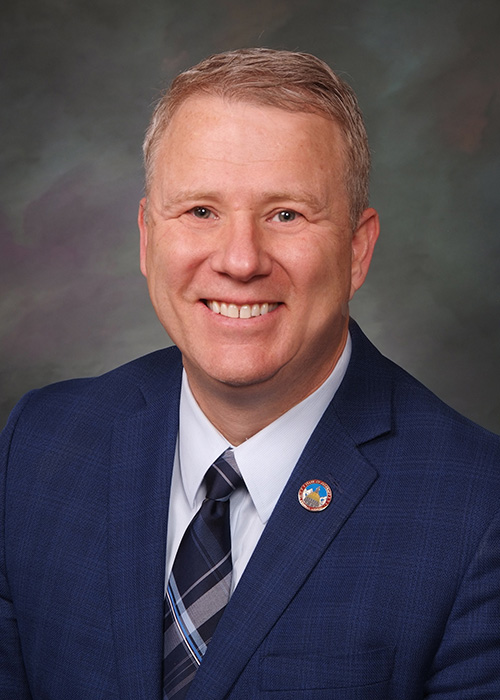
Chris Kolker
DDemocratic
P

Jennifer Bacon
DDemocratic
P

Naquetta Ricks
DDemocratic
Ask Maddy
·
AI policy assistant
Ask Maddy about HB 21-1168
Scope: CO
Hi! I can help you understand HB 21-1168. What would you like to know?
Try one of these
i
Maddy answers using official bill text and legislative records. Always verify before sharing.
Sources cited inline