

Civil Forfeiture Reforms
Summary
During the 2017 session, the general assembly enacted a bill involving civil forfeiture requiring seizing agencies to submit reports to the department of local affairs (department). The bill requires reporting agencies rather than seizing agencies to file the reports and defines 'reporting agency'. The bill also expands the scope of the reports to include seizures related to a local public nuisance law or ordinance. The 2017 act also prohibited seizing agencies from receiving forfeiture proceeds from the federal government unless the aggregate value of property seized in a case is over $50,000. The bill establishes the law enforcement assistance grant program in the department of public safety to reimburse seizing agencies for revenue lost because of this prohibition. The bill establishes the law enforcement community services grant program (program) in the division of local government in the department to provide grants to law enforcement agencies, local governments, and community organizations to improve community services. It establishes a committee to review grant applications and make recommendations on grant awards and establishes a fund from which grants are paid. Under current law, the net balance of proceeds received from a forfeiture action are divided evenly between the governmental body of the seizing agency and the managed service organization providing behavioral health in the judicial district (MSO). The bill provides that the 50% that went to the MSO is now divided so that the MSO and the new law enforcement community services grant program fund each receive 25%. (Note: This summary applies to the reengrossed version of this bill as introduced in the second house.) , Read More
Bill status
signed
all 5 stages cleared
Introduction
Jan 2018
Committee Review
May 2018
House Passage
Apr 2018
Senate Passage
May 2018
Signed into Law
May 2018
Introduced Jan 10, 2018
Signed May 29, 2018
Floor votes · Senate May 4, 2018
How they voted
29–22
Passed · 2 other
Total votes 53
May 4, 2018
D
Democratic29
93% Yea
R
Republican24
91% Nay
Vote distribution
All Yea
All Nay
Mixed
No data
Full legislative history
Actions timeline
Total actions
17
Key actions
2
Committee
6
May 29, 2018
Signed into law
Governor Signed
executive
May 4, 2018
Senate · Passed
Senate Vote: pass (29-22-2)
senate
May 3, 2018
Committee
Senate Committee on Appropriations Refer Unamended to Senate Committee of the Whole
upper
May 2, 2018
Committee
Senate Committee on Finance Refer Unamended to Appropriations
upper
Apr 30, 2018
Committee
Senate Committee on State, Veterans, & Military Affairs Refer Unamended to Finance
upper
Apr 10, 2018
Introduced
Introduced In Senate - Assigned to State, Veterans, & Military Affairs
upper
Apr 6, 2018
Committee
House Committee on Appropriations Refer Amended to House Committee of the Whole
lower
Feb 12, 2018
Committee
House Committee on Finance Refer Amended to Appropriations
lower
Feb 6, 2018
Committee
House Committee on Judiciary Refer Amended to Finance
lower
Jan 10, 2018
Introduced
Introduced In House - Assigned to Judiciary
lower
4 primary · 0 co-sponsors
Sponsors
Role
Legislator
Party
State
District
P
BG
Bob Gardner
RRepublican
P
DK
Daniel Kagan
DDemocratic
P
LH
Leslie Herod
DDemocratic
P
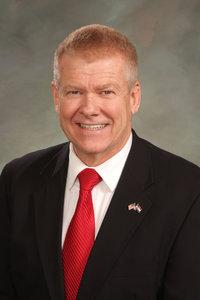
Tim Neville
RRepublican
Ask Maddy
·
AI policy assistant
Ask Maddy about HB 18-1020
Scope: CO
Hi! I can help you understand HB 18-1020. What would you like to know?
Try one of these
i
Maddy answers using official bill text and legislative records. Always verify before sharing.
Sources cited inline