Maddy summaryHB 1001 reduces income tax rates for Arkansas residents, including individuals, trusts, estates, and both domestic and foreign corporations. For individuals, the bill establishes a progressive tax structure with rates ranging from 0% to 3.7% for income up to $94,700, while providing a specific tax credit for income between $94,701 and $97,600. Corporations see their tax brackets adjusted starting in 2027, with rates increasing from 1% to 4.1% on net income exceeding $11,000. The legislation also includes provisions for annual adjustments to the individual tax tables to account for inflation or other economic factors.

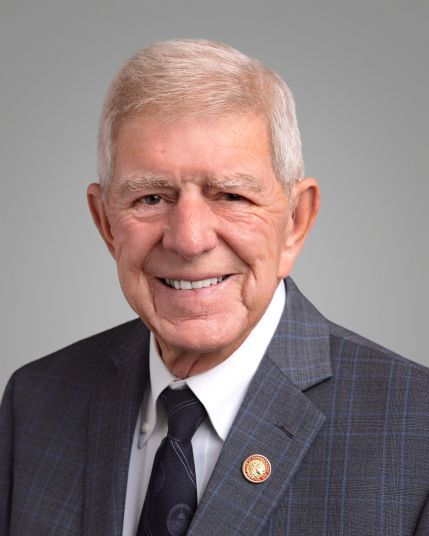
Rep. Dwight Tosh
Sponsored bills
Maddy summaryHB 1079 authorizes $1 million for the Arkansas Department of Corrections to purchase and operate technology designed to detect and stop illegal wireless devices in prisons. The funds will be used to implement systems that monitor and mitigate contraband activity within correctional facilities for the 2026-2027 fiscal year. This legislation includes standard requirements to follow state procurement and budget laws when spending the money.
Maddy summaryHouse Bill 1534 proposes to increase the existing homestead property tax credit. This bill directly affects homeowners by reducing the amount of property taxes they owe on their primary residence. The key mechanism is an adjustment to the credit amount, providing a larger tax reduction for eligible households.
Maddy summarySB 526 proposed to prohibit the retail sale of specific disposable vapor products in Arkansas. It defined a "disposable vapor product" as one with a non-detachable battery that cannot be refilled and is designed for disposal after use. The bill would have banned retailers from selling such products if they originated from a "prohibited foreign party." The Director of Arkansas Tobacco Control could seize non-compliant products, with violations being a Class A misdemeanor, although FDA-approved products were exempt. A 90-day grace period was included for businesses to liquidate existing inventory.
Maddy summarySenate Bill 204 proposes to exempt certain financial gains from state gross income for tax purposes. This exemption would apply to taxpayers whose property is acquired by a government or entity under the right of eminent domain or the threat of condemnation. Essentially, any profit a property owner makes from such a forced sale would not be considered taxable income under this bill.
Maddy summaryHouse Bill 1626, as amended, aimed to prohibit the sale of certain disposable vapor products. The bill's central provision was to ban the sale of disposable vapor products that originate from a "prohibited foreign party," a term defined by referencing an existing legal statute (§ 18-11-802). This measure would have directly impacted retailers selling vapor products and consumers who purchase them. The bill did not pass and died in committee.
Maddy summaryHJR 1015 was a proposed constitutional amendment in Arkansas that aimed to change how judicial candidates appear on the ballot. If approved, it would have required candidates for Supreme Court Justice, Court of Appeals Judge, Circuit Judge, and District Judge to declare their political party affiliation or independent status. This declared affiliation or independent status would then be printed on the ballot for voters to see. The stated purpose of the amendment was to ensure transparency regarding judicial candidates' affiliations. This amendment would have taken effect on January 1, 2027, if passed.
Maddy summaryHB 1662, titled "TO PROHIBIT LOBBYING FOR A COVERED FOREIGN ENTITY," aimed to prevent individuals or organizations from lobbying on behalf of certain foreign entities. The provided text is an amendment to the bill, which made minor changes to specific wording and references within the original text. Without the full original bill text, the specific definitions of "covered foreign entity" or the detailed mechanisms and scope of the prohibition are not available.
Maddy summaryHouse Bill 1842 (HB 1842) reorganizes the Office of Criminal Detention Facilities Review Coordinator by moving it into the Arkansas Commission on Law Enforcement Standards and Training, which is part of the Department of Public Safety. This office is responsible for creating minimum standards for the construction, maintenance, and operation of local, county, regional, state, and juvenile criminal detention facilities. The bill specifies that the Criminal Detention Facilities Review Coordinator will be hired by the Secretary of the Department of Public Safety. The coordinator's duties include ensuring consistent interpretation and administration of these minimum standards.
Maddy summaryHB 1604, now Act 943, amends existing laws regarding contracts made by state agencies in Arkansas. The bill specifically prohibits state agencies from using public funds to purchase promotional items that are manufactured in China. This measure aims to regulate the types of products state agencies can acquire using taxpayer money. These new provisions apply to contracts executed on or after the act's effective date.