

Maddy summaryHR 2978, the GUARD Act, allows state, local, and tribal law enforcement agencies to use existing federal grant funds for investigating elder financial fraud, "pig butchering" investment scams, and general financial fraud. The bill directs these funds toward hiring specialized staff, training on blockchain tools and transnational fraud, purchasing investigative software, improving data collection, and creating financial sector liaisons to coordinate with banks. It requires annual reports from law enforcement on fund usage and outcomes, and mandates federal agencies to submit comprehensive reports to Congress on scam statistics, enforcement actions, and funding allocation. The legislation directly affects law enforcement agencies and aims to strengthen efforts against fraud targeting vulnerable populations, particularly elderly individuals.
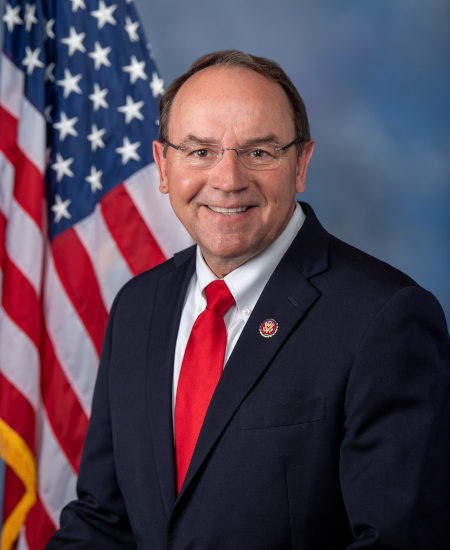
Rep. Thomas P. Tiffany
Sponsored bills
Maddy summaryThis bill requires all new passenger vehicles manufactured for sale in the U.S. to include AM radio as standard equipment (not an optional add-on) by 2027-2028, depending on manufacturer size. It mandates that AM radio receivers must be easily accessible to drivers and allows compliance through digital AM broadcast technology. During a transition period, manufacturers must clearly label vehicles without AM radio but cannot charge extra for this feature. The bill also mandates a GAO study on AM radio's role in emergency alerts and includes a 10-year sunset provision for the rule. It preempts state laws regarding AM radio access in vehicles.
Maddy summaryThe Make Apportionment Great Again Act would change how U.S. House seats are distributed among states by excluding noncitizens from the population count used for apportionment. It requires the Secretary of Commerce to recalculate state populations using existing federal and state government records, without conducting a new census, and mandates that future censuses include a question on citizenship status. The bill establishes a legal presumption that any resulting changes in seat allocation are valid, allowing courts to overturn them only with clear evidence of statutory or constitutional violations. Additionally, it creates an expedited judicial process for legal challenges, requiring cases to be heard by three-judge panels and permitting direct appeal to the Supreme Court.
Maddy summaryHR 5831 designates the U.S. Postal Service facility at 306 South Main Street in Waupaca, Wisconsin, as the "Master Sergeant Melvin O. Handrich Post Office Building." The bill updates all official federal references - such as laws, maps, and documents - to use this new name for the building. It does not create new policies or affect services, but formally changes the facility's official designation. The bill directly impacts how the building is identified in all federal communications and records.
Maddy summaryThis bill authorizes the establishment of two memorials honoring Wisconsin infantry regiments at Civil War battle sites. It directs the Secretary of the Interior to approve locations within Antietam National Battlefield for regiments that fought at Antietam (1862) and within Manassas National Battlefield Park for regiments that fought at the Second Battle of Bull Run (1862). The memorials must be funded and built by private entities - no federal funds may be used for design, acquisition, site preparation, or installation - and the National Park Service will assume maintenance responsibility after installation.
Maddy summaryHR 7008, the Stop Insider Trading Act, restricts Members of Congress, their spouses, and dependent children from purchasing certain investments like stocks in publicly traded companies. It requires 7-14 days' advance public notice before selling any such investment, including the sale date, description, and number of shares. Exceptions apply for work-related transactions (e.g., employer compensation) and reinvesting dividends. Violations trigger a fee of $2,000 or 10% of the investment’s value (whichever is greater), plus any net gain, paid from personal funds - not congressional allowances or campaign donations. The bill aims to prevent conflicts of interest by increasing transparency around congressional financial dealings.
Maddy summaryHR 3937, the Wabeno Economic Development Act, directly transfers approximately 14 acres of National Forest System land in Wisconsin from the federal government to Tony’s Wabeno Redi-Mix, LLC. The bill requires the Secretary of Agriculture to convey the land via quitclaim deed after an appraisal determines its market value, with the company paying that value plus all conveyance costs. It also includes provisions for disclosing hazardous material conditions but exempts the government from remediation responsibilities. Separately, the bill mandates a federal review of permitting processes for stone, sand, and gravel development on public lands, requiring a report on current timelines and recommendations for streamlining. This legislation primarily affects the specific company and federal land management practices, with no broader regulatory changes beyond the review requirement.
Accurately Counting Risk Elimination Solutions Act or the ACRES Act This bill establishes requirements regarding reports about hazardous fuels reduction activities and standardized procedures for tracking data for hazardous fuels reduction. Hazardous fuels reduction activities means any vegetation management activities that reduce the risk of wildfire but excludes the award of contracts to conduct hazardous fuels reduction activities. First, the Department of Agriculture (USDA) and the Department of the Interior must include in the materials submitted in support of the President's budget each fiscal year a report on the number of acres of federal land on which such activities were carried out during the preceding year. Next, USDA and Interior must implement standardized procedures for tracking data related to such activities. The standardized procedures must include regular, standardized data reviews of the accuracy and timely input of data used to track hazardous fuels reduction activities; verification methods that validate whether such data accurately correlates to such activities; an analysis of the short- and long-term effectiveness of such activities on reducing the risk of wildfire; and for hazardous fuels reduction activities that occur partially within the wildland-urban interface, methods to distinguish which acres are located within and which located outside the wildland-urban interface. Finally, the Government Accountability Office must (1) conduct a study on this bill's implementation, and (2) submit a report to Congress with the results of the study.
North Rim Restoration Act This bill allows the National Park Service (NPS) to expedite the approval of contracts to restore forests, structures, and assets within areas of the Grand Canyon National Park impacted by the Dragon Bravo Fire in Arizona. Specifically, the bill authorizes the NPS to use emergency acquisition flexibilities without a presidential emergency or disaster declaration to contract for the following services in such impacted areas: managing or restoring forests, rebuilding structures affected by the fire, improving grounds and structures, conducting recovery efforts, or other specified activities. This authority expires on the date that is the earlier of the following: (1) seven years after the date of this bill's enactment, or (2) the date on which projects and recovery efforts within such area are completed. The NPS may request Congress extend such authority for 12 months if a new wildfire ignites within such area and impacts recovery efforts related to the Dragon Bravo Fire. The bill also authorizes the NPS to enter into noncompetitive procurement contracts for rebuilding, rehabilitating, replacing, or operating assets, such as lodging or utilities, to support the recovery and reopening of the Grand Canyon National Park North Rim. This authority is conditioned upon the NPS making certain determinations regarding the North Rim concessioner and it terminates seven years after this bill's enactment.
Protecting Privacy in Purchases Act This bill prohibits payment card networks from using merchant codes that distinguish firearms retailers from general-merchandise retailers or sporting-goods retailers. The Department of Justice must enforce this bill and report annually on the resulting investigations and cases.