

Maddy summaryHR 5267, the American Franchise Act, clarifies when franchisors can be considered joint employers of franchisee employees under federal labor laws. It defines "substantial direct and immediate control" over essential employment terms like wages, benefits, hours, hiring, and discipline - requiring franchisors to actively set these terms to be deemed joint employers. The bill explicitly excludes routine brand standards, training, or minimal safety requirements from constituting such control. This directly affects franchisors and franchisees by limiting joint employer liability to cases where franchisors exert significant, ongoing influence over core employment decisions. The law applies prospectively to new cases after enactment, not past disputes.
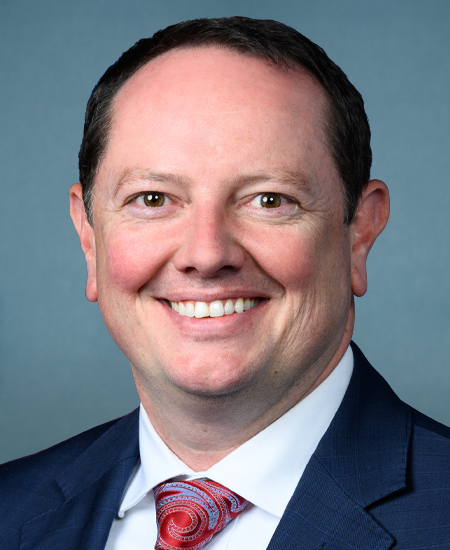
Rep. Eric Burlison
Sponsored bills
Maddy summaryThe Flock-Off Act prohibits federal agencies, state and local governments, and other recipients of federal funds from using federal money to purchase, operate, or maintain automated camera systems that capture biometric data or license plate information. The bill requires these entities to remove any existing covered camera systems within 180 days of enactment, with violations resulting in the withholding of further federal funding until reimbursed. Specific exceptions allow for the continued use of such systems within one mile of the U.S. borders for security purposes and on toll roads strictly for toll collection and enforcement.
Maddy summaryThis bill, titled the Permanent CBDC Ban Act, aims to permanently prohibit the Federal Reserve from issuing a central bank digital currency. It achieves this by amending the Federal Reserve Act to remove the specific legal authority that allows the Reserve to create such a digital currency. The legislation directly affects the Federal Reserve by stripping away its power to launch a digital version of the dollar. By deleting the relevant subsection of the law, the bill ensures that the Reserve cannot issue a CBDC in the future.
Maddy summaryThe Great American Healthcare Act introduces several changes to the U.S. healthcare system, primarily focusing on expanding Health Savings Accounts (HSAs) and increasing price transparency for medical services. Under the HSA provisions, individuals can contribute more money to these accounts, use funds for healthy food and fitness expenses, and roll over unused balances to family members or specific political accounts. The bill also allows employers to satisfy certain coverage mandates by contributing directly to employees' HSAs. To make healthcare costs clearer, the legislation requires hospitals, laboratories, and imaging centers to publicly post their standard charges and negotiated rates in a uniform format. Additionally, the bill mandates that health plans provide detailed itemized bills and explanations of benefits to patients within 45 days of a claim request. Finally, the act expands the ability of pharmacists and nurses to dispense certain low-risk prescription drugs without a doctor's direct supervision and repeals a specific rule regarding Federal Reserve earnings on balances.
Maddy summaryThis bill, known as the D.C. Taxing Authority Review Act, modifies the rules for how new taxes and fees proposed by the District of Columbia government are reviewed by Congress. It requires that any D.C. law imposing or increasing a tax or fee must receive explicit approval from a joint resolution passed by both the House of Representatives and the Senate within 60 days, or else the law will not take effect. Additionally, the bill limits the time for debating these specific approval resolutions to one hour, split evenly between supporters and opponents. These changes directly affect the District of Columbia government's ability to enact new financial measures without prior congressional consent.
Maddy summaryThis bill updates the official address for the Specialist Jeffrey L. White, Jr. Post Office. It amends a previous public law to change the street number for the facility from 324 to 211 in all official records.
Maddy summaryThe Protection Against Mass Surveillance Act prohibits federal agencies from buying, using, or contracting for automated surveillance systems that rely on license plate recognition, facial recognition, biometric identification, or other technologies designed for mass tracking. It also prevents state, local, and tribal governments from using federal funds to acquire or operate these same surveillance tools. If federal agencies obtain data in violation of these rules, the law requires them to delete the information within 30 days and bars its use as evidence in any court or administrative proceeding.
Maddy summaryHR 6213, the Heat Workforce Standards Act of 2025, prohibits the U.S. Department of Labor from finalizing, implementing, or enforcing OSHA's proposed "Heat Injury and Illness Prevention" standard (published August 30, 2024). This bill directly blocks the specific regulatory proposal targeting heat safety in both outdoor and indoor work settings. It does not create new requirements or affect workers; it solely prevents the implementation of the existing OSHA proposal. The bill is procedural, focusing on halting a regulatory action rather than establishing new policy.
Maddy summaryHR 4986, the Parents Opt-in Protection Act, amends federal law to require written permission before schools administer certain student surveys or evaluations. It directly affects students (especially minors) and their parents, requiring schools to obtain prior written consent from the student (if an adult or emancipated minor) or the parent (for minors) for each specific survey. The bill clarifies that schools cannot force participation without this written consent for surveys related to sensitive topics like health or behavior. This change updates existing consent rules from verbal permission to a written requirement for targeted school assessments.
Maddy summaryHR 4123, the FIT Procurement Act, modernizes federal information and communications technology (ICT) procurement by requiring new training for federal acquisition staff and streamlining processes to boost small business participation. The bill mandates a cross-functional ICT training program covering cloud computing, AI, cybersecurity, and commercial tech adoption, with learning objectives focused on outcome-based contracting and reducing waste. It increases simplified acquisition thresholds ($250,000 to $500,000) and micro-purchase limits ($10,000 to $25,000) to reduce administrative barriers. The Act also directs the Comptroller General to assess small business participation in federal tech contracts and requires agencies to eliminate unnecessary procedural hurdles for small businesses. These changes directly affect federal procurement staff, small businesses competing for contracts, and executive agencies managing ICT acquisitions.