

In committee Sep 24, 2026
0 co-sponsors
Total votes
2,837
all sessions
Attendance
97%
98 missed
Near the chamber average
With party
84%
of cast votes
Lower than 99% of chamber peers
Bipartisan score
8%
crosses aisle rarely
Higher than 98% of chamber peers
Sponsored
716
bills & resolutions
Near the chamber average
Committees
7
assignments
716 bills and resolutions
Sponsored bills
Total
716
Primary
56
Co-sponsor
660
This page
716
matching current filters
Amending the Rules of the House of Representatives with respect to the certification requirement in the case of a congressional earmark or limited tax or tariff benefit.
Maddy summaryThis House resolution amends the rules governing congressional earmarks and limited tax or tariff benefits by expanding the scope of required financial interest certifications. It requires members of Congress to certify that not only themselves and their spouses, but also any immediate family member and any entity in which they hold a material financial interest, have no direct or indirect financial stake in the proposed benefit. The amendment specifically includes interests arising from business assets that could reasonably be expected to appreciate in value due to their proximity to the location of the earmarked activity.
In committee Sep 17, 2026
1 co-sponsor
SMILE for Veterans Act
Maddy summaryThe SMILE for Veterans Act directs the Secretary of Veterans Affairs to launch a three-year pilot program that provides dental care to eligible veterans living in rural areas who currently lack access to standard departmental services. The program operates by reimbursing or contracting with community-based providers, such as mobile clinics, nonprofit organizations, and private practices, to deliver basic preventive, restorative, and urgent dental treatments. Eligibility extends to veterans enrolled in the VA system who reside in designated rural areas and are either not otherwise eligible for dental care or unable to reach existing facilities within standard timeframes, with specific provisions allowing homeless veterans to qualify through alternative verification methods. The bill authorizes $5 million for program setup in fiscal year 2027 and $20 million annually for the following three years, while also establishing an internal working group to evaluate access barriers and requiring a final report to Congress on the pilot's effectiveness.
Budget & TaxesSupports Budget & TaxesThe bill establishes and funds a three-year pilot program for dental care for veterans, indicating increased government spending on a public service.
VeteransSupports VeteransThe bill establishes a pilot program to provide dental care to veterans in rural areas, directly expanding access to healthcare services for veterans.
In committee Sep 16, 2026
1 co-sponsor
American Reserve Modernization Act of 2026
Maddy summaryThe American Reserve Modernization Act of 2026 directs the U.S. Treasury to create two new accounts: a Strategic Bitcoin Reserve for Bitcoin acquired through government forfeiture and a Digital Asset Stockpile for other digital assets. The bill mandates that all Bitcoin held in the reserve be kept for at least 20 years, with strict rules against selling or disposing of these assets during that time. It also establishes a transparency system requiring quarterly public reports and third-party audits to verify the government's holdings and management of these digital assets.
In committee Sep 16, 2026
1 co-sponsor
Directing the President, pursuant to section 5(c) of the War Powers Resolution, to remove United States Armed Forces from hostilities with Iran.
Maddy summaryThis concurrent resolution directs the President to withdraw U.S. military forces from hostilities with Iran. It invokes Section 5(c) of the War Powers Resolution, which allows Congress to end ongoing military engagements. The bill permits keeping troops only if they are needed to defend the U.S. or its allies from an immediate attack, provided the President follows specific reporting rules. All other forces must be removed unless Congress has passed a formal declaration of war or a specific authorization for using military force against Iran.
Passed Sep 16, 2026
1 co-sponsor
Save Our Sequoias Act
Save Our Sequoias Act This bill provides for the conservation of giant sequoia trees ( Sequoiadendron giganteum ) in California. Specifically, it provides statutory authority for the Giant Sequoia Lands Coalition and outlines the coalition's duties. The coalition must submit a Giant Sequoia Health and Resiliency Assessment and annually update it. The information from the assessment must be made available so the information can be integrated into certain other plans. The coalition must also create and maintain a website that contains the assessment, educational materials, searchable information about individual giant sequoia groves, and a searchable database to track the status and costs of reforestation and rehabilitation activities. In addition, the bill declares an emergency on certain public lands and allows officials to carry out protection plans during the emergency to respond to the threat of wildfires, insects, and drought. The emergency expires after seven years. The Department of the Interior must develop and implement a Giant Sequoia Reforestation and Rehabilitation Strategy. Finally, the bill establishes a variety of programs and funds to support the conservation of giant sequoias.
Passed Sep 16, 2026
1 co-sponsor
AM Radio for Every Vehicle Act of 2025
Maddy summaryThis bill requires all new passenger vehicles manufactured for sale in the U.S. to include AM radio as standard equipment (not an optional add-on) by 2027-2028, depending on manufacturer size. It mandates that AM radio receivers must be easily accessible to drivers and allows compliance through digital AM broadcast technology. During a transition period, manufacturers must clearly label vehicles without AM radio but cannot charge extra for this feature. The bill also mandates a GAO study on AM radio's role in emergency alerts and includes a 10-year sunset provision for the rule. It preempts state laws regarding AM radio access in vehicles.
Passed Sep 16, 2026
1 co-sponsor
Northeast Lobsterman Protection Act of 2026
Maddy summaryThis bill extends the deadline for specific regulations protecting the North Atlantic right whale from 2028 to 2035. The change directly affects the U.S. government agencies responsible for enforcing these conservation rules, such as the National Marine Fisheries Service. By updating the Consolidated Appropriations Act, 2023, the legislation ensures that current protective measures remain in effect for an additional seven years. This adjustment allows regulators more time to gather data and potentially develop new strategies before the regulations expire.
Passed Sep 14, 2026
1 co-sponsor
Cost Estimates Improvement Act
Maddy summaryThe Cost Estimates Improvement Act requires the Congressional Budget Office and the Joint Committee on Taxation to include public debt servicing costs in their financial estimates, to the extent practicable. This change directly affects federal budgeting processes by ensuring that the interest payments on national debt are factored into official cost projections for new legislation. The bill amends the Congressional Budget and Impoundment Control Act of 1974 to mandate this specific inclusion in all future estimates prepared by these two bodies.
In committee Sep 10, 2026
1 co-sponsor
Get Foreign Money Out of United States Elections Act
Maddy summaryThis bill expands federal election laws to prevent foreign nationals from influencing U.S. elections by tightening restrictions on domestic companies with significant foreign ownership or control. It requires businesses that are at least 50% owned by foreign individuals, or those with specific foreign influence, to file a sworn certification proving they are not foreign-controlled before making any political donations or spending money on election activities. Additionally, the law clarifies that these rules apply to state and local ballot initiatives and mandates that corporate political action funds certify their managers and board members are U.S. citizens or permanent residents. The legislation also prohibits recipients of funds from these businesses from using the money for further political contributions unless they receive and verify the required compliance certification.
In committee Jul 22, 2026
1 co-sponsor
Ask Maddy
·
AI policy assistant
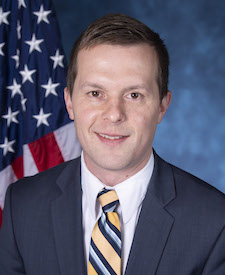
Ask Maddy about Jared F. Golden
Scope: arizona
Hi! I can help you understand Jared F. Golden's legislative record. What would you like to know?
Try one of these
i
Maddy answers using official bill text and legislative records. Always verify before sharing.
Sources cited inline