

Maddy summaryThis House resolution marks the 25th anniversary of the September 11, 2001 terrorist attacks by formally honoring the memory of the nearly 3,000 victims and recognizing the sacrifices made by first responders, military personnel, and the passengers of United Airlines Flight 93. The bill acknowledges the ongoing health challenges faced by survivors and responders, highlighting the role of the World Trade Center Health Program in providing long-term medical support. It also credits charitable organizations and community groups that have continued to assist victims' families and veterans over the past two decades. Finally, the resolution urges the American public to observe the anniversary with ceremonies and reaffirms Congress's commitment to remembering the events and lessons of that day.
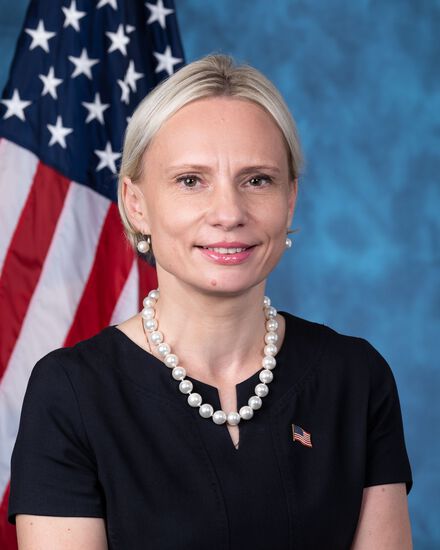
Rep. Victoria Spartz
Sponsored bills
Maddy summaryThe Flock-Off Act prohibits federal agencies, state and local governments, and other recipients of federal funds from using federal money to purchase, operate, or maintain automated camera systems that capture biometric data or license plate information. The bill requires these entities to remove any existing covered camera systems within 180 days of enactment, with violations resulting in the withholding of further federal funding until reimbursed. Specific exceptions allow for the continued use of such systems within one mile of the U.S. borders for security purposes and on toll roads strictly for toll collection and enforcement.
Maddy summaryThe Common Sense 250 Act of 2026 approves the location for a commemorative work honoring Thomas Paine within a specific designated area in Washington, D.C. This legislation overrides previous requirements to allow the project to proceed in Area I, as defined by a 2003 map of commemorative zones in the capital. The bill directly impacts the planning and placement of this memorial by confirming its site without altering other aspects of the Commemorative Works Act.
Maddy summaryThe Competition in State Healthcare Markets Act requires the Department of Health and Human Services to conduct an annual study for ten years regarding healthcare competition and consolidation at the state level. This research will track specific metrics, including medical licensing rules, hospital and insurance mergers, and the number of operating healthcare facilities. The agency must also calculate market concentration levels using the Herfindahl-Hirschman Index and gather data on alternative insurance options like short-term plans. Each year, the results will be submitted to congressional committees and published as publicly accessible interactive datasets on a government website.
Maddy summaryThis resolution expresses support for designating February as Serbian American Heritage Month to honor the history and contributions of the Serbian American community. It recognizes that approximately one million Americans of Serbian ancestry have served in various fields, including the military, science, business, and the arts, while highlighting specific historical events like Operation Halyard. The measure urges the public to observe this month with ceremonies and educational programs that celebrate Serbian heritage and the enduring friendship between the United States and Serbia.
Maddy summaryThis resolution expresses the House of Representatives' support for the Freedom 250 Grand Prix, an INDYCAR race scheduled to take place in Washington, D.C., in August 2026. The bill highlights the event's significance as the first motor race held near the National Mall, where drivers will navigate a course around iconic national monuments to celebrate America's 250th birthday. It recognizes the long history of American INDYCAR racing and its role in fostering national pride and entertainment. The text serves as a formal acknowledgment of the event rather than enacting new laws or funding.
Maddy summaryThe Protection Against Mass Surveillance Act prohibits federal agencies from buying, using, or contracting for automated surveillance systems that rely on license plate recognition, facial recognition, biometric identification, or other technologies designed for mass tracking. It also prevents state, local, and tribal governments from using federal funds to acquire or operate these same surveillance tools. If federal agencies obtain data in violation of these rules, the law requires them to delete the information within 30 days and bars its use as evidence in any court or administrative proceeding.
Maddy summaryThe American Enrichment Deployment Act modifies federal rules to allow the construction of uranium enrichment facilities to begin before a full operating license is granted. This change applies to companies building these facilities, permitting them to start construction under the same conditions used for other nuclear fuel cycle projects. The Nuclear Regulatory Commission must update its regulations within 180 days to implement these new procedures while retaining its authority to oversee safety and enforce compliance.
Maddy summaryHR 5549, the Efficient Nuclear Licensing Hearings Act, streamlines the licensing process for nuclear facilities by reducing mandatory hearings. It allows the Nuclear Regulatory Commission (NRC) to issue construction permits, operating licenses, or amendments without a hearing if it provides 30 days' notice and Federal Register publication, skipping the hearing requirement only when an amendment involves "no significant hazards." This change applies to all pending NRC applications after enactment, shifting from current rules requiring hearings unless waived. The bill directly affects nuclear facility developers, the NRC, and communities potentially impacted by licensing decisions through its revised notice and hearing procedures.
Maddy summaryThe Nuclear Regulatory Modernization Act of 2026 updates how the Nuclear Regulatory Commission handles public hearings and licensing for nuclear facilities. It allows the Commission to issue permits without holding a formal hearing if no one requests one, provided they give at least 30 days of notice and publish their intent in the Federal Register. The bill also permits the construction of uranium enrichment facilities to begin before a final operating license is granted, though the NRC retains the authority to stop construction if regulatory requirements are not met. Additionally, the legislation states that these changes must be implemented in a way that respects existing bans on importing uranium from Russia.