

Maddy summarySCR 1032 is a proposed referendum bill that would require Arizona school districts and charter schools to increase base salaries for eligible teachers if voters approve additional funding from the state land trust. It establishes a "teacher pay fund" using state land trust distributions to cover these salary increases, ensuring all eligible teachers receive the same amount regardless of experience. Schools must publicly post annual salary data on their websites and report to the state education department, with eligibility limited to full-time instructional staff who spend over 75% of their time teaching students. The bill does not take effect until approved by voters and requires ongoing reporting to ensure compliance with the salary increases.
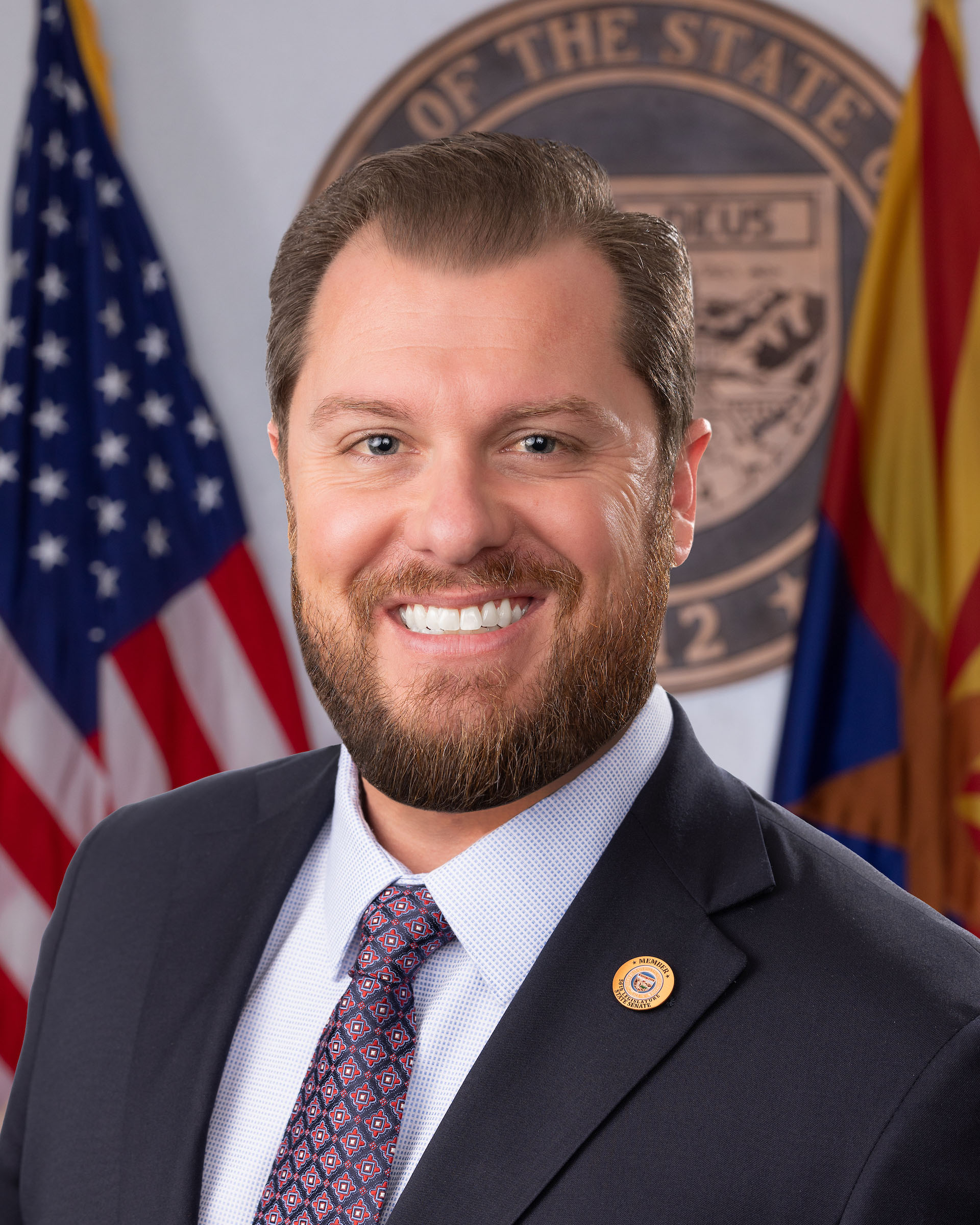
Sen. Jake Hoffman
Sponsored bills
Maddy summaryHCR 2001 proposes amending Arizona's constitution to establish new voting rules. It would require all voters to be U.S. citizens, mandate free government-issued ID at polling places, ban foreign campaign contributions, and set specific early voting hours ending at 7:00 PM on the Friday before general elections. The amendment also guarantees in-person voting access on election day and allows mail-in ballots only for citizens who formally request them and provide citizenship proof. If approved by voters, it would become "The Arizona Secure Elections Act," but it is currently only a proposed constitutional amendment awaiting voter approval.
Maddy summaryArizona's SB 1687 changes election dates for local governments in the state. It shifts the primary election date from the second-to-last Tuesday in July (through 2026) to the Tuesday before the last Monday in May starting in 2028, while keeping general elections on the first Tuesday after the first Monday in November. The bill applies to all cities, towns, counties, school districts, and community colleges, requiring them to hold candidate elections only on these standardized dates in even-numbered years. Exceptions include tax-related votes, which must still be held on specific November dates, and special elections for vacancies. The law aims to consolidate election dates to reduce costs and increase voter participation.
Maddy summarySCR 1030 proposes an Arizona constitutional amendment requiring U.S. citizenship for voting in state elections, banning foreign campaign contributions, and mandating government-issued ID for all voters. It would set a 7:00 PM Friday deadline for early voting before general elections and guarantee in-person voting access on election day. Qualified citizens with proof of citizenship could request mail-in ballots if authorized by law. This amendment, titled "Arizona Secure Elections Act," requires voter approval at the next general election to take effect.
Maddy summaryHCR 2047 is a symbolic Arizona legislative resolution recognizing the historical and biblical significance of "Judea and Samaria" as the ancestral homeland of the Jewish people. It formally rejects the term "West Bank" as a political construct and mandates that Arizona state government use "Judea and Samaria" in all official communications and documents regarding the territory. The resolution cites biblical references, historical claims, and legal arguments (including the San Remo Resolution and League of Nations Mandate) to support its position. As a concurrent resolution, it has no legal effect on international borders or U.S. policy but reflects Arizona's official stance on terminology. It does not alter any existing laws or policies related to the region.
Maddy summaryArizona's SB 1432 prohibits the use of federally issued central bank digital currency (CBDC) as legal tender within the state. It bans CBDC for all contracts, payments, and transactions, including escrow disbursements and distributed ledger technology transfers. The bill amends definitions to explicitly exclude federal digital currency from "legal tender" and requires all transactions to use traditional money or dollar-backed digital assets. This applies to all businesses, individuals, and contracts conducted within Arizona.
Maddy summarySB 1437 amends Arizona's public records law to improve access to government information. It requires public agencies to provide copies of records in electronic format when possible and to charge only for material costs (like paper and ink) for most requests, with exceptions for law enforcement video requests and commercial uses. The bill also mandates that agencies provide an index of withheld records and the reasons for denial when they refuse a request. This affects all Arizona government offices and anyone seeking public records, ensuring clearer access and fee transparency.
Maddy summarySB 1010 renames Arizona's Loop 202 highway as the "Charlie Kirk Highway" in honor of Charlie Kirk. The bill requires the Arizona Department of Transportation to update all official documents, records, and signage to include this new name while maintaining existing designations. It affects public records and highway signage for Loop 202, with no changes to the highway's physical structure or function. This is a ceremonial designation with no substantive policy changes.
Maddy summarySCR 1033 is a resolution urging Arizona's state retirement systems to evaluate potential investments in Bitcoin exchange-traded funds (ETFs). It directs the Arizona State Retirement System and Public Safety Personnel Retirement System to monitor Bitcoin ETF developments, consult with SEC-approved firms, and submit a report on risks, benefits, and implementation options to state officials before the next legislative session. The resolution does not authorize investment but requires a formal assessment of digital asset opportunities for these retirement funds, which manage billions in member assets. This applies specifically to Arizona's public retirement systems, not private or federal funds.
Maddy summarySB 1686 designates a specific area east of the Arizona State Capitol in Phoenix as the "Wesley Bolin and Charlie Kirk Freedom Plaza." The bill honors Charlie Kirk, a veteran, and Don Bolles, a journalist, by naming the plaza after them. It amends state law to include this plaza within the Capitol complex's designated areas for maintenance and public access. The bill does not create new funding or policy changes but formally establishes the memorial's name and location.