Maddy summarySB 1552 is a procedural bill that revises definitions within Arizona's transportation laws (specifically Arizona Revised Statutes Title 28). It updates terminology for terms like "all-terrain vehicle," "autonomous vehicle," "electric bicycle," and "dynamic driving task" to clarify legal language used by the Arizona Department of Transportation (ADOT). The bill does not create new policies or affect specific groups; it solely standardizes existing definitions for consistency in transportation regulations. This type of definitional revision is common in legislative updates to ensure clarity in existing statutes.

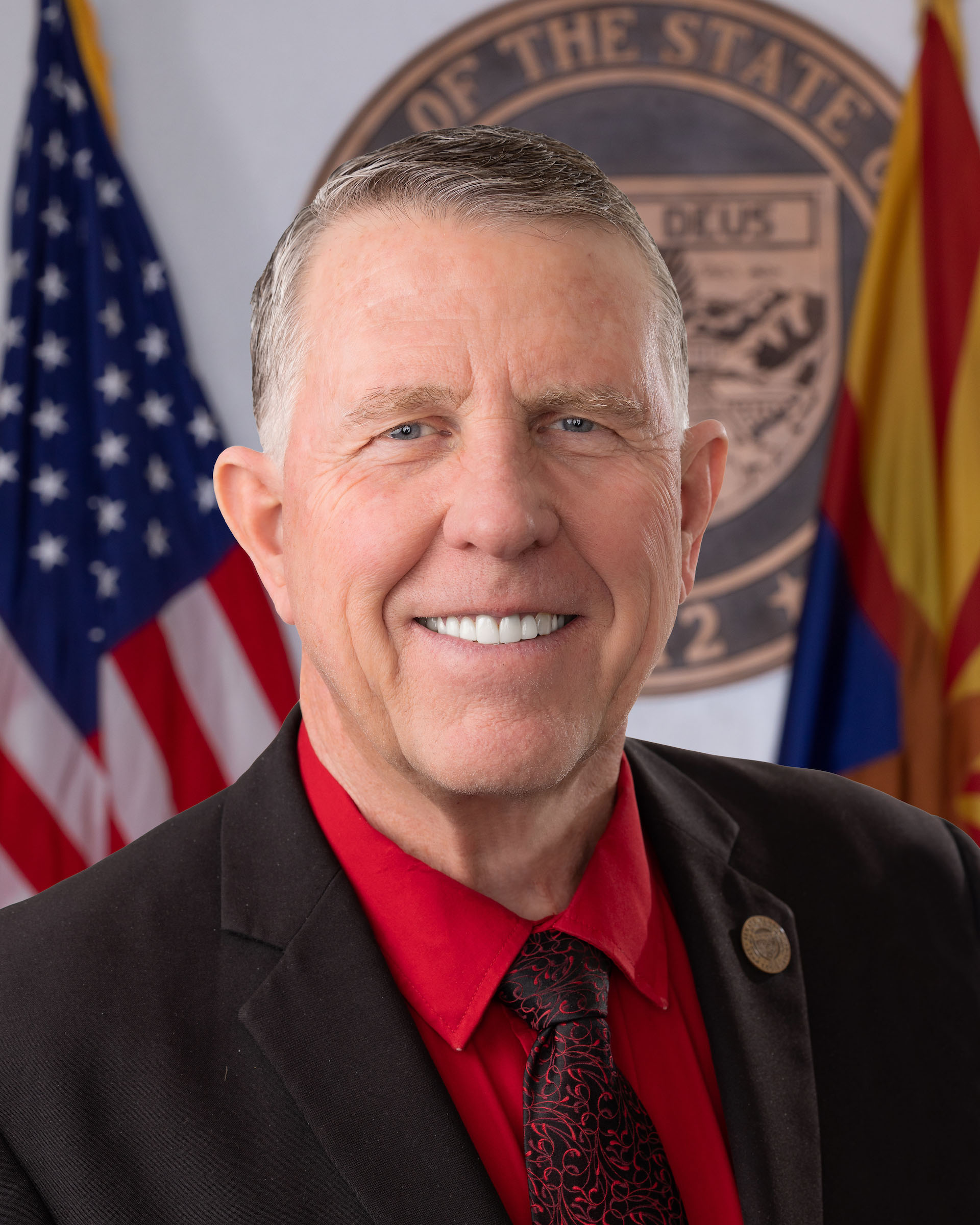
Sen. Dave Farnsworth
Sponsored bills
Maddy summaryThis bill amends Arizona law to establish a formal process for designating certain state highways as "primitive roads." It allows the state director to classify low-traffic routes as primitive roads, requiring warning signs stating "Primitive road, caution, use at your own risk" to inform the public. The law also limits state liability for injuries on these roads, except in cases of intentional harm or gross negligence by state employees. This directly affects drivers using these designated routes and clarifies maintenance responsibilities for the Arizona Department of Transportation (ADOT).
Maddy summaryArizona's SB 1821 amends foster care licensing rules and adds oversight for the Department of Child Safety (DCS). It requires foster parents to complete six hours of initial training and twelve hours of ongoing training annually, mandates fingerprint checks for all adults in foster homes (with limited kinship care waivers), and establishes an auditor general team to review DCS data accuracy and case management systems. The bill directly affects foster parents, DCS staff, and children in foster care by setting clearer standards for home licensing, safety checks, and medication management in group foster homes. Key provisions include mandatory training hours, fingerprint clearance requirements, and enhanced audits to ensure proper tracking of children's placements.
Maddy summarySB 1186 requires companies bidding on state contracts or applying for state grants to disclose any "anything of value" (like donations or loans) they or their executives provided to the governor or related entities (such as campaign committees or political groups supporting the governor) within the past five years. It also mandates that state agencies retain all notes from proposal evaluations and prohibits destroying these notes; if notes are destroyed, related contracts may need to be re-bid. The bill directly affects businesses seeking state contracts or grants by adding transparency requirements about their political contributions. Key provisions include mandatory disclosure for both contract proposals (Section 1) and grant applications (Section 3), alongside new record retention rules for procurement evaluations (Section 2).
Maddy summarySB 1281 requires Arizona's explicit legislative consent before the federal government can acquire privately owned real property within the state, except for land already held by federal agencies. It prohibits county recorders from registering deeds transferring property to the federal government (Section 1) and mandates that property owners or escrow agents notify the legislature before any such sale or transfer, triggering a joint resolution approval process (Section 4). This directly affects private property owners seeking to sell land to the federal government, as they must now obtain state legislative approval through a joint resolution detailing the property and its intended use. Violating these requirements incurs a civil penalty of $500-$1,000.
Maddy summarySB 1327 amends Arizona law to require the Board of Regents to differentiate tuition and fees for students based on whether they are from foreign countries. This directly affects Arizona public universities and their international students, who would pay higher rates than in-state or out-of-state domestic students. The bill adds "students from foreign countries" as a specific category for tuition differentiation under existing authority, while maintaining the 145-credit-hour threshold for undergraduate tuition rates. It also mandates annual reporting to the legislature on students meeting this threshold.
Maddy summaryArizona's HB 2248, titled the "Arizona Medical Freedom Act," bans businesses, schools, and government entities from requiring medical interventions (like vaccines or treatments) as a condition for services, employment, school attendance, or access to facilities. It specifically prohibits: denying services or entry based on vaccination status, requiring interventions for employment (except for foreign travel requirements), or offering different pay based on whether someone has received a medical intervention. The law includes exceptions for standard workplace safety equipment under industry standards (but excludes pandemic-era mandates like mask requirements) and does not apply to schools operating under parental rights laws. Violations can be enforced by the attorney general, who may seek court orders and recover legal fees.
Maddy summarySB 1549 defines "ultralight vehicle" in Arizona law to clarify regulatory boundaries for these aircraft. The bill specifies that an ultralight must be a single-occupant vehicle without a U.S. airworthiness certificate, weigh under 155 lbs unpowered or 254 lbs when powered (with fuel limits of 5 gallons and speed limits of 55 knots), and meet other technical criteria. This definition applies to future regulations governing ultralight operations but does not impose new restrictions or requirements on current users. The bill amends Arizona Revised Statutes § 28-8601 to include this specific definition, primarily serving as a reference for future rulemaking.
Maddy summarySB 1457 establishes Arizona's Advanced Air Mobility Fund, managed by the state treasurer, to support development and deployment of advanced air vehicles. The fund will finance purchasing air mobility vehicles for testing, building vertiports (landing facilities), and specifically for border security - prioritizing counties along Arizona's international border. Monies come from legislative appropriations and private donations, with spending requiring review by the Joint Committee on Capital Review before use. The bill directly affects border counties and transportation infrastructure projects by creating dedicated funding for air mobility technology.
Maddy summarySB 1280 restricts the management of Mexican gray wolves in Arizona by requiring the state wildlife commission to secure a federal memorandum of understanding before releasing wolves. It prohibits releasing wolves within three miles of state trust land or private property and mandates DNA profiling for all released, translocated, or captured wolves. The bill also requires the state agency to report regularly on wolf deaths, feeding costs, captures, collared locations, and incidents involving wolves. Crucially, it bans the transportation of Mexican wolf puppies into Arizona and prohibits using public funds for such transportation.