Maddy summaryHB 4117 makes it a class 1 misdemeanor to knowingly disturb religious services through indecent behavior, profane language, or unnecessary noise near the worship space. It directly affects individuals who disrupt the order and solemnity of religious gatherings, whether inside the venue or nearby. The law specifically targets actions that disturb the "assemblage of persons who have met for religious worship," not general public conduct. This bill, which passed the Arizona House on February 26, 2026, creates a new criminal penalty for such disruptions.

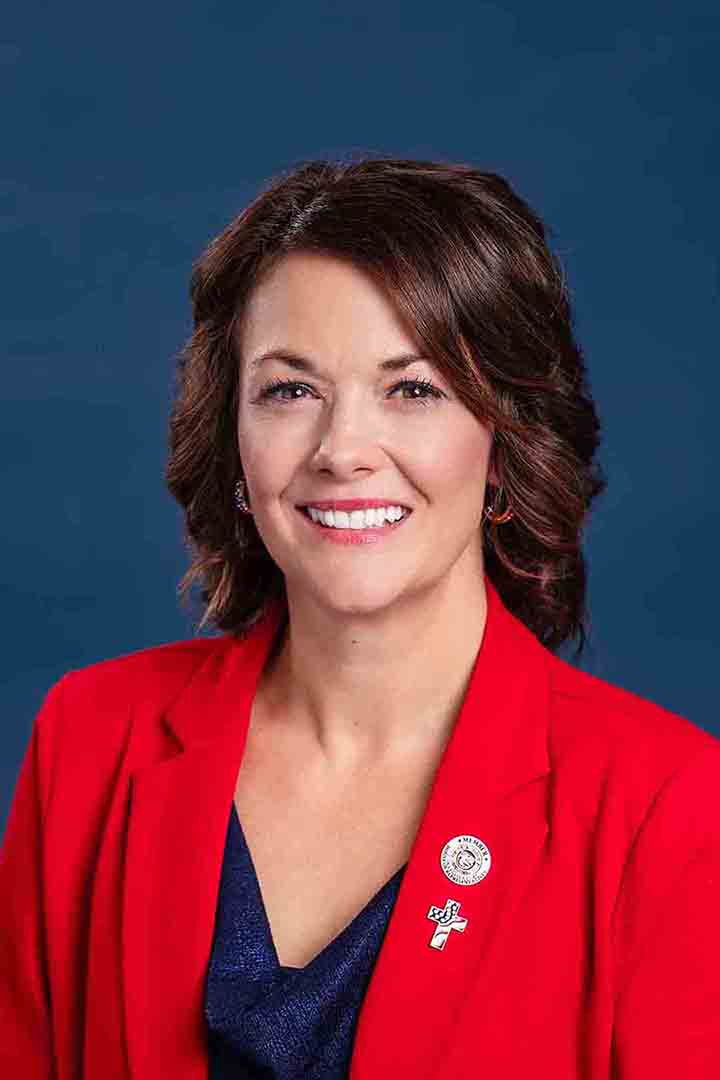
Rep. Rachel Keshel
Sponsored bills
Maddy summaryHB 2662 (Arizona) sets standards for expert testimony in parenting time cases where domestic violence or abuse is alleged. It requires courts to admit only testimony from experts with specific clinical experience supporting victims of domestic violence - not just forensic expertise - and limits evidence to scientifically validated methods. The bill prohibits the use of polygraphs, voice-stress analysis, or unproven psychological measures in these proceedings. This directly affects courts, experts testifying in custody disputes, and parents involved in cases with domestic violence allegations.
Maddy summaryHB 2830 requires Arizona public schools to include age-appropriate, factual instruction on fetal and prenatal development within science education standards. The bill mandates that this instruction cover biological stages (from fertilization through birth), developmental milestones, and supporting structures like the placenta, while explicitly excluding topics such as sexual activity, contraception, or abortion. The state board of education must adopt these standards and determine suitable grade levels for the content. The law clarifies this instruction is not classified as sex education, so it does not require parental consent or opt-out procedures.
Maddy summaryHB 2957 is a definitions bill that amends Arizona's driver license statutes by clarifying terms like "autonomous vehicle," "automated driving system," and "electric bicycle." It does not create new restrictions or requirements but establishes standardized definitions for future legislative or regulatory use. The bill directly affects how Arizona law will interpret these terms in upcoming transportation rules, including those related to self-driving cars and e-bikes. This procedural update has no immediate impact on current driver licensing or vehicle operation.
Maddy summaryHCR 2001 proposes amending Arizona's constitution to establish new voting rules. It would require all voters to be U.S. citizens, mandate free government-issued ID at polling places, ban foreign campaign contributions, and set specific early voting hours ending at 7:00 PM on the Friday before general elections. The amendment also guarantees in-person voting access on election day and allows mail-in ballots only for citizens who formally request them and provide citizenship proof. If approved by voters, it would become "The Arizona Secure Elections Act," but it is currently only a proposed constitutional amendment awaiting voter approval.
Maddy summaryThis is a commemorative resolution (HCR 2063), not a substantive bill. It honors Yvonne Glee Lime Fedderson, founder of Childhelp and a global humanitarian dedicated to child welfare, following her death on January 23, 2026. The resolution expresses the Arizona Legislature's sympathy to her family and admirers, and directs the Secretary of State to send copies of the resolution to her family and Childhelp. It has no policy provisions or impact on legislation.
Maddy summaryHB 2275 amends Arizona's definition of "midwife" in state law to explicitly include professionals who deliver babies or provide health care related to pregnancy, labor, delivery, and postpartum care for mothers and infants. The bill clarifies that licensed midwives under this law cover these specific services, aligning the definition with current practice. It does not create new requirements or affect other aspects of midwifery regulation. This is a technical correction to the existing licensing statute.
Maddy summaryHB 2276 corrects a technical error in Arizona's law defining "obstructing governmental operations" (A.R.S. § 13-2402). The bill clarifies that knowingly interfering with a public servant performing their duties or a peace officer enforcing the law - through violence or threats - remains a class 1 misdemeanor. It specifically excludes obstruction that occurs during an arrest from this offense. This is a procedural update to the statute's wording, not a policy change.
Maddy summaryHCR 2018 is a proposed voter measure (not yet law) that would require Arizona cities and towns to apply a uniform local tax rate to all food sales, eliminating differential tax rates for specific food items. It exempts food manufacturing, wholesale, and distribution from local transaction taxes, and specifically removes taxes on food purchased with SNAP benefits (food stamps) or sold at low cost to eligible elderly, homeless, or disabled individuals through approved programs. The bill affects local governments that impose food taxes, food businesses, and low-income residents using SNAP benefits. If approved by voters, it would apply retroactively to taxable periods starting after the effective date.
Maddy summaryHB 2839 (Arizona) requires cities and towns to apply municipal sales taxes uniformly to all food items, prohibiting extra charges for specific foods. It exempts food manufacturing, distribution, and packaging containers from these taxes, and removes taxes on food purchased with SNAP benefits (food stamps) or low-cost food sold to eligible elderly, homeless, or disabled individuals through approved programs. The law affects local governments imposing food taxes, food businesses, and SNAP recipients by standardizing tax treatment and expanding certain exemptions. It applies retroactively to taxable periods after its effective date.