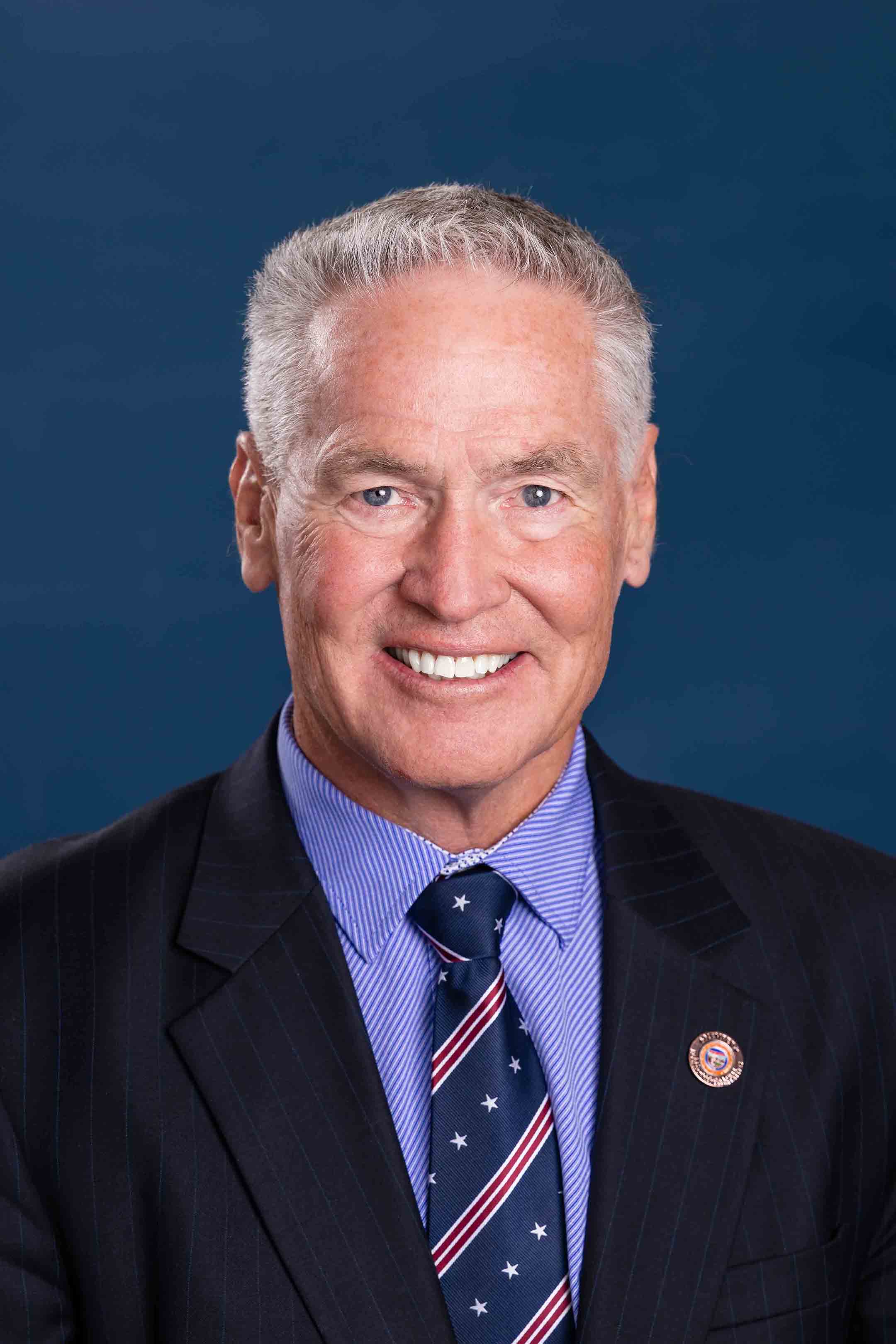
Photo of Ralph Heap
R Arizona House · District 10

Rep. Ralph Heap

Compare
Total votes
1,672
all sessions
Attendance
98%
39 missed
Higher than 87% of chamber peers
With party
84%
of cast votes
Lower than 82% of chamber peers
Bipartisan score
10%
crosses aisle rarely
Higher than 83% of chamber peers
Sponsored
127
bills & resolutions
Near the chamber average
Committees
3
assignments
127 bills and resolutions

Sponsored bills

Total
127
Primary
23
Co-sponsor
104
This page
127
matching current filters
Co-sponsor HB 2700
Signed into law · Arizona House · Co-sponsor
technology study committee; assistive technology

Maddy summaryHB 2700 establishes Arizona's "Technology First Study Committee" to examine assistive technology access for individuals with developmental disabilities. The committee, composed of 12 members from disability advocacy groups, state agencies, universities, and technology programs, will study emerging assistive technologies, analyze current service gaps, and identify improvements to better serve this population. It must submit a final report to state leaders by October 1, 2027, detailing findings and recommendations. The committee is scheduled to cease operations after this report deadline. This bill directly affects Arizonans with developmental disabilities by aiming to improve their access to technology-based support services.

Signed into law Jun 22, 2026 1 co-sponsor
Co-sponsor HB 2660
Vetoed · Arizona House · Co-sponsor
health boards; licensure decisions; investigation

Maddy summaryHB 2660 amends Arizona's chiropractic licensure laws to expand the grounds for disciplinary action against chiropractors. It adds specific prohibitions, including deceptive advertising (e.g., advertising "free" services without disclosing what's included), billing for unprovided services, and soliciting vulnerable patients (like accident victims within 15 days) without proper consent. The bill also strengthens the board's investigation powers, allowing it to require medical/mental exams during probes and issue emergency license suspensions if public safety is at immediate risk. These changes directly affect licensed chiropractors in Arizona by increasing accountability for conduct impacting patient safety and transparency in billing and advertising.

Vetoed Jun 19, 2026 1 co-sponsor
Co-sponsor HB 2248
Vetoed · Arizona House · Co-sponsor
medical interventions; prohibition

Maddy summaryArizona's HB 2248, titled the "Arizona Medical Freedom Act," bans businesses, schools, and government entities from requiring medical interventions (like vaccines or treatments) as a condition for services, employment, school attendance, or access to facilities. It specifically prohibits: denying services or entry based on vaccination status, requiring interventions for employment (except for foreign travel requirements), or offering different pay based on whether someone has received a medical intervention. The law includes exceptions for standard workplace safety equipment under industry standards (but excludes pandemic-era mandates like mask requirements) and does not apply to schools operating under parental rights laws. Violations can be enforced by the attorney general, who may seek court orders and recover legal fees.

Vetoed Jun 19, 2026 1 co-sponsor
Co-sponsor HCR 2001
Passed · Arizona House · Co-sponsor
citizenship; identification; contributions; early voting

Maddy summaryHCR 2001 proposes amending Arizona's constitution to establish new voting rules. It would require all voters to be U.S. citizens, mandate free government-issued ID at polling places, ban foreign campaign contributions, and set specific early voting hours ending at 7:00 PM on the Friday before general elections. The amendment also guarantees in-person voting access on election day and allows mail-in ballots only for citizens who formally request them and provide citizenship proof. If approved by voters, it would become "The Arizona Secure Elections Act," but it is currently only a proposed constitutional amendment awaiting voter approval.

Passed Jun 15, 2026 1 co-sponsor
Co-sponsor HCR 2063
Introduced · Arizona House · Co-sponsor
Yvonne Fedderson; death resolution

Maddy summaryThis is a commemorative resolution (HCR 2063), not a substantive bill. It honors Yvonne Glee Lime Fedderson, founder of Childhelp and a global humanitarian dedicated to child welfare, following her death on January 23, 2026. The resolution expresses the Arizona Legislature's sympathy to her family and admirers, and directs the Secretary of State to send copies of the resolution to her family and Childhelp. It has no policy provisions or impact on legislation.

Introduced Jun 13, 2026 1 co-sponsor
Co-sponsor HCR 2018
Introduced · Arizona House · Co-sponsor
municipal tax; exemption; food

Maddy summaryHCR 2018 is a proposed voter measure (not yet law) that would require Arizona cities and towns to apply a uniform local tax rate to all food sales, eliminating differential tax rates for specific food items. It exempts food manufacturing, wholesale, and distribution from local transaction taxes, and specifically removes taxes on food purchased with SNAP benefits (food stamps) or sold at low cost to eligible elderly, homeless, or disabled individuals through approved programs. The bill affects local governments that impose food taxes, food businesses, and low-income residents using SNAP benefits. If approved by voters, it would apply retroactively to taxable periods starting after the effective date.

Introduced Jun 13, 2026 1 co-sponsor
Co-sponsor HCR 2044
Passed · Arizona House · Co-sponsor
preferential treatment; discrimination; prohibited acts

Maddy summaryThis proposed constitutional amendment (HCR 2044) would prohibit Arizona state and local governments from granting preferential treatment or discrimination based on race, sex, color, ethnicity, or national origin in public employment, education, or contracting. It specifically bans requiring individuals to endorse race-based policies, spending public funds on offices promoting such policies, or implementing disciplinary actions based on race/ethnicity. The amendment directly affects public schools, universities, government agencies, and contractors operating under state authority. If approved by voters, it would become part of Arizona's Constitution, replacing existing antidiscrimination laws in these specific areas.

Passed Jun 12, 2026 1 co-sponsor
Primary HB 2686
Signed into law · Arizona House · Lead sponsor
physicians; surgical centers; call coverage

Maddy summaryHB 2686 is a definitional amendment to Arizona's medical licensing statutes (Section 32-1401), not a substantive policy change. It clarifies terms like "medical assistant," "office-based surgery," "adequate records," and "advisory letter" without creating new requirements or affecting call coverage for surgical centers. The bill solely updates terminology for consistency in medical practice regulations, with no direct impact on physicians, surgical centers, or patient care protocols. This is a procedural adjustment to existing definitions, not a new law altering medical practice standards.

Signed into law Jun 4, 2026 0 co-sponsors
Primary HB 2906
Signed into law · Arizona House · Lead sponsor
dental board; membership

Maddy summaryHB 2906 amends Arizona's dental board membership structure. It changes the board to include six licensed dentists (one must be an oral and maxillofacial surgeon), two licensed dental hygienists, two public members, and one business entity member. All members are appointed by the governor for four-year terms, with new fingerprint-based criminal background checks required before appointment. The bill also specifies that the business entity member must be an employee or owner of a registered business but cannot hold a dental license under the same chapter.

Signed into law Jun 4, 2026 0 co-sponsors
Co-sponsor HB 2641
Signed into law · Arizona House · Co-sponsor
PFAS; firefighting foam; prohibition

Maddy summaryHB 2641 prohibits local governments, fire departments, and state agencies from using class B firefighting foam containing intentionally added PFAS chemicals during training or testing, effective January 1, 2020. Exceptions allow emergency firefighting, fire prevention, and testing at facilities with proper containment, treatment, and disposal measures. The law specifically targets foam for flammable liquid fires (class B) but does not restrict manufacturing, sale, or emergency use of the foam. It defines PFAS chemicals as fluorinated substances used in firefighting formulations and clarifies that the prohibition applies only to non-emergency purposes.

Signed into law Jun 4, 2026 1 co-sponsor
Showing 1 to 10 of 127 bills
1 2 3 13 Next