

0 co-sponsors
Total votes
128
all sessions
Attendance
57%
87 missed
Lower than 96% of chamber peers
With party
88%
of cast votes
Lower than 80% of chamber peers
Bipartisan score
6%
crosses aisle rarely
Higher than 75% of chamber peers
Sponsored
87
bills & resolutions
Lower than 96% of chamber peers
Committees
0
assignments
87 bills and resolutions
Sponsored bills
Total
87
Primary
21
Co-sponsor
66
This page
87
matching current filters
An Act relating to employer contributions in the teachers' retirement system; relating to supplemental employee benefits; and providing for an effective date.
Maddy summarySB 55 reduces required employer contributions to Alaska's teachers' retirement system. It lowers the employer contribution rate from 14.56% to 12.56% of base salaries for active and reemployed retired teachers, and cuts supplemental employee benefit contributions from 9% to 7% of annual compensation. The bill directly affects school districts and public employers participating in the teachers' retirement system (AS 14.25) or public employees' retirement system (AS 39.35), impacting their payroll obligations. The changes take effect July 1, 2025, and also clarify eligibility rules for employers not participating in federal Social Security.
EducationOpposes EducationBill reduces employer retirement contributions and supplemental benefits for teachers, directly cutting teacher compensation and retirement security, a key indicator of opposing education support.
Labor & EmploymentOpposes Labor & EmploymentBill reduces employer retirement contributions (14.56%→12.56%) and supplemental benefits (9%→7%), directly cutting employee compensation and retirement security.
In committee May 15, 2026
1 co-sponsor
An Act relating to the regional educational attendance area and small municipal school district fund; relating to Mt. Edgecumbe High School; and relating to teacher housing.
Maddy summaryHB 174 creates a dedicated fund to support rural school districts and Mt. Edgecumbe High School in Alaska. It provides funding for school construction and major maintenance projects at these locations, as well as for maintenance of state-owned teacher housing located within rural school districts. The bill specifies that the fund must not hold more than $70 million in unspent balances and prioritizes school construction projects. This directly affects regional educational attendance areas, small municipal school districts, and teachers working in those communities.
Budget & TaxesSupports Budget & TaxesCreates dedicated fund for school construction/maintenance, prioritizing educational budget allocations per bill's focus on appropriations and capital projects.
EducationSupports EducationCreates dedicated fund for rural school construction/maintenance and teacher housing, directly advancing K-12 infrastructure and educator support through targeted appropriations.
HousingSupports HousingBill allocates funds for maintenance of state-owned teacher housing in rural school districts, directly supporting housing maintenance for educators within educational infrastructure.
Vetoed Jul 30, 2025
1 co-sponsor
Urging the United States Congress and the President of the United States to reinstate the Secure Rural Schools and Community Self-Determination Act of 2000 and make the funding mechanism in the Act permanent.
Maddy summaryHJR 5 is a resolution passed by the Alaska Legislature urging the U.S. Congress and President to reinstate and permanently fund the Secure Rural Schools and Community Self-Determination Act of 2000. This act provided critical funding to rural communities near national forests (like those in Southeast Alaska) that historically relied on payments from federal timber revenue to support schools, roads, public safety, and infrastructure. The resolution specifically requests retroactive funding for fiscal year 2025 after the program expired in January 2025 and asks Congress to make the funding mechanism permanent. It does not create new law but formally advocates for federal action to prevent budget shortfalls in affected rural areas.
Budget & TaxesSupports Budget & TaxesSeeks permanent federal funding for schools, infrastructure, and public safety programs, directly supporting budget allocation for essential services.
EducationSupports EducationBill seeks to restore funding for schools in rural districts via Secure Rural Schools Act, directly supporting school funding infrastructure historically tied to timber revenue payments.
TransportationSupports TransportationBill explicitly funds rural infrastructure including roads (a transportation component) to support schools and public safety as part of the Secure Rural Schools Act.
Passed Jul 30, 2025
1 co-sponsor
Commemorating the 250th birthday of the United States Marine Corps.
Maddy summaryThis is a symbolic resolution (HCR 6) passed by Alaska's legislature to honor the 250th anniversary of the U.S. Marine Corps' founding on November 10, 2025. It expresses the legislature's recognition of the Marine Corps' historical role, values, and sacrifices, including honoring fallen service members. The resolution calls on Alaskans to participate in commemorative activities and encourages local communities to recognize area Marines. It has no legal effect or policy changes - it is purely a ceremonial expression of support.
Passed Jul 30, 2025
1 co-sponsor
Urging the President of the United States to expand evacuation efforts for applicants with approved Special Immigrant Visas, including resumption of evacuation flights organized by the Coordinator for Afghan Relocation Efforts; urging the United States Department of State to secure legal protections and humanitarian assistance for Special Immigrant Visa applicants; urging the United States Citizenship and Immigration Services in the United States Department of Homeland Security to expedite the review of applications for Special Immigrant Visas; and requesting that the United States Secretary of State provide a report to Congress regarding efforts to reinstate evacuation flights for applicants with approved Special Immigrant Visas.
Maddy summaryHJR 13 is a state resolution urging the U.S. President to resume evacuation flights for Afghan nationals with approved Special Immigrant Visas (SIVs) and their families. It specifically requests the State Department expedite visa processing, secure legal protections for SIV applicants, and provide Congress with a report on reinstating evacuation flights. The resolution directly affects Afghan allies who worked with U.S. forces and have received SIV approval but remain stranded abroad, often separated from family members. As a non-binding resolution, it calls for federal action but does not alter existing law or create new obligations.
Passed Jul 30, 2025
1 co-sponsor
Urging the United States Congress to honor the terms of the Mineral Leasing Act and the Alaska Statehood Act and provide the state with a 90 percent share of all bonuses, royalties, and rentals received by the federal government from the Arctic National Wildlife Refuge and the National Petroleum Reserve in Alaska.
Maddy summarySJR 19 is a non-binding resolution passed by the Alaska Legislature urging the U.S. Congress to honor historical agreements requiring Alaska to receive 90% of federal revenue from oil and gas leases on two specific federal lands: the Arctic National Wildlife Refuge and the National Petroleum Reserve in Alaska. It references the 1958 Alaska Statehood Act and a 1957 amendment to the Mineral Leasing Act, which established Alaska's right to this 90% share as part of statehood negotiations. The resolution does not change current law but requests Congress fulfill this long-standing commitment, particularly as federal energy development expands in these areas. It is a statement of policy position, not a legislative proposal with immediate effect.
Budget & TaxesSupports Budget & TaxesBill seeks 90% federal revenue share from Alaska oil leases, directly increasing state budget resources via intergovernmental revenue sharing as per Statehood Act.
EnergySupports EnergyBill seeks 90% revenue share from oil/gas leases in ANWR/NPR-A, directly advancing fossil fuel energy production under ENERGY subject.
EnvironmentOpposes EnvironmentBill seeks revenue from oil/gas leases in Arctic National Wildlife Refuge (environmental protection area), prioritizing industry over conservation. Does not address environmental protection, supporting fossil fuel development in sensitive ecosystems.
Passed Jul 30, 2025
1 co-sponsor
An Act establishing a violation for hindering the Alaska Sunset Commission; establishing the Alaska Sunset Commission to review, audit, and make recommendations on discontinuation of or changes to state entities; and relating to the powers and duties of the Alaska Sunset Commission.
Maddy summarySB 107 establishes the Alaska Sunset Commission to review state agencies, recommend discontinuing or changing them, and audit their operations. It makes intentionally blocking the commission’s work a violation punishable by up to $5,000 in fines, including for state employees who fail to cooperate. The bill also prohibits convicted violators from working for the state without a special waiver and requires public disclosure of employee disciplinary records related to non-cooperation. This directly affects state agencies, employees, and officials who must comply with the commission’s requests.
In committee May 17, 2025
1 co-sponsor
An Act relating to the membership of the legislative council; and relating to the membership of the Legislative Budget and Audit Committee.
Maddy summarySB 160 changes membership rules for two Alaska legislative committees. It requires the Legislative Council and the Legislative Budget and Audit Committee to include at least one member from each of the two major political parties on each house's delegation (replacing previous "minority" language). The bill also defines "minority" as a group with organized leadership representing at least 25% of a house's membership. These changes affect how committee members are appointed, not policy outcomes. (Procedural bill; summary focuses solely on membership requirements.)
In committee May 16, 2025
0 co-sponsors
An Act relating to the Executive Budget Act; relating to strategic plans, mission statements, performance plans, and financial plans for executive branch agencies; and providing for an effective date.
Maddy summarySB 37 requires Alaska executive branch agencies to include specific details in their budget submissions, such as lists of reimbursable services agreements, descriptions of those services, and the entities involved. It mandates that agencies develop mission statements and performance plans outlining desired results, which must align with efficient resource use. The bill also requires agencies to report semi-annually on performance metrics to the legislature for transparency. These changes apply directly to state agencies preparing budgets under Alaska Statutes 37.07.085 and 37.07.010, aiming to improve accountability in budget management.
In committee May 12, 2025
1 co-sponsor
Ask Maddy
·
AI policy assistant
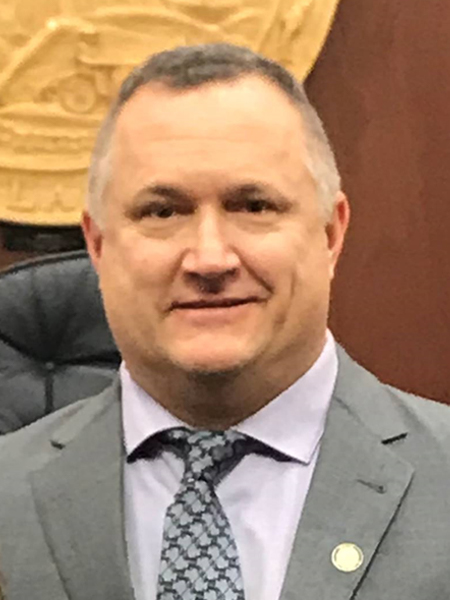
Ask Maddy about Mike Shower
Scope: alaska
Hi! I can help you understand Mike Shower's legislative record. What would you like to know?
Try one of these
i
Maddy answers using official bill text and legislative records. Always verify before sharing.
Sources cited inline