Maddy summaryHB 36 amends Alaska law to allow minors aged 16 or older in foster care to consent to up to five outpatient mental health sessions without parental permission. After five sessions, mental health providers must obtain parental consent for medication or continued treatment. The bill also establishes documentation standards for homeless minors (16+ years) to self-certify eligibility for consent, requiring verification from specific officials or professionals. It directly affects youth in Alaska’s child welfare system receiving mental health services, particularly those in foster care or experiencing homelessness.

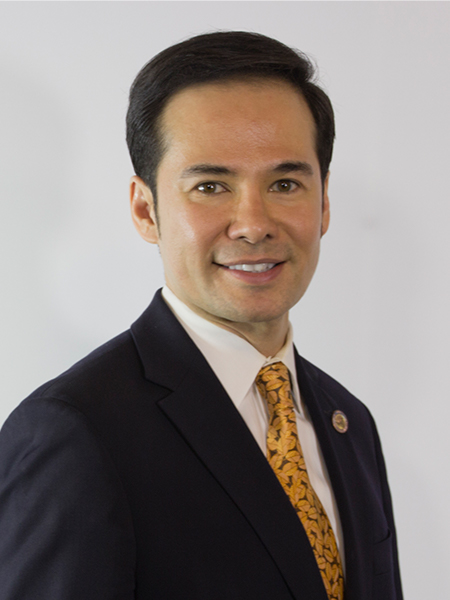
Rep. Neal Foster
Sponsored bills
Maddy summaryHB 25 bans polystyrene foam (Styrofoam) containers for prepared food in restaurants and prohibits state agencies from purchasing such items. It requires restaurants to use biodegradable or compostable alternatives instead, with exemptions available if affordable alternatives are unavailable or if compliance would cause undue hardship. Exceptions include food prepared outside Alaska, reusable coolers, and disaster emergencies. The law takes effect January 1, 2026, and defines key terms like "disposable food service ware" and "biodegradable" to clarify coverage. This directly affects restaurants, food vendors, and state purchasing decisions.
Maddy summaryHB 126 allows Native village corporations that were involuntarily dissolved under Alaska law to apply for reinstatement by December 31, 2026, if they missed the original reinstatement deadline. Once reinstated, these corporations and their shareholders regain all legal rights, obligations, and privileges as if dissolution never occurred, with actions taken during dissolution treated as valid. The bill also permits a corporation's board of directors to change its name (if the previous name is unavailable) without following standard corporate amendment procedures. This applies only to Native village corporations, not religious or nonprofit entities as referenced in the title but not detailed in the bill text.
Maddy summaryHB 133 requires Alaska state agencies to pay contractors within 30 days of receiving a compliant payment request for contracts under the State Procurement Code. For grants and reimbursement agreements to nonprofits, municipalities, and Alaska Native organizations, it sets a 30-day payment deadline (21 days if federal funds are used) after a compliant request is submitted. If payments are delayed, agencies must pay interest starting on the 31st day for contracts or the 21st/30th day for grants. Agencies must also provide written notice within eight working days if withholding payment, detailing the reason and required corrections to resolve the issue.
Maddy summaryHB 52 ensures minors receiving inpatient mental health treatment at psychiatric hospitals in Alaska have the right to weekly confidential communication (via phone or video) with parents, legal guardians, or an approved adult, unless prohibited by law or deemed unadvisable by a physician. The bill requires psychiatric hospitals to report all uses of seclusion or restraint to the Department of Health and parents within one business day, and mandates biannual unannounced inspections of hospitals treating minors, including interviews with at least 50% of minor patients. It also requires the Department of Health to publish an annual report detailing seclusion/restraint usage, inspection findings, and data on minors in care, with the report due by November 1 each year. These provisions take effect on July 1, 2025.
Maddy summaryHJR 39 is a resolution passed by the Alaska State Legislature urging the federal government to waive a $100,000 annual H-1B visa fee for international educators hired by Alaska schools. It directly affects Alaska school districts - particularly rural and remote ones facing teacher shortages in subjects like math, science, and special education - who currently employ nearly 500 international educators. The resolution cites that the fee increase threatens to force schools to pay millions or lose needed teachers, impacting over 5,000 students currently without adequate staffing. This is a non-binding request to federal officials (including the President, Education Secretary, and Homeland Security Secretary), not a law that would change visa fees itself.
Maddy summaryHB 1 clarifies that gold and silver coins (defined as "specie") cannot be subject to borough or city sales and use taxes in Alaska. It also updates Alaska's legal tender definition to include federal, recognized foreign, or state-authorized gold/silver coins, while explicitly stating individuals are not required to accept such coins for payments. The bill primarily affects local tax policies and defines the conditions under which specie qualifies as legal tender, without creating new taxes or altering existing tax obligations.
Maddy summaryHB 226 increases the loan amount eligible for lower interest rates on Alaska Housing Finance Corporation (AHFC) loans for small community and multi-family housing. It raises the threshold from $250,000 to $400,000, meaning loans up to $400,000 will qualify for the reduced rate, while amounts exceeding this will use standard interest rates. The bill directly affects Alaska residents applying for AHFC loans under specific housing programs. This change modifies existing law (AS 18.56.470) to expand access to lower-cost financing for qualifying housing projects.
Maddy summarySB 26 is a bill that petitions the U.S. Department of Transportation to move all of Alaska into the Pacific Standard Time zone under the Uniform Time Act of 1966. It also permanently exempts Alaska from observing daylight saving time, requiring the state to use standard time year-round during periods when daylight saving time would otherwise apply. The exemption only takes effect if the Department of Transportation approves the time zone change by January 1, 2035. This bill directly affects all Alaskans by changing the state’s time zone and eliminating seasonal clock changes. The bill itself does not implement the change but seeks federal approval for the policy shift.
Maddy summaryHB 202 designates giant cabbage (Brassica oleracea var. capitata) as Alaska's official state vegetable. The bill amends state code to formally include this designation and takes effect immediately upon enactment. This is a symbolic measure with no substantive policy changes or direct impact on residents or state programs.