

In committee Sep 24, 2026
1 co-sponsor
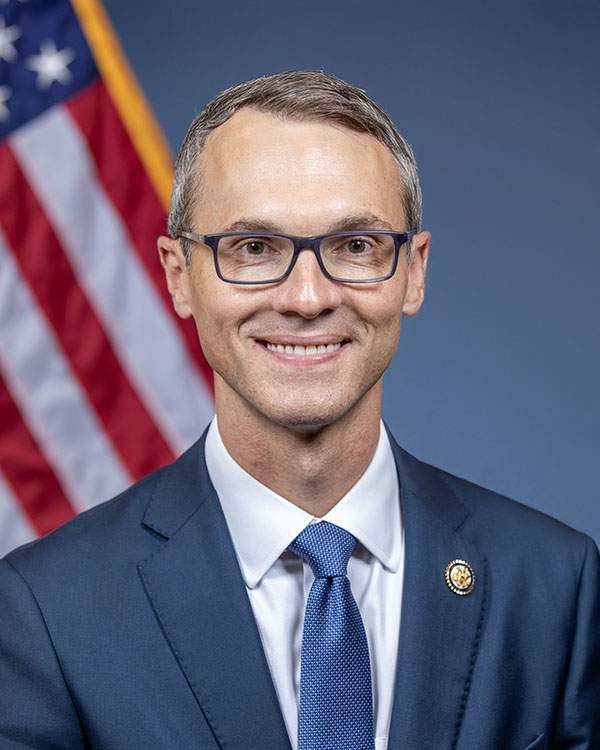
Rep. James R. Walkinshaw
Total votes
430
all sessions
Attendance
99%
3 missed
Higher than 80% of chamber peers
With party
98%
of cast votes
Near the chamber average
Bipartisan score
1%
crosses aisle rarely
Near the chamber average
Sponsored
400
bills & resolutions
Near the chamber average
Committees
6
assignments
400 bills and resolutions
Sponsored bills
Total
400
Primary
24
Co-sponsor
376
This page
400
matching current filters
Expressing the sense of the House of Representatives that the third Friday of September should be recognized as "National POW/MIA Recognition Day".
Maddy summaryThis House resolution expresses the sense that the third Friday of September should be recognized as National POW/MIA Recognition Day to honor prisoners of war and missing-in-action military personnel. It cites Department of Defense statistics showing over 80,000 U.S. servicemembers remain unaccounted for across various conflicts, with the majority located in the Asia-Pacific region. The bill acknowledges the federal government's moral obligation to account for these individuals and encourages Americans to participate in local commemorative celebrations, display the POW/MIA flag, and perform acts of service for affected families.
In committee Sep 17, 2026
1 co-sponsor
To direct the Director of National Intelligence to submit to Congress a report on the use of artificial intelligence systems to acquire, analyze, query, disseminate, or otherwise access information under section 702 of the Foreign Intelligence Surveillance Act of 1978.
Maddy summaryThis bill requires the Director of National Intelligence to submit a report to Congress within 180 days detailing how artificial intelligence systems are used to access information under Section 702 of the Foreign Intelligence Surveillance Act. The report must include an overview of these AI applications, an evaluation of safeguards ensuring compliance with the law and the Fourth Amendment, and a list of the specific AI models in use. Additionally, it requires disclosure of any related information previously submitted to the Foreign Intelligence Surveillance Court by the Department of Justice or intelligence agencies. The Director of National Intelligence must coordinate this effort with the heads of major intelligence agencies, including the FBI, CIA, and NSA.
Criminal JusticeSupports Criminal JusticeThe bill requires a report on AI use in surveillance and an evaluation of safeguards to ensure compliance with the Fourth Amendment, which protects civil rights and enhances accountability in criminal justice.
TechnologySupports TechnologyThe bill requires a report on AI use in intelligence, including safeguards and compliance. This promotes oversight and accountability for AI systems, indirectly supporting responsible technology development and use.
In committee Sep 17, 2026
1 co-sponsor
To designate the facility of the United States Postal Service located at 1225 Kempsville Road in Virginia Beach, Virginia, as the "Colonel Edward Shames Post Office Building".
This bill designates the facility of the United States Postal Service located at 1225 Kempsville Road in Virginia Beach, Virginia, as the "Colonel Edward Shames Post Office Building".
Passed Sep 17, 2026
1 co-sponsor
Wintergreen Emergency Egress Act
Wintergreen Emergency Egress Act This bill directs the Department of the Interior to issue a right-of-way through the Blue Ridge Parkway for an additional emergency exit from Wintergreen in Nelson County, Virginia, once certain requirements have been met. Specifically, Interior must grant the right-of-way if it reports to specified congressional committees that the following have been completed: (1) an evaluation of alternatives to the right-of-way for exiting Wintergreen that do not cross federal land, including an evaluation of whether existing trails can be converted to roads; (2) an analysis of expected fire ecology behavior in the event of a fire emergency with respect to the right-of-way; and (3) any required reviews under the National Environmental Policy Act of 1969 and the National Historic Preservation Act.
Passed Sep 17, 2026
1 co-sponsor
CISA Force Structure Assessment Act
Maddy summaryThe CISA Force Structure Assessment Act requires the Director of the Cybersecurity and Infrastructure Security Agency to evaluate whether the agency has enough staff, resources, and properly trained personnel to fulfill its mission. This review must cover specific areas such as securing federal systems, protecting state and local governments, managing critical infrastructure risks, and addressing emerging technologies like artificial intelligence and quantum computing. The Director is required to consult with other federal agencies, industry groups, and government officials while conducting this assessment. Within one year of the bill's enactment, a report detailing the findings and recommendations for any identified shortages or training gaps must be submitted to the relevant congressional committees.
In committee Sep 16, 2026
0 co-sponsors
Justice for Ukrainian Children Act
Maddy summaryThe Justice for Ukrainian Children Act directs the U.S. government to support efforts to locate and rescue Ukrainian children forcibly transferred by Russia, while imposing mandatory sanctions on foreign individuals who facilitate these transfers. The bill authorizes at least $15 million annually from fiscal years 2027 through 2032 to fund evidence collection, maintain a centralized database, and assist in the rehabilitation of affected children. It requires the President to block the assets and revoke the visas of any foreign person found to have knowingly participated in the abduction or indoctrination of Ukrainian minors, with limited exceptions for humanitarian aid and national security needs. Additionally, the legislation allocates $10 million annually to expand U.S. media broadcasting services in Ukraine and neighboring regions to counter disinformation.
Budget & TaxesSupports Budget & TaxesThe bill authorizes at least $15 million annually from fiscal years 2027 through 2032, directly impacting government spending and appropriations for a specific program.
Criminal JusticeSupports Criminal JusticeThe bill supports international efforts to address crimes against children, which aligns with broader criminal justice principles of accountability and victim support, although it is not domestic criminal justice reform.
In committee Sep 16, 2026
0 co-sponsors
American Procurement Improvement Act of 2026
Maddy summaryThe American Procurement Improvement Act of 2026 modernizes the AbilityOne Program by renaming it the Commission for the Employment of Individuals Who Are Blind or Have Significant Disabilities and updating its statutory framework to better support employment opportunities for people with disabilities. The bill expands the definition of eligible workers to include those with significant disabilities beyond blindness, while requiring qualified nonprofit agencies to maintain a workforce where at least 51 percent of direct labor hours are performed by these participating employees. Key provisions mandate that agencies provide professional development and pay participating employees rates consistent with their nondisabled peers, and they establish new rules for adding or removing products from the federal procurement list, including time-limited additions for pilot projects. Additionally, the legislation introduces mechanisms to monitor involuntary terminations of workers, allows for governmentwide contract vehicles to improve procurement efficiency, and ensures that intergovernmental support agreements cannot be used to bypass these federal hiring requirements.
In committee Sep 16, 2026
1 co-sponsor
ASAP Act
Maddy summaryThis bill would require Medicare to cover early detection screening tests for Alzheimer's disease and related dementias starting January 1, 2028. It defines eligible tests as FDA-cleared genomic blood tests, blood product analyses, or equivalent medical imaging methods (like protein expression or whole genome sequencing) that detect pre-symptomatic or early-stage conditions. Medicare beneficiaries would receive this coverage without cost-sharing for these specific screenings. The bill amends Medicare coverage rules to explicitly include these tests under Section 1861(nnn) of the Social Security Act.
In committee Sep 16, 2026
1 co-sponsor
TRAPS Act
Maddy summaryThe TRAPS Act establishes a federal Task Force on Payment Scams, chaired by the Treasury Secretary, to coordinate efforts across agencies like the FTC, Federal Reserve, and consumer groups. The Task Force will study current scam tactics (such as fake text messages or fraudulent payment platforms), evaluate prevention strategies, and develop recommendations to help consumers avoid and report scams. It must submit an initial report within one year and annual updates, focusing on improving federal-state coordination and education programs. This bill directly affects government agencies and stakeholders participating in the Task Force, with the goal of protecting consumers from evolving payment scams.
In committee Sep 16, 2026
1 co-sponsor
Ask Maddy
·
AI policy assistant
Ask Maddy about James R. Walkinshaw
Scope: alabama
Hi! I can help you understand James R. Walkinshaw's legislative record. What would you like to know?
Try one of these
i
Maddy answers using official bill text and legislative records. Always verify before sharing.
Sources cited inline