

Juvenile court, required to provide written notification to local superintendent or principal of private K-12 school if student charged with or adjudicated delinquent for certain serious crimes; authorized to provide written notice of charges for or adjudication of delinquency for lesser crimes
SB 133 requires juvenile courts to send written notices to private K-12 school principals or superintendents when a student is charged with or found delinquent for serious crimes like murder, rape, or sodomy (classified as capital offenses or Class A/B felonies). For less serious offenses, courts may choose to provide similar notice at their discretion. This law directly affects private school administrators by mandating communication about student legal issues tied to specific violent or severe crimes. The bill focuses on transparency between courts and schools for a defined set of offenses, without altering school discipline policies. It does not apply to minor offenses or public school systems.
Bill status
passed
3 of 5 stages cleared
Introduction
Feb 2025
Committee Review
Apr 2025
Senate Passage
Mar 2025
House Passage
Governor
Introduced Feb 6, 2025
Last action Apr 9, 2025
Maddy AI version diff · 1 comparison
What changed between versions
Introduced
→
Judiciary Engrossed Substitute Offered
·
4 edits
·
Mar 18, 2025
MODERATE
This bill was amended by the House Judiciary Committee to clarify which specific serious crimes trigger mandatory notification to schools. The original version required notification for Class A or B felonies, while the revised version explicitly lists capital offenses, murder, rape in the first degree, and sodomy in the first degree as mandatory triggers. The bill also added language allowing school officials to share information with staff who need it to supervise students, and corrected some grammatical errors in the original text.
Scope change
The bill's scope was narrowed and clarified by specifying exactly which serious crimes require mandatory notification to schools, moving from a general felony classification to specific enumerated offenses.
REQUIREMENT
Changed the mandatory notification threshold from 'Class A or B felony' to specific enumerated offenses including capital offenses, murder, rape in the first degree, and sodomy in the first degree.
Added language clarifying that school principals may disseminate information to teachers and staff who need it to supervise students.
TECHNICAL
Corrected grammatical errors in the original text, such as changing 'provide provide' to 'provide' and 'rehabilitating the child or to' to 'rehabilitate the child or to'.
Updated document header information to reflect House Judiciary Committee substitute version with new tracking number and date.
Floor votes
How they voted
This bill passed the Senate by voice vote (no roll call recorded).
Full legislative history
Actions timeline
Total actions
13
Key actions
5
Committee
4
Amendments
2
Apr 9, 2025
Introduced
Judiciary Engrossed Substitute Offered (Judiciary)
lower
Apr 3, 2025
Lower · Passed
Reported Out of Committee Second House (Judiciary)
lower
Apr 3, 2025
Introduced
Judiciary 1st Amendment (Judiciary)
lower
Mar 19, 2025
Lower · Passed
Pending Committee Action in Second House (Judiciary)
lower
Mar 18, 2025
Upper · Passed
Motion to Read a Third Time and Pass - Adopted Roll Call 349
upper
Feb 19, 2025
Upper · Passed
Reported Out of Committee House of Origin
upper
Feb 6, 2025
Upper · Passed
Pending Committee Action in House of Origin (Education Policy)
upper
1 primary · 0 co-sponsors
Sponsors
Role
Legislator
Party
State
District
P
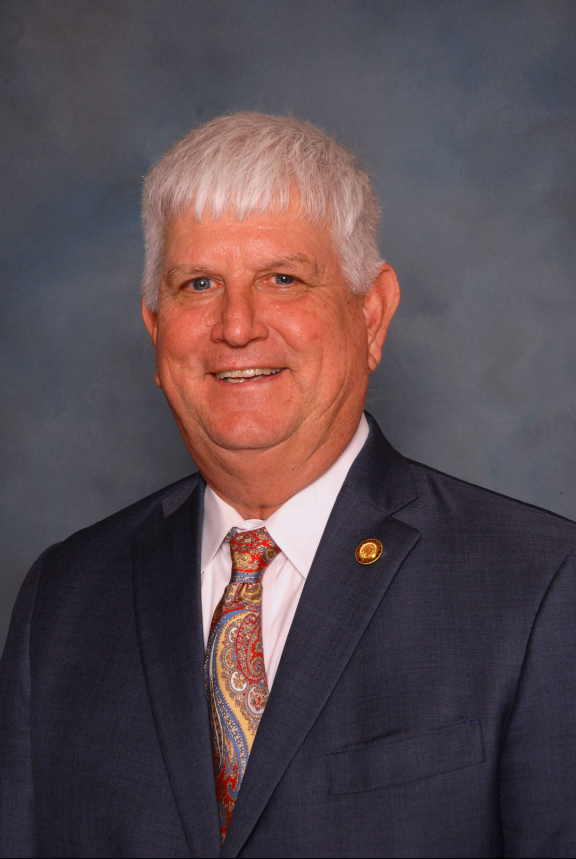
David Sessions
RRepublican
Ask Maddy
·
AI policy assistant
Ask Maddy about SB 133
Scope: AL
Hi! I can help you understand SB 133. What would you like to know?
Try one of these
i
Maddy answers using official bill text and legislative records. Always verify before sharing.
Sources cited inline