HB 449 Alabama House · 2025 Regular Session

Crimes and offenses; crimes of unlawful use of DNA in the first, second, and third degree created, criminal penalties provided

HB 449 creates new criminal offenses related to the unlawful use of an individual's DNA sample or genetic data without their explicit permission. The bill defines "express consent" as clear authorization provided after a disclosure about how the DNA will be collected, used, or shared. It establishes three degrees of unlawful DNA use, with penalties ranging from a Class A misdemeanor for unauthorized collection or retention to a Class C felony for intentionally selling or transferring another person's DNA without consent. Exceptions are provided for uses by law enforcement, criminal investigations, court orders, and certain regulated entities.
Bill status passed 3 of 5 stages cleared
Introduction
Mar 2025
Committee Review
May 2025
House Passage
Apr 2025
Senate Passage
Governor
Introduced Mar 18, 2025 Last action May 6, 2025
Maddy AI version diff · 1 comparison

What changed between versions

Introduced Engrossed · 5 edits · Apr 29, 2025
MODERATE
The bill was amended from Introduced to Engrossed status, primarily adding new exemptions for genetic testing companies and higher education institutions, expanding law enforcement protections, and reorganizing the structure of criminal penalties. The changes clarify when DNA collection and use is permitted without consent while maintaining core privacy protections.
Scope change
The bill's scope was expanded to include additional exemptions for genetic testing companies, covered entities under HIPAA, and higher education institutions, while law enforcement exemptions were made more specific regarding criminal investigations and court proceedings.
EXEMPTIONS

Added exemptions for genetic testing companies, covered entities/business associates under HIPAA regulations, and public or private higher education institutions from the bill's restrictions.

ENFORCEMENT

Expanded law enforcement exemptions to explicitly include DNA collected as evidence in criminal investigations, court hearings, grand jury proceedings, and criminal trials.

REQUIREMENT

Reorganized the criminal penalty structure, moving from three separate sections to a clearer hierarchy with first degree (Class C felony), second degree (Class D felony), and third degree (Class A misdemeanor) offenses.

Added a new provision stating that each instance of prohibited collection, retention, submission, analysis, or disclosure constitutes a separate violation.

DEFINITION

Reorganized the bill's structure and definitions while maintaining the same core terms for DNA, DNA sample, express consent, genetic data, and genetic testing.

Floor votes

How they voted

This bill passed the House by voice vote (no roll call recorded).
Full legislative history

Actions timeline

Total actions
15
Key actions
6
Committee
4
Amendments
3
May 6, 2025
Upper · Passed
Reported Out of Committee Second House
upper
May 1, 2025
Upper · Passed
Pending Committee Action in Second House (Judiciary)
upper
Apr 29, 2025
Lower · Passed
Motion to Read a Third Time and Pass as Amended - Adopted Roll Call 1083
lower
Apr 29, 2025
Lower · Passed
Motion to Adopt - Adopted Roll Call 1082
lower
Apr 29, 2025
Introduced
Judiciary Engrossed Substitute Offered (Judiciary)
lower
Apr 3, 2025
Lower · Passed
Reported Out of Committee House of Origin (Judiciary)
lower
Apr 3, 2025
Introduced
Judiciary 2nd Amendment (Judiciary)
lower
Apr 3, 2025
Introduced
Judiciary 1st Amendment (Judiciary)
lower
Mar 18, 2025
Lower · Passed
Pending Committee Action in House of Origin (Judiciary)
lower
1 primary · 0 co-sponsors

Sponsors

Role
Legislator
Party
State
District
P
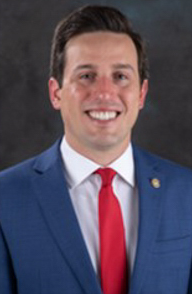
Photo of Ben Robbins
Ben Robbins
RRepublican
AL
33